
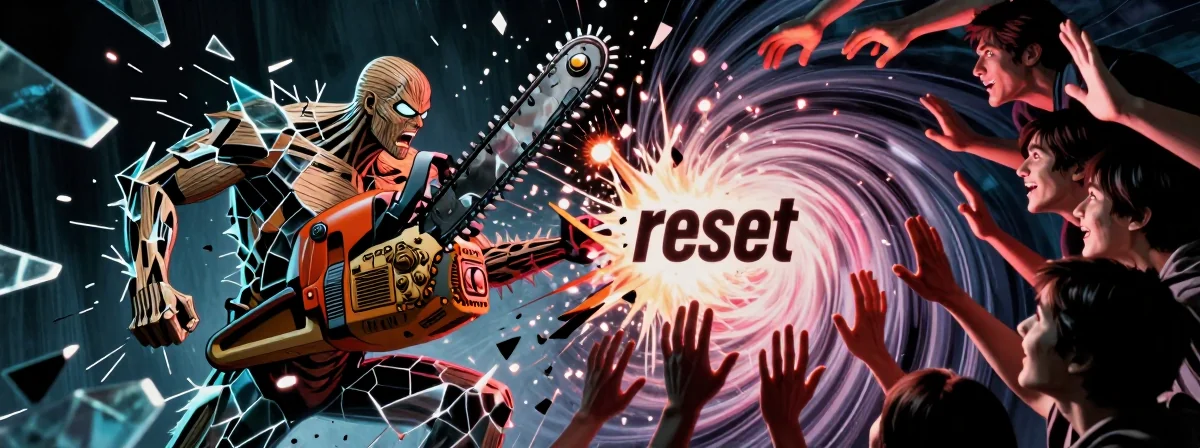
Some stories break your heart before they even end. Chainsaw Man’s latest twist isn’t just a plot turn—it’s a full narrative reset that left even the most dedicated fans questioning whether they’ve been reading the same story. The art still shines, the characters still resonate, but suddenly everything feels different. Let’s talk about what happens when a creator’s vision collides with what readers thought they were signing up for.
Design Meets Performance
The Art Still Works, Even When the Story Doesn’t
Fujimoto’s art remains breathtakingly brutal—every panel still carries that signature mix of grotesque beauty and raw emotion. The way Pochita’s final moments are rendered is pure poetry, even as the narrative logic starts to fray. It’s a reminder that sometimes the most technically perfect work can still feel fundamentally broken when the story underneath collapses.When “Undo” Becomes a Narrative Cheater’s Button
Pochita eating himself to reset the world feels less like clever storytelling and more like pulling the plug on the story’s engine mid-race. It’s the literary equivalent of a video game developer hitting Ctrl+Z on their entire project. Sometimes the most technically impressive moves are the ones that feel like cheating.Denji’s Happiness Equation: The Most Controversial Math Problem
“Denji was only really happy when he was suffering and at his most miserable.” This isn’t just a plot point—it’s a philosophical grenade tossed into the reader’s lap. The idea that misery equals authentic happiness challenges everything we expect from character arcs. It’s a beautiful, dangerous thought that makes us question whether we’ve been reading the story we thought we were.
- The Empty Throne of Part 3
The “Final Chapter” announcement that turned into “To Be Continued” is the narrative equivalent of a phantom limb—your brain keeps expecting something that isn’t there. This isn’t just about cliffhangers; it’s about the erasure of closure. The author’s willingness to leave readers dangling feels less like a masterstroke and more like creative indecision.
The Bug Apocalypse: A Red Herring or a Warning Sign?
The sudden bug-themed apocalypse feels like a narrative fever dream—introduced with minimal setup and maximum chaos. It’s the kind of bold choice that either elevates a story to genius or pulls it into self-parody. Here, it lands somewhere in that terrifying middle ground where you’re not sure if you’re impressed or just confused.Fujimoto’s Signature Abruptness: A Blessing or a Curse?
The author has always been known for sudden, jarring shifts—but this feels different. Previous twists maintained momentum; this one feels like hitting a wall and then discovering the wall was just a portal to the first chapter. It’s the difference between a sharp turn and a complete system reboot.The Devil in the Details: Why We Keep Reading
Even as the main plot dissolves into quantum uncertainty, the side characters and subplots still feel real. This is where Chainsaw Man’s genius remains intact—the ability to maintain emotional truth even when narrative logic fails. It’s a testament to how powerful secondary characters can be when the main story starts to fray.
Looks Good, Works Better
The real tragedy isn’t that Chainsaw Man might be ending (or continuing) in a way we didn’t expect. It’s that we’ve been conditioned to believe stories should follow predictable paths. The most beautiful technology—whether in manga or in life—is often the kind that breaks our expectations. Maybe the real ending was never about where the story was going, but about how willing we were to keep reading when the road disappeared beneath our feet.