
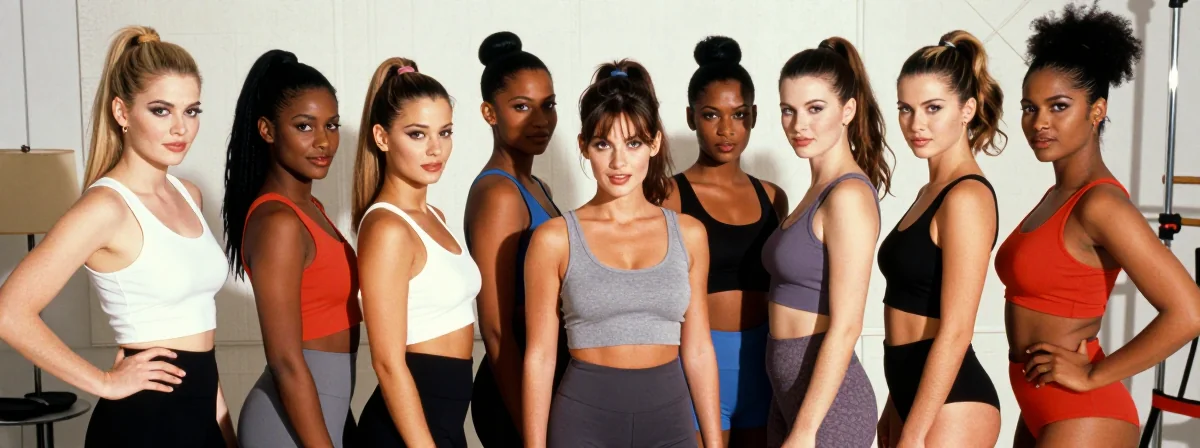
The music video that dropped in 1992 was a bombshell. Women with curves that defied the era’s ultra-thin ideal were suddenly celebrated. But what seemed radical then feels like a warm-up today. The real revolution? We’re still living with its echoes.
Curves weren’t just a preference—they were a rebellion against an era where being rail-thin was the only ticket to mainstream approval. The women in that iconic video weren’t just dancers; they were pioneers in a cultural shift that’s still unfolding.
By the time Destiny’s Child hit the scene, those same proportions were considered “big.” In 1992, what’s now called “thicc” was borderline obese by medical standards. The disconnect isn’t just about taste—it’s about how quickly our collective perception can warp.
Why Did the 90s Embrace Such Extreme Thinness?
The 90s weren’t just about grunge and dial-up internet—they were the height of the “heroin chic” era. Models like Kate Moss were celebrated for their gaunt frames, while pop stars like Britney Spears and Christina Aguilera were criticized for gaining weight that would now be called “fit.”
Florence Griffith Joyner, or “FloJo,” became a household name despite—or perhaps because of—the ridicule she faced for her athletic build. Late-night comedians joked about her “absurd” butt, but today, she looks like a perfectly proportioned athlete. The contrast isn’t just visual; it’s a mirror to how society weaponized body standards.
The Rise of the “Thicc” Revolution
Today’s obsession with curves didn’t materialize overnight. It was the 90s video that first normalized the idea that big butts and small waists could be desirable. But back then, butt implants weren’t a thing, and Brazilian butt lifts were unheard of in the US. The women in the video were natural outliers in an era that punished outliers.
Now? The landscape is flooded with surgical enhancements. The average “big butt” today would have been considered morbidly obese in 1992. This isn’t just inflation—it’s a reflection of how much our idea of “normal” has shifted.
How Obesity Rates Changed the Game
Here’s the uncomfortable truth: US adult obesity rates have more than doubled since 1990, jumping from 19% to over 42% by 2022. As the average body size grew, so did what society considered “large.” A butt that would have been celebrated in the 90s is now just average.
This isn’t just about numbers—it’s about how we measure beauty. When “thicc” became a compliment, it wasn’t just a shift in slang; it was a recalibration of what we find appealing. But the irony? The women who inspired this shift were often mocked for their “excessive” curves.
The Double Standard That Still Haunts Us
Queen Latifah was once labeled “obese” in the 90s, but now her figure is celebrated. Pamela Anderson and Carmen Electra were considered “curvy” then, but by today’s standards, they’d be called “slim.” The inconsistency isn’t just confusing—it’s actively harmful.
The same era that celebrated FloJo’s athletic build also made jokes about it. The same media that pushed anorexia as the ideal also, paradoxically, created the first wave of curve acceptance. The contradiction isn’t just historical; it’s a template for how we still navigate body politics today.
Why We’re Still Obsessed With 90s Curves
The 90s weren’t just a decade—they were a turning point. For the first time, mainstream media showed women with curves without apology. But the real power? It wasn’t just in the celebration; it was in the normalization of bodies that had long been deemed “other.”
Today’s “thicc” trend owes its existence to that moment. But the difference is clear: back then, it was a niche rebellion. Now, it’s an industry. From BBLs to gym regimens, the pursuit of curves is a billion-dollar market built on the shoulders of 90s pioneers.
The Future of Body Standards
The cycle isn’t breaking—it’s evolving. We’re seeing a return to the ultra-thin ideal, with actresses like Cynthia Erivo and Ariana Grande facing pressure to conform to an emaciated look. The same forces that once pushed curves are now pulling us back.
But the 90s lesson remains: beauty standards are never permanent. What’s celebrated today can be ridiculed tomorrow. The real power isn’t in chasing trends—it’s in recognizing that every era gets it wrong.
The women who defied the 90s beauty standard didn’t just change fashion—they changed how we see ourselves. And that legacy? It’s still fighting for its place in a world that can’t decide what to value next.