
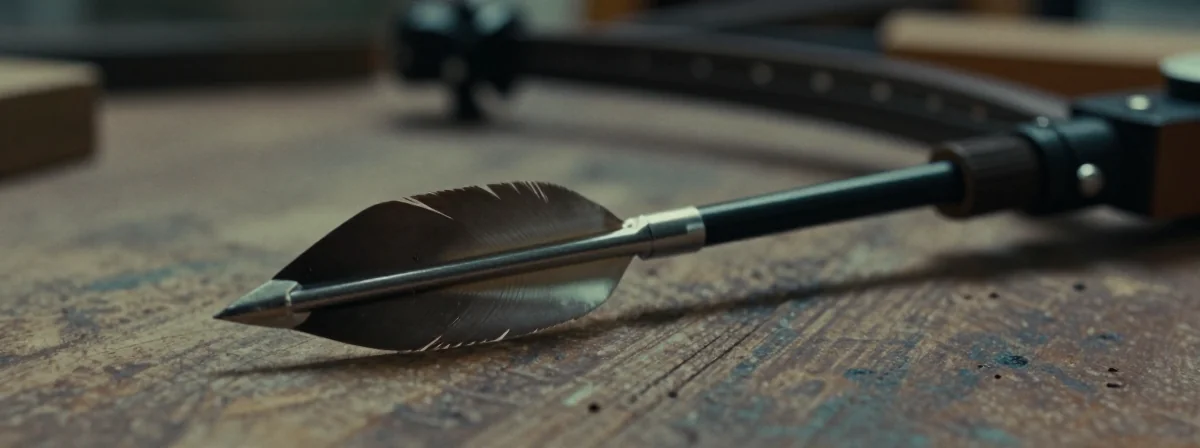
Ever wonder why your crossbow bolts fly straight one day and wildly off-target the next? The answer isn’t in your aim—it’s in the fletching. Most shooters never realize that the number of fletchings on their bolts is the single biggest factor in accuracy, and getting it wrong means wasted shots.
Crossbows aren’t like traditional bows. They rely on a rail to launch bolts, and that rail demands a specific setup. If your fletchings aren’t aligned right, they’ll drag, scrape, or destabilize the bolt before it even leaves the crossbow. It’s a mechanical problem, not a skill issue—and fixing it is simpler than you think.
Here’s the truth: crossbow bolts need two fletchings, not three. The difference isn’t subtle—it’s fundamental.
Why Two Fletchings Are Better Than Three on Crossbow Bolts
Think of a crossbow rail as a track. Your bolt needs to ride smoothly along it without anything getting in the way. Three fletchings? That’s like trying to fit three wheels on a two-wheeled cart—one of them is bound to rub. Two fletchings, placed parallel to the rail, create a symmetrical path that lets the bolt glide out cleanly.
Three fletchings, on the other hand, create an asymmetrical setup. Even with 120° spacing, one fletching will inevitably hit the rail or create uneven drag. Crossbow bolts are short and stiff—they don’t bend like arrows do. They can’t compensate for bad fletching like arrows can. That’s why you see accuracy drop instantly when you use the wrong configuration.
Arrows vs. Bolts: The Flexibility Factor You’re Ignoring
Arrows need three fletchings because they bend. That’s right—when you shoot a traditional bow, the arrow flexes around the bow’s riser (that’s the Archer’s Paradox). The fletchings stabilize it mid-flight after this bend. But crossbow bolts don’t bend; they’re rigid. They launch straight from the rail without any flex, so they don’t need the extra stabilization that three fletchings provide.
In fact, three fletchings add unnecessary drag. At the speeds crossbow bolts travel, air resistance matters—but not enough to justify the instability caused by extra fletchings. You’re better off with two that keep the bolt flat on the rail.
The Rail Is Everything: Why Crossbow Mechanics Demand Two Fletchings
Crossbows launch bolts at incredible speeds, often before air can even stabilize them. But the rail is the real star here. It’s designed to guide the bolt, and two fletchings are the only way to ensure a clean ride. If one fletching hits the rail, the bolt’s trajectory is ruined before it even starts.
Manufactured crossbows come with a specific orientation for bolts—usually marked or implied. Mess that up, and you’re shooting wildly off-target. Two fletchings make it easy to keep symmetrical, while three create an uneven weight distribution that throws accuracy out the window.
Speed Over Stability: Why Crossbow Bolts Don’t Need Extra Fletchings
Here’s a quick test: count to two in your head, then count to three. See how much longer three takes? That’s the same principle at play. Crossbow bolts hit their target so fast that air doesn’t have time to stabilize them like it does with arrows. Three fletchings are overkill—they don’t help and can hurt.
Two fletchings give you enough stabilization without adding drag. It’s the sweet spot between control and speed, and it’s why crossbow bolts are designed this way. If you’re using three, you’re not gaining anything—you’re just making it harder for the bolt to launch cleanly.
Stop Guessing: The Right Way to Fletch Your Crossbow Bolts
If you’re making your own bolts, set up your jig for two fletchings. If you’re buying pre-fletched ones, check the orientation. Most manufacturers mark the correct side to face the rail. Don’t assume symmetry works the same as with arrows—it doesn’t.
The moment one fletching starts tearing off, you know why: it’s hitting something. That’s your clue that the configuration is wrong. Fix it, and your accuracy will improve almost instantly.
The Single Idea That Changes Everything About Your Crossbow Shots
Crossbow bolts aren’t arrows. They don’t need the same stabilization, and they don’t fly the same way. The rail is the key, and two fletchings are the only way to keep it clean. Forget what you know about traditional archery—crossbows demand a different approach.
Next time you load a bolt, check the fletching. If it’s three, switch to two. If it’s misaligned, fix it. That’s the one change that’ll make your crossbow shoot like it’s supposed to. The rest is just practice.