

You know that feeling when you’re 30 and realize you’ve already lived through 75% of your expected life? It’s like the game engine suddenly switched from 60 FPS to 30 FPS without telling you. Your brain’s rendering pipeline is still outputting the same number of frames, but now each frame represents twice as much real-world time. The system’s still running, but the clock speed has changed.
Time isn’t actually speeding up — your perception system is degrading. It’s a subtle but critical difference. Like when your favorite game starts having frame drops not because the hardware slowed down, but because the developers added too many background processes.
Breaking It Down
Your Brain’s Frame Rate Drops as You Age
Think of your consciousness as a video recorder. When you’re young, it’s recording at 60 frames per second — every detail, every nuance gets captured. But as you age, it starts recording at 30 FPS. The same amount of real time gets compressed into fewer mental frames, so your brain interpolates and fills in the gaps. Suddenly, ten years feels like it flew by because your brain only saved the highlights. It’s not time accelerating; it’s your memory compression algorithm getting more aggressive.Novelty Is the Only Time Hack That Works

Ever notice how a new vacation feels longer than your daily commute? That’s because your brain treats novel experiences as high-priority data. It allocates more processing power to encode them. When you do something for the 100th time, your brain marks it as “background process” and allocates minimal resources. Want to stretch time? Force your brain to treat everyday moments as firsts. Try a new restaurant, learn a new skill, take a different route to work. Each novelty is like overclocking your perception system.
The Math of Life Experience
When you’re 5, a year represents 20% of your entire life. When you’re 50, it’s just 2%. Your brain weights experiences proportionally to their perceived significance in your lifetime. This isn’t some mystical “relativity of time” — it’s basic information theory. Your consciousness is essentially calculating the Shannon entropy of your life experiences, and as the denominator grows, each new experience contributes less to the total information content.Autopilot Is the Ultimate Time Vampire
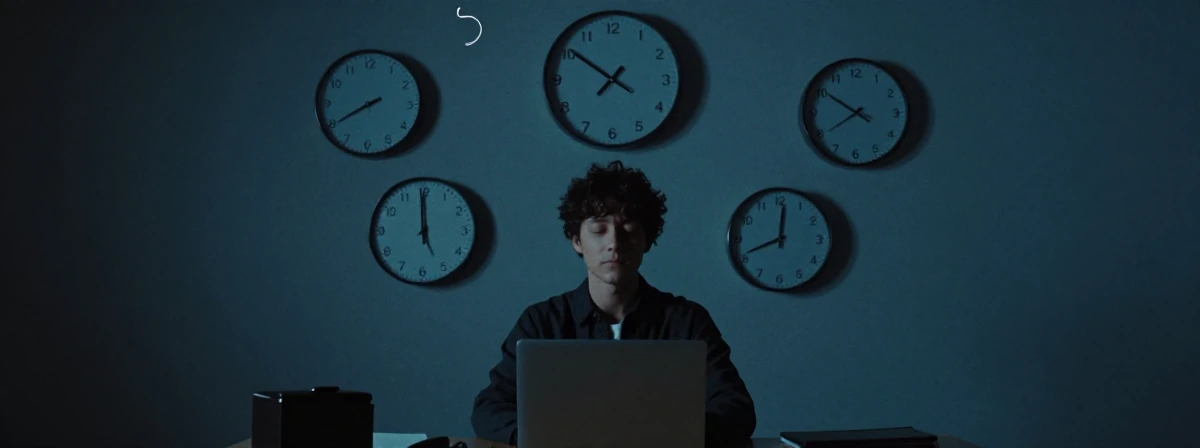
The moment you put your life on autopilot, you’ve effectively turned yourself into background process. Your brain starts filtering out routine experiences because they don’t contain new information. This is why people who do the same thing every day for decades swear time flies — their consciousness is literally skipping frames. It’s like watching a movie where the same scene repeats every five minutes; eventually your brain starts fast-forwarding through it.
The Recovery Cost Escalator
When you’re young, you can push your body to its limits and it rebuilds itself overnight. At 30, recovery takes days. By 50, it’s weeks. This isn’t just about physical healing — it’s about cognitive recovery too. The older you get, the more energy your brain needs to process new information. This is why learning feels harder as you age: your cognitive RAM is constantly being eaten up by background processes like managing chronic pain, processing grief, and handling complex responsibilities.The Grief Cache Problem
Every significant loss gets cached in your emotional memory. Unlike data that gets compressed or purged, grief accumulates like temporary files that never get cleaned. By middle age, you’re not just processing current events — you’re constantly referencing this growing cache of past losses. It’s like having dozens of browser tabs open from years ago that you never closed. Each one consumes a little bit of your processing power, making it harder to allocate resources to new experiences.Decision Paralysis Isn’t Laziness — It’s System Overload
When you’re young, your decision tree has fewer branches. As you age, each choice becomes exponentially more complex because of accumulated context. A 20-year-old choosing between two jobs has a simple binary decision. A 40-year-old has to factor in career trajectory, financial implications, family considerations, health impacts, and retirement planning. It’s like comparing a simple if/else statement to a recursive algorithm with multiple nested loops. No wonder you feel paralyzed — your brain is trying to optimize a system that’s become computationally intractable.The Retirement Calculation That Changes Everything
Here’s the brutal math: If you save $500/month starting at 25, you’ll have about $1.2M by 65 (assuming 7% annual return). If you wait until 35, you’ll have about $600K. Wait until 45, and you’re down to $300K. The exponential growth curve means every year you delay compounds the deficit. Your brain’s natural tendency to discount future rewards makes this perfectly logical — until you realize that future self is you. It’s like deferring software updates until your system becomes unstable.The Social Network That Actually Matters
Your real social network isn’t on any platform — it’s the people who show up when your system fails. These aren’t the people you network with; they’re the people who become part of your system’s redundancy protocol. When your hardware starts failing (and it will), you’ll need people who can take over critical functions. This isn’t about emotional support — it’s about system resilience. Your friends aren’t just friends; they’re backup servers for your life’s essential data.The Final Optimization
When you realize time isn’t a resource to be saved — it’s a system to be optimized. The goal isn’t to slow time down; it’s to maximize the information density of each moment. Novelty isn’t a luxury; it’s a maintenance requirement. Every new experience is like defragmenting your consciousness, clearing out the cached routines that make your life feel compressed. The ultimate hack isn’t about making time feel longer — it’s about making your life feel less compressed.