
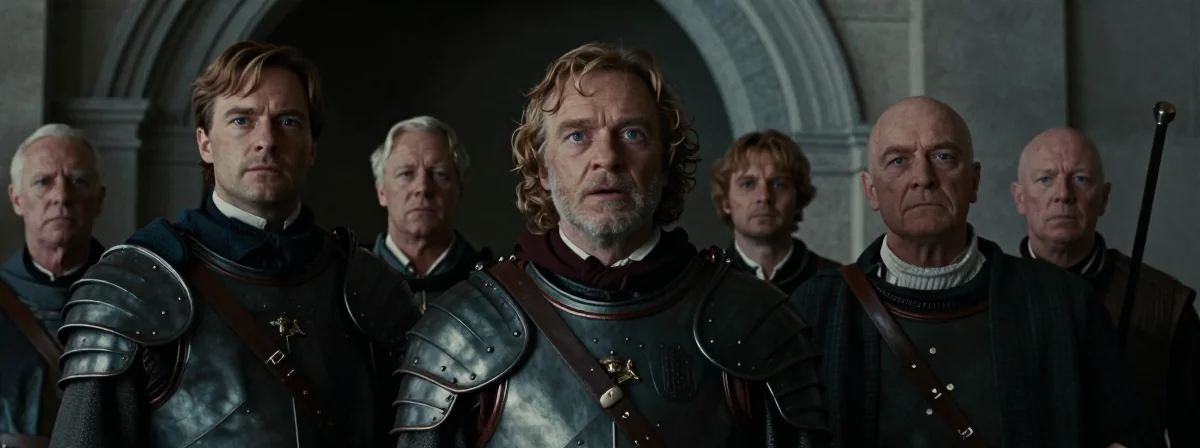
Some directors are like operating systems — they start optimized, then get bloated with updates. Ridley Scott is Windows ME of the film world: once revolutionary, now glitching with every new release. His historical epics are like trying to play Civilization IV with a keyboard designed for a VR game — the mechanics are fundamentally broken.
You know that feeling when you’re deep in a strategy game, meticulously planning your next move, only to have the AI roll a 20 and completely break your carefully laid plans? That’s what watching Scott’s “historically accurate” films feels like. The man who brought us Blade Runner is now the guy who can’t remember which patch notes he’s working from.
Pattern Recognition
The AI Director Paradox Scott’s recent films are like an AI trying to write history — it has all the data points but no understanding of context. His Napoleon project is like a machine learning algorithm that’s been fed too many romanticized fanfics instead of primary sources. The result is a system that can regurgitate facts but fails at the most basic level of historical empathy — like a chatbot that can list all of Napoleon’s battles but doesn’t understand why they matter.
Whitewashing as System Failure When you whitewash Columbus (or anyone, really), you’re like a game modder who replaces all the textures with solid white — it might run faster, but it’s not the same game anymore. History isn’t a performance optimization problem; it’s about preserving the original code. Scott’s approach is like taking a vintage computer game, replacing all the sprites with generic assets, and calling it “modernized.”
Grenadier Misconception The term “grenadier” by 1800 was like calling someone a “punch card programmer” today — technically accurate but completely anachronistic. By Napoleon’s time, grenadiers were the special forces equivalent, not literal grenade throwers. It’s like calling Navy SEALs “flintlock specialists” — the name stuck but the function evolved. This is what happens when you treat history like a simple variable that never changes.
The La Tour D’Auvergne Legacy

This forgotten hero is like that one NPC in an RPG who gives you a crucial quest but disappears immediately — essential to the plot but easily overlooked. His tradition of being called on roll call after death is the digital equivalent of a ghost in the machine — a persistent memory that the system can’t quite delete. It’s the kind of genuine historical detail that Scott’s films desperately need.
AI Remasters Ruining Classics Scott letting AI touch his classics is like letting a self-driving car drive your vintage Porsche — it might get you there, but it’s not the same experience. Digital restoration should be like open-source development — community-driven, transparent, and respectful of the original code. Instead, we get algorithmic guesswork that’s like trying to fix a leaky pipe by adding more water.
The Tintin Connection Capitaine Haddock’s curses are like the perfect API endpoint — concise, expressive, and universally understood. When history meets pop culture like this, it’s like finding a perfect hash collision — two different inputs producing the same meaningful output. This is how history should be taught: not as dry data points, but as shared cultural experiences.
Military Traditions as Living Code The roll call tradition for fallen soldiers is like having a backup server that never gets turned off. It’s the ultimate form of version control for human memory. In a world where we’re losing our collective memory faster than we can archive it, these traditions are like the oldest file formats that still work — simple, reliable, and essential to our operating system.
Bottom line: Great directors are like great system architects — they understand that the most important parts of the system are invisible. Scott’s recent work shows a fundamental misunderstanding of how history works as a system — it’s not about getting individual facts right, but about preserving the integrity of the entire operating system. The next time you watch a historical film, think of it like debugging code — you’re not just looking for syntax errors, but for the underlying logic that makes everything work.