

Ever stared at a 3D screen and wondered how your brain gets tricked into seeing depth without those annoying glasses? The answer is simpler—and more brilliant—than you think. It’s optical magic built right into the display itself, and it’s changing how we experience digital worlds. Let’s unpack the genius behind this tech.
It works because your eyes see slightly different perspectives of the same scene—just like in real life. Without glasses, you’re looking at a screen that’s essentially showing two images at once, one for each eye. The trick is in how those images get separated, and that’s where Nintendo’s innovation shines through.
What’s Coming
Columns Have Secret Lives
Imagine your screen isn’t one flat image but two interleaved images. Every other column of pixels belongs to a different eye. Your right eye only sees even columns, your left eye only odd columns. The result? A 3D effect without glasses—just pure optical wizardry. It’s like the screen is whispering different stories to each eye at the same time.Lenticular: The Unsung Hero
This isn’t new tech—it’s the same principle behind those novelty postcards that change images as you tilt them. A lenticular display adds a layer of tiny lenses over the screen, directing columns of pixels to your left or right eye. It’s a clever way to split the screen in half, giving each eye its own view.The Sweet Spot Problem

There’s a catch: you have to be in the right spot. Too close, too far, or at the wrong angle, and the illusion breaks. That’s why you don’t see this on TVs—no one wants to demand perfect positioning from their couch. But for handhelds? It’s perfect. You hold it where it works best.
Resolution: The Hidden Cost
Since you’re splitting pixels between eyes, you need double the resolution to maintain quality. A 1080p 3D image actually needs 4K pixels—2K for each eye. It’s a trade-off, but one that delivers an experience worth the cost. Every pixel counts when you’re building two worlds at once.The New 3DS: Adaptive Brilliance
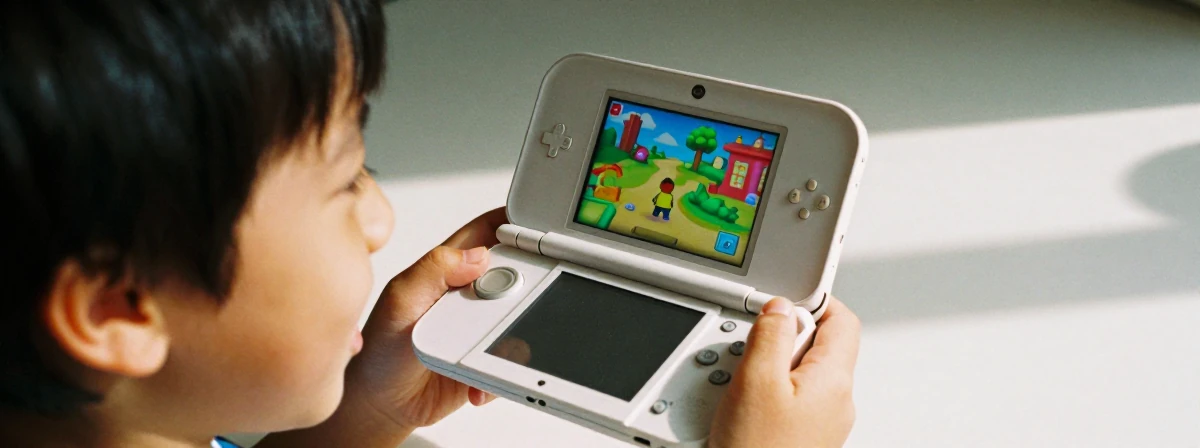
Nintendo took it further with the New 3DS. An IR camera tracks your position and adjusts the display on the fly. Move your head? The screen catches up. It’s like having a personal assistant for your eyes, ensuring the 3D stays locked in no matter how you hold it. That’s innovation at its finest.
- No Glasses, No Limits
This tech isn’t just about convenience—it’s about freedom. Glasses-free 3D breaks barriers, making immersive experiences accessible to everyone. It’s a reminder that the best tech disappears into the background, letting you focus on what matters: the experience itself.
The Future Looks Bright
The next time you see a 3D screen, remember: it’s not just pixels. It’s a carefully orchestrated dance between light, lenses, and your own eyes. This isn’t just about games or movies—it’s about rethinking how we interact with digital spaces. The future isn’t just about what we can create; it’s about how we can experience it. And that, my friends, is where the real magic happens.