
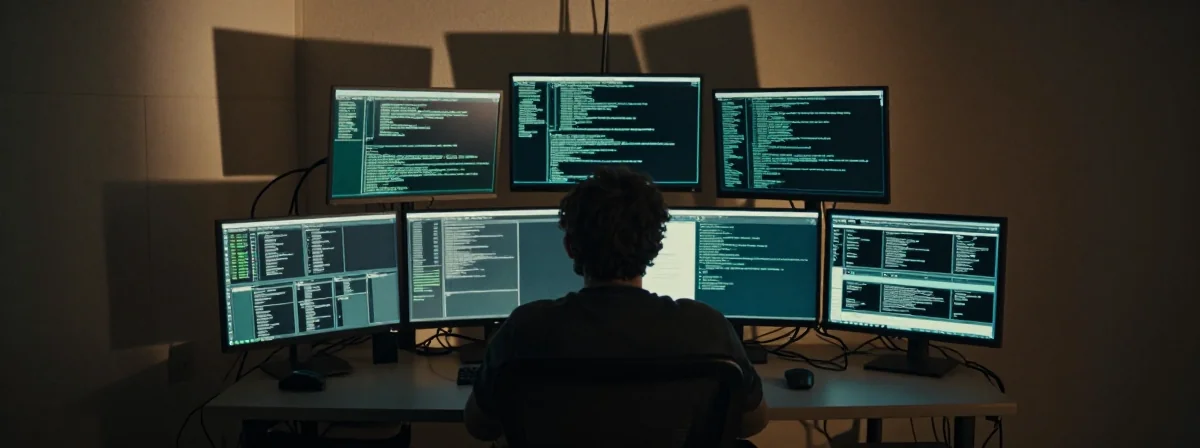
There is a specific kind of panic that sets in when you realize your digital life is a mess. It’s that moment you look at your screen and realize you haven’t actually accomplished anything meaningful in three hours. You open twenty tabs, check your notifications three times a minute, and stare at a blinking cursor. It feels like a productivity failure, but the root cause isn’t laziness. It’s a flawed setup.
Most people treat their technology as a passive tool, assuming that if they just get the “right” software or the “latest” gadget, efficiency will follow. The reality is often the opposite. Your devices are engineered to grab your attention, not give it back. Understanding how this dynamic works is the first step to taking control.
Are Your Notifications Actually Working Against You?
You probably think of notifications as helpful alerts. They tell you when that email arrives or when a friend texts. In reality, they are a constant, low-level stressor designed to hijack your brain’s dopamine receptors. Every time your phone buzzes, you experience a micro-frustration. You have to stop what you’re doing, acknowledge the interruption, and then consciously decide whether to engage or ignore it.
This “decision fatigue” adds up fast. Studies show that frequent notification interruptions can lower your IQ by as much as ten points temporarily. You aren’t just distracted; you are cognitively impaired. The solution isn’t to turn everything off, but to curate your digital environment ruthlessly. Silence the non-essential. Trust your memory, not the beep.
Why Your “Open Tabs” Are Actually Empty Tabs
We’ve all been there. You open a new tab to “keep something for later,” but that “later” never comes. That open tab is a digital ghost. It occupies memory space in your browser and, more importantly, it occupies mental space in your brain. Your brain knows it’s there, and it creates a background tension that you aren’t even aware of.
This is known as “open-loop thinking.” Your brain is constantly scanning for the information you put on that tab, preventing you from focusing on the task at hand. The practical fix is brutal but effective: close the browser. If you need to reference it, bookmark it. If you don’t need it now, you don’t need it at all. A clean browser is a clear mind.
Is Your Password Strategy Actually a Security Risk?
Most people use the same password for everything, or they use a password manager that is too simple to be effective. This creates a single point of failure that hackers exploit. When one service gets breached, your digital identity is compromised across the board. It feels like you’re being overly cautious, but you’re actually being dangerously complacent.
A practical expert doesn’t just tell you to “make a stronger password.” They tell you to use a passphrase. Instead of “HorseBatteryStaple,” use a long, memorable sentence like “BlueTacosEatPizzaInParis.” It’s longer, harder to crack, and easier for you to remember. Security isn’t about complexity; it’s about entropy.
Will Buying New Gadgets Fix Your Workflow?
There is a persistent myth that upgrading your hardware will magically solve your productivity issues. You buy a new laptop, thinking the faster processor will make you work faster. It doesn’t. The bottleneck is almost always in your process, not your processor. You are still the same person making the same decisions with the same distractions.
The new gadget becomes just another shiny object to play with. The practical approach is to audit your current tools. Do you actually need the latest features, or do you just want the newness? Often, the best upgrade is a software update or a configuration change that forces you to work differently, rather than just faster.
Are You Actually Working, or Just Connected?
The concept of “always-on” availability has eroded the boundary between work and life. You might be sitting at your desk, but your brain is checking Slack, email, and Slack again. This constant state of partial attention prevents deep work, which is where the real value is created. You are present physically, but mentally elsewhere.
True productivity requires the ability to disconnect. You need to create physical and digital boundaries. Turn off the push notifications during your deep work blocks. Let the emails wait. You will find that the world does not end if you don’t reply in five minutes. In fact, the quality of your work will improve, and you’ll actually finish sooner.
Are You Paying for Productivity with Dopamine?
Every time you check social media, you get a hit of dopamine. It feels like a reward. But when you try to do something difficult, like writing a report or learning a new skill, there is no immediate reward. This contrast makes difficult tasks feel painful. You are chemically wired to prefer the easy, dopamine-rich scrolling over the slow, effortful work.
You have to retrain your brain to find satisfaction in the process, not just the result. Start small. Celebrate small wins without external validation. Over time, you can rewire your neural pathways to value deep focus over the quick hit of a notification. It takes time, but the freedom is worth it.
The uncomfortable truth is that technology is not the problem. It is a tool that amplifies whatever habits you already have. If you are disorganized, technology will make you more disorganized. If you are focused, it will make you unstoppable. The only way to fix your digital workflow is to stop looking for the next gadget and start looking at your own habits.