
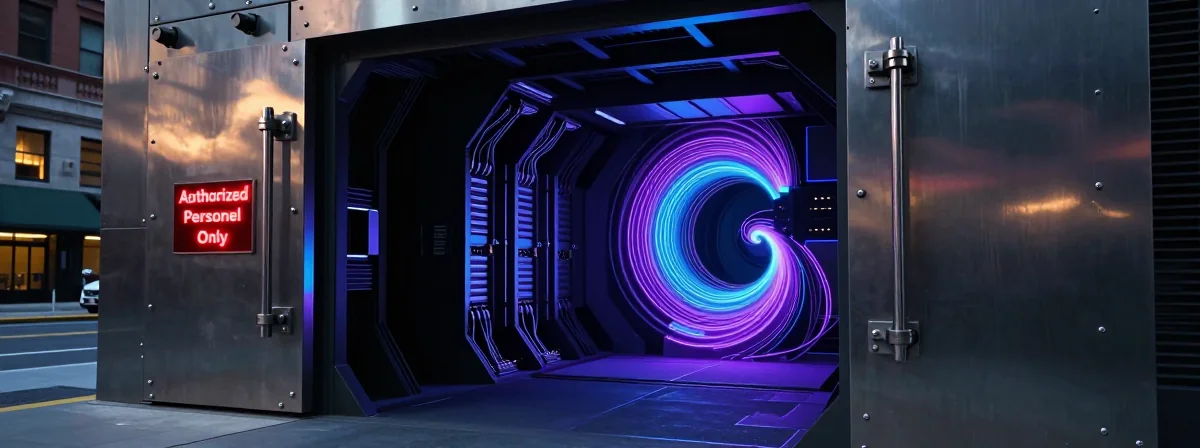
We all feel the subtle pull of control. In a world where we rent our homes, lease our cars, and subscribe to software, the idea of owning the very pipes through which our data flows is intoxicating. It represents the ultimate freedom: the ability to speak without an intermediary listening. Yet, when we look at the titans of technology, we see that this freedom comes at a staggering price. Meta, for instance, hasn’t just built a company; they have effectively constructed a parallel internet.
This isn’t a sci-fi fantasy. It is a quiet, sprawling reality of fiber optics buried beneath oceans and data centers humming in the desert. The question isn’t if they can do it, but why they would bother when the public internet is so readily available. The answer lies in the ancient human desire for leverage, for the knowledge that no one can cut off your power.
The Philosophy of the Vault
There is a certain dignity in building what you need rather than begging for it. Meta operates on a philosophy of vertical integration that borders on obsession. They don’t just rent the cables; they run their own. They don’t rely on the public DNS system, a critical piece of the internet’s address book, because they know the vulnerability of depending on someone else’s book.
This creates a fortress. When you rent infrastructure, you are at the mercy of the landlord. If they raise the price, you have to pay. If they go out of business, you are stranded. By building it themselves, Meta ensures that no other party holds power over their communication. It is the ultimate negotiation tactic: you simply cannot be fired from your own infrastructure.
The Price of Autonomy
We often mistake the cost of building a parallel internet for just the price of the copper and glass. It is far more expensive than that. It requires a level of expertise that is vanishingly rare. You need engineers who understand not just code, but the physics of light bending through fiber, the geopolitics of submarine cable treaties, and the arcane regulations of telecommunications.
The irony is that the barrier to entry isn’t just the money; it is the motivation. As the conversation around this topic often drifts toward, the billions required to build such a system are often dwarfed by the sheer apathy of the average human. We are creatures of habit, and the public internet is convenient. Why tear down a functioning system to build a more expensive one, unless the risk of the public system becomes too great?
The Landlord and the State
Even if you possess the motivation and the millions, you are still subject to the reality of land. You cannot simply dig a hole and lay a wire. You need permission. In most countries, the physical backbone of the internet is a shared resource, owned by governments or licensed to private entities with strict oversight.
To run your own lines, you must navigate a labyrinth of red tape. You need government permission to use publicly owned land. If you dream of a satellite constellation like Starlink, you are playing a game of cosmic bureaucracy, subject to international treaties and national oversight. The internet was born from government funding, and it remains tethered to the state. You cannot simply sever the cord and expect to float freely in the ether.
Scale is a Lie
There is a temptation to look at a local area network—a LAN—and think, “I could do that.” I could connect my laptop to my printer and call it an internet. But this is where the snowball fight analogy becomes necessary.
A snowball fight is simple. You gather some snow, roll it, and throw it. A land war in Russia in winter is also simple in concept, but the scale introduces variables that break the system. The difference between a small network and a global internet is not just size; it is complexity. It is redundancy, it is security, it is the management of millions of moving parts.
Consider the time Meta broke their own DNS in 2021. Their internal services couldn’t find each other. They had built a closed system so secure and so complex that it became fragile. They had to fix it themselves because the public internet couldn’t help them. This is the cost of autonomy: you are responsible for every crack in the pavement.
What We’re Really Talking About
When we speak of a “parallel internet,” we are often conflating terms. A VPN is a tunnel through the public internet, not a new internet. An intranet is a private room within a house. Internet2, a project connecting universities, is a scaled-down version of the original vision for the web.
The distinction is subtle but vital. You can create a private network using leased lines from telecom providers. It is cheaper than it was twenty years ago, and thousands of times faster. But it is still reliant on the infrastructure of others. To truly own the connection, you must own the land it sits on.
The Wisdom of the Shared Road
Ultimately, the dream of a parallel internet is a dream of isolation. It is the desire to create a world where your rules apply and no one else intrudes. But the internet, by its very nature, is a communal vessel. It is only useful because it connects us all.
The lesson here isn’t that we should all try to build our own parallel universes. The lesson is to understand the layers of the world we live in. We have our private islands, our corporate intranets, and our encrypted tunnels. We also have the public highway. Knowing the difference between the two—and the immense effort required to maintain the private ones—is the first step toward understanding the digital age.