
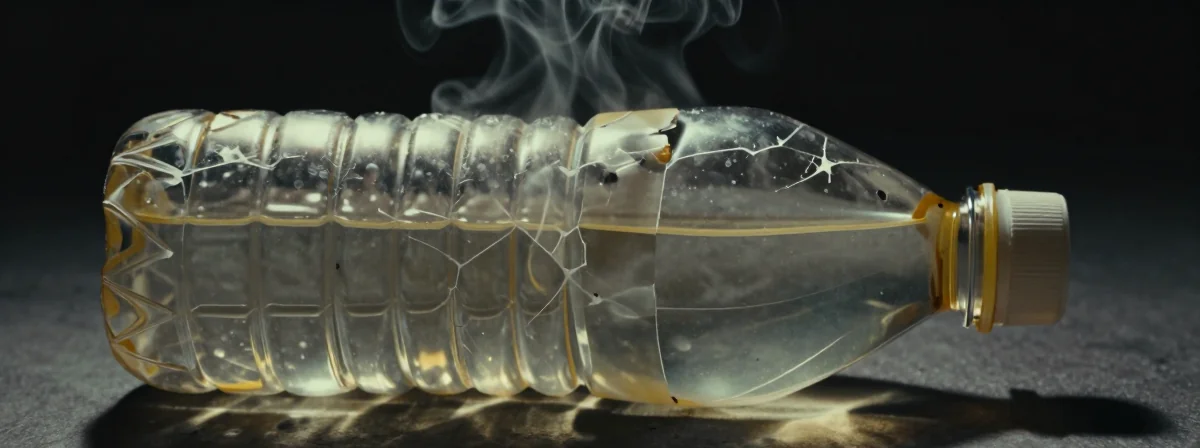
That chemical stench radiating from your cheap storage bins? It’s not just unpleasant; it’s a chemical warning label. You’re holding a plastic sandwich made of a thousand different additives, and that stuff is slowly eating itself apart. It turns out the recycling symbol on the bottom of your bottle isn’t a promise of a second life—it’s more like a “please recycle” stamp on a product designed to degrade the moment you stop looking at it.
The Additive Soup
Cheap plastics are basically a chemistry experiment gone wrong. Manufacturers mix polymers with massive amounts of additives—colorants, stabilizers, plasticizers—to make them cheap, colorful, and durable. You might be holding a container that is over 50% additives rather than actual plastic. That strong, weird smell isn’t just “plastic”; it’s those chemicals off-gassing over time. It’s the chemical equivalent of a food burning in the back of your fridge.
The Brittle Bowl Surprise
You remember that fancy, expensive Tupperware your mom had from the 70s? The stuff that was supposed to last forever? It probably did. It lasted almost 50 years. But then you dropped it, and it shattered like glass. That’s the dark side of durability. The plastic chains get shorter every time they heat up and cool down, eventually becoming so brittle that they snap under the slightest pressure.
You Can’t Un-Bake a Cake
Think of plastic like a cake. You mix flour, eggs, sugar, and milk to make the cake. Trying to recycle that cake back into the original ingredients is like trying to un-bake it. You can sort of separate the flour, but the cooking process changes the egg—it’s not an egg anymore. It takes a massive amount of energy, chemicals, and time to try to break plastic down to its original state, and often, the result is lower quality than the starting material.
The Coke vs. Pepsi Problem
Plastic isn’t a one-size-fits-all material. A Pepsi bottle is chemically different from a Coke bottle, and even the cap and the label are often made of different plastics. When you toss them all in a bin, they get mixed. Trying to melt down a soup of incompatible plastics usually results in a sludge that’s useless for most applications. You end up with a product that can’t be made into a bottle again, so it gets downcycled into something like park benches.
The Raw Material Reality
Here is the uncomfortable truth that hurts the most: the raw material to make new plastic is basically free waste. Ethylene, the building block of most plastics, is a byproduct of oil refining. Oil companies have to get rid of it anyway, so they sell it to plastic manufacturers dirt cheap. It is exponentially cheaper to produce virgin plastic from this waste stream than it is to collect, sort, clean, and reprocess old plastic.
Molecular Recycling is the Future
There is hope on the horizon, but it requires high-tech chemistry. Companies like Eastman are developing “molecular recycling.” Instead of melting plastic down and hoping for the best, they use chemicals to unzip the long polymer chains back into their original building blocks—monomers. This allows them to purify the material and rebuild it into virgin-quality plastic. It’s technically difficult and expensive, but it’s the only way to truly close the loop without losing quality.
Buy Glass, Buy Less
Until the infrastructure catches up, the most practical solution is to vote with your wallet. Glass is infinitely recyclable without loss of quality, and it doesn’t off-gas chemicals that give you a headache. If you have to use plastic, buy the better stuff. The cheap bins that smell like chemicals will break or shatter sooner than you expect, and the recycling center won’t know what to do with them anyway.