
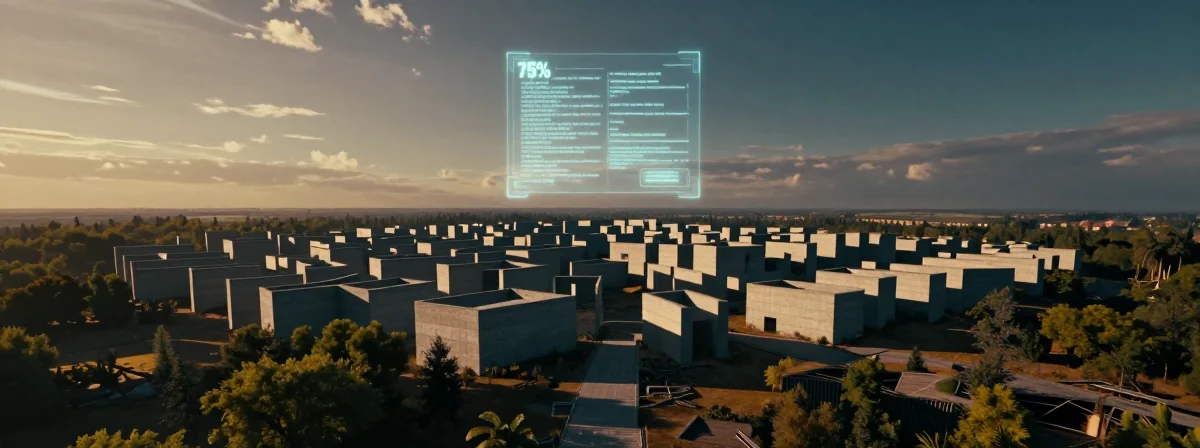
When a statistic claims that 75% of Earth’s land has been significantly altered by human activity, the immediate reaction is skepticism. It feels like a stretch. You drive through the American Southwest or fly over the Canadian Shield and see nothing but empty space. You hike into the wilderness and find silence. How can a prosecutor claim that the land is guilty of alteration when the physical evidence seems to show pristine nature?
The answer lies not in the physical footprint of humanity, but in the microscopic and chemical fingerprints we have left behind. To understand this claim, one must look beyond the bulldozers and look at the invisible mechanisms of change. The definition of “altered” is not a matter of opinion; it is a matter of legal and scientific definition, and the evidence suggests we have breached the statute of natural integrity in ways we never intended.
What Does “Altered” Actually Mean in a Legal Sense?
The confusion stems from a semantic trap. When the average person hears “altered,” they imagine a construction site. They imagine concrete, steel, and pavement. However, the scientific community, specifically those reviewing the IPBES Global Assessment, defines alteration differently. It is not a crime of physical destruction; it is a crime of chemical and biological interference.
Consider the evidence presented by experts across 50 countries. They did not just count buildings. They counted the invisible shifts in the ecosystem. Introducing an invasive species to a region that cannot control it constitutes alteration. Dumping toxic runoff into a water source that triggers an algae bloom and suffocates native life constitutes alteration. The prosecution does not need to show a building to prove the crime; showing the death of the ecosystem is sufficient proof of guilt.
The Case of the Uninhabitable Wilderness
A common defense strategy in this argument is the geography of the land. Critics point to Antarctica, the Sahara Desert, and Siberia. They argue that these massive landmasses—comprising roughly 10% of the earth’s surface each—are untouched. If 90% of the land is untouched, the 75% statistic cannot hold water.
This argument relies on a technicality regarding “inhabitable.” While vast portions of the planet are indeed uninhabitable by human standards, that does not make them immune to human impact. The expansion of deserts due to global warming, driven by human carbon emissions, alters the very nature of the land. Furthermore, the argument ignores the sheer scale of the remaining land. When you account for the uninhabitable poles and deserts, the remaining habitable land is so heavily impacted that the statistic holds firm. You cannot claim a region is “untouched” when the climate that sustains it has been chemically modified by industrial activity thousands of miles away.
The Microbiological Footprint
Perhaps the most damning piece of evidence against the “untouched” argument is biological. We often forget that we are walking ecosystems ourselves. A person born in a modern city carries a distinct microbiome. When that person enters a pristine wilderness, they are not a silent observer; they are a biological contaminant.
The defense often claims that driving through a vast empty landscape proves the land is untouched. However, the introduction of human pathogens and microbiota into a new environment can alter the soil composition and the health of native species. The argument that “breathing” constitutes alteration is not hyperbole; it is a biological reality. We carry our environment with us, and every interaction with the wild leaves a trace.
The Scope of the IPBES Report
The weight of this conclusion rests on a mountain of evidence. The report cited in these discussions is not a casual opinion. It represents a synthesis of 15,000 scientific studies and government reports reviewed by 145 experts from 50 different countries. This is not a fringe theory; it is a consensus of the global scientific community.
The indictment is broad. It includes the destruction of wetlands (85% of which have been degraded) and the impact on marine life (90% of fish stocks are fully exploited). The evidence suggests that “altered” is the only logical conclusion when you account for the cumulative effect of pollution, climate change, and invasive species. The land is not just paved over; it is chemically and biologically compromised.
The Verdict: Ecosystem Collapse vs. Physical Destruction
Ultimately, the distinction between “destroyed” and “altered” is the key to understanding the current state of the planet. We have not necessarily paved over the majority of the earth. We have simply modified it to the point where it no longer functions as it did before. The removal of topsoil, the shift in atmospheric chemistry, and the disruption of food webs are all forms of alteration.
The evidence suggests that the claim of 75% alteration is not an exaggeration, but a forensic reality. We have changed the laws of nature by introducing foreign elements. The “untouched” land is a myth born of ignorance regarding the scope of human impact. The case is closed on the definition of the crime; the only question remaining is how we proceed in a world where the very chemistry of the ground has been irrevocably changed.