We love the story of the lone genius sitting in a patent office, dreaming up the universe while everyone else slept. It’s a narrative as old as the hills, and frankly, it’s a little bit of a lie. When we look back at the early 20th century, the scientific landscape was a chaotic war zone of ideas, not a quiet library.
You’ve probably heard the claim that 100 scientists published a rebuttal to Einstein. You might have heard that he won a Nobel Prize for something other than Relativity. You might even wonder why a guy with messy hair and a mustache became the world’s first true celebrity scientist. The truth is messier, more collaborative, and frankly, more impressive than the legend suggests.
Did 100 Scientists Really Attack Einstein?
Back in the 90s, when I was first cutting my teeth on systems engineering, we used to joke about “groupthink.” It turns out, Einstein actually faced the ultimate groupthink scenario. There was a massive backlash against his theories, but it wasn’t just a few grumpy colleagues.
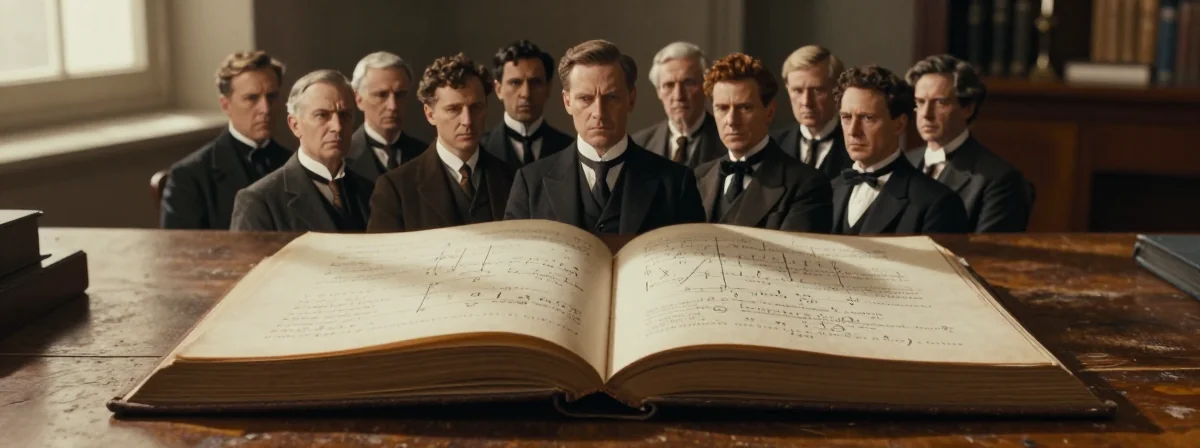
During World War I, Einstein—a Jewish German living in Berlin—was essentially an enemy of the state in the eyes of the establishment. When his papers on relativity started circulating, they didn’t just get ignored; they got attacked. A group of prominent scientists, totaling about 100, published a petition in a major journal arguing against his work. It was a heavy hitter list of names, many of whom were titans of the field.
Here is the counterintuitive part: Einstein didn’t just sit there and take it. He responded to the petition with a famous quip. He essentially said, “If I am wrong, it would only take one.” He knew that truth doesn’t need a majority vote. It’s a lesson we forget today in an age of confirmation bias and echo chambers. The weight of evidence eventually crushed the petition, but it took a few years. It wasn’t an overnight victory.
The Nobel Prize and the Photoelectric Effect
If you ask a layperson what Einstein won the Nobel Prize for, they’ll likely say “Relativity.” They’d be wrong. He never got the prize for General Relativity. That’s the kind of detail they hide in the fine print.
Einstein won the Nobel Prize in 1921 for the Photoelectric Effect. This is a massive distinction because it highlights a different side of his genius. While General Relativity rewrote the book on gravity and space-time, the Photoelectric Effect laid the groundwork for quantum mechanics. He proved that light isn’t just a wave; it’s made of little packets of energy called photons.
This distinction is vital. It shows that Einstein wasn’t just a theorist living in an ivory tower. He was an experimentalist at heart, connecting the dots between observation and math in a way no one else could. He stood on the shoulders of giants like Max Planck, but he built the ladder to let everyone else climb up.
Standing on the Shoulders of Giants
You’ve heard the phrase “standing on the shoulders of giants.” It’s usually attributed to Newton, but Einstein lived it. He wasn’t the best mathematician in the room. He was the best physicist in the room, but he knew his limitations.
When he was trying to formulate General Relativity, he hit a wall with the math. It was too complex for him to solve on his own. He turned to a classmate from his university days, Marcel Grossman. Grossman brought in the heavy machinery of Riemannian geometry and tensor calculus.
Einstein used that math like a carpenter uses a hammer. He didn’t invent the hammer, but he figured out exactly how to use it to build the house. He was the creative genius who connected the dots; Grossman was the master craftsman who built the frame. It’s a humbling reminder that even the greatest minds of history needed help to make the impossible possible.
Why the “Genius Look” Matters
We live in an age of influencers, but Einstein was the first one. He was the first scientist to truly understand the power of the camera and the press. Before him, scientists were usually depicted as powdered-wig-wearing, faceless figures in old paintings.
Einstein had a look. He had wild hair, a bushy mustache, and a wardrobe that looked like it came out of a thrift store. He was striking, yes, but he also projected a vibe of “I don’t care what you think.” That resonated with the public. In the 1920s, with the rise of mass media and photography, he became a household name almost overnight after the Eddington Experiment proved his theories right.
It’s easy to mock the association between “messy hair” and “genius,” but that association was engineered. He looked the part, and the world needed a face for the most complex theory ever devised. It made the terrifying concept of relatable.
The Eddington Experiment and the Proof
You can theorize until you’re blue in the face, but in science, you need proof. The Eddington Expedition in 1919 was the moment the rubber met the road. Arthur Eddington went to the island of Principe to observe a solar eclipse.
The theory predicted that the sun’s gravity would bend the light of stars passing behind it. The old Newtonian model said it would bend a little; Einstein said it would bend a lot. When the photos came back, they matched Einstein. It was the first time a theory of gravity had been tested and confirmed.
This wasn’t just a win for physics; it was a cultural earthquake. It proved that the universe didn’t just follow simple rules like F=ma, but something far more elegant. It also proved that Einstein was right about the math, even when his intuition said it was crazy.
The Legacy of a Revolutionary
We tend to view Einstein as a singular figure, a one-man band. But looking at the history, he was part of a massive roster of brilliant minds. He worked alongside Dirac, Fermi, and Von Neumann. They were all doing pioneering work in quantum mechanics and atomic physics at the same time.
Einstein’s unique contribution wasn’t just the equations; it was the perspective. He took the Lorentz transformations—which everyone else thought were just a mathematical trick to make Maxwell’s equations work—and said, “No, that means time is relative.” He took the known math and flipped the paradigm.
Even today, we are still testing his theories. Just a few years ago, experiments were done to see if gravity acts on antimatter the same way it does on matter. They confirmed Einstein was right. His theories are our theory of gravity, period. We are still trying to fit them into a complete picture of the universe, but the foundation he built is solid.
Final Thoughts
The next time you look at a picture of Einstein, don’t just see the hair. See the weight of history. He didn’t do it alone. He faced a hundred angry scientists, he stood on the mathematical shoulders of friends, and he had to fight to be taken seriously in a world that didn’t want to listen.
He showed us that genius isn’t about being right all the time. It’s about having the courage to look at the math, see what everyone else missed, and say, “This is how the universe actually works.” That’s a legacy worth remembering.