
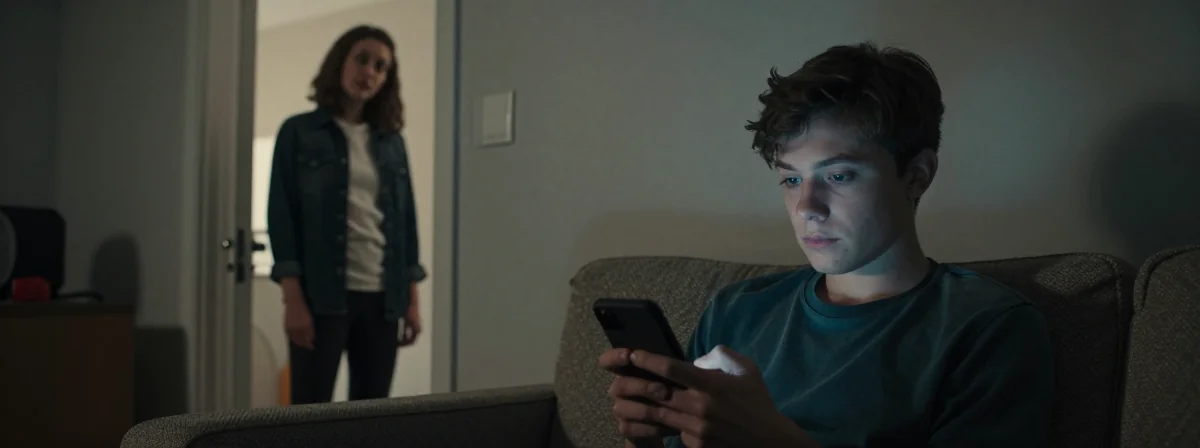
The silence that follows a sudden departure is heavy. You stand up from the couch, announce you’re tired, and walk out of the room. The conversation pauses. Someone looks confused. The energy shifts from warmth to awkward curiosity.
It feels like a minor moment, but it reveals a profound shift in how we interact. We’ve become so accustomed to the digital “read receipt” and the silent log-off of a text message that we’ve forgotten the physical cues required to navigate a room full of people. We are slowly becoming people who disappear.
It’s not that we mean to be rude. It’s that we’ve normalized a behavior that signals, “I am done with you,” without offering the courtesy of an explanation. When we stop saying goodbye, we aren’t just losing a pleasantry; we are eroding the social contract that keeps us connected.
The Digital Hangover: Why We Can’t Just “Log Off” Anymore
There was a time when leaving a chat window meant you were gone. You signed off, and the other person understood. You didn’t need to explain where you were going or why you weren’t coming back for another eight hours. It was a clean break.
We are carrying that digital efficiency into the physical world, and it’s causing friction. In an online environment, absence is a natural state. In a physical one, absence is suspicious.
If you get up from a dinner table, a movie night, or a card game and simply walk out the door without a word, you are breaking the unspoken rules of presence. You are signaling that your time is more valuable than their curiosity. The modern tendency to treat physical interactions like digital ones—where you can just “close the tab” and walk away—is a habit that is quietly destroying our social cohesion.
The Anxiety of the Unanswered Question
There is a very specific kind of dread that comes from wondering where someone went. It’s not just boredom; it’s a spike in anxiety.
When someone vanishes without a trace, the human brain begins to fill in the blanks. Did they get hurt? Are they angry? Did they fall asleep standing up? This mental spiraling happens because we are hardwired to look for patterns and connections. When those connections are severed abruptly, we feel a loss of control.
By announcing your departure—saying “I’m going to bed” or “I’m tired”—you aren’t just being polite. You are providing a data point that calms the room. You are saying, “I am safe, I am still here, but I am unavailable for the next few hours.” It’s a crucial piece of information that prevents the group from spiraling into unnecessary worry.
Why “Just Leaving” Feels Robotic
There is a reason that walking out of a room without a word feels like “NPC behavior” (Non-Player Character). In video games, characters often have scripted paths. If they walk into a room and then walk out without interacting, it feels fake. It feels like a glitch.
Real life is messy. It’s full of tangents, interruptions, and unfinished thoughts. To abruptly cut that thread is to treat the people around you like background noise rather than active participants. It creates a disconnect that can make the group feel like they were just talking to a machine.
The effort required to say “Well, I’m going to head out now, have a good night” is minimal, yet it bridges the gap between “I am a person” and “I am a glitch.” It acknowledges the shared reality of the room.
The “Irish Exit” is for Parties, Not Friends
There is a concept known as the “Irish Exit”—leaving a social gathering without saying goodbye. It’s often cited as a cool, mysterious move. But that only works when you don’t care if the people you leave behind wonder where you went.
When you are with close friends or family, the Irish Exit is a betrayal of trust. It suggests that you care more about your own peace than their peace of mind. It implies that you are willing to leave them in a state of confusion just to avoid a five-second goodbye conversation.
This isn’t about being clingy. It’s about respect. It’s understanding that your departure impacts the energy of the room. If you are in a group that has established a rhythm of conversation, walking away disrupts that rhythm. It’s the equivalent of turning off the TV while everyone is laughing at a joke. It kills the vibe.
Reclaiming the Art of the Farewell
We need to reclaim the simple act of saying goodbye. It is a small ritual that reinforces our humanity. It tells the people around us that they matter enough for us to spend a few seconds acknowledging their presence before we retreat into our own worlds.
It’s not just about manners; it’s about empathy. It’s the realization that your comfort (wanting to sleep) is less important than their peace of mind (knowing you aren’t mad or dead).
Next time you feel the urge to just get up and disappear, pause for a second. Consider the silence that will follow. Consider the questions that will pop into their heads. A simple “I’m going to crash, talk tomorrow” costs you nothing but buys you back your reputation as a considerate, present human being.