
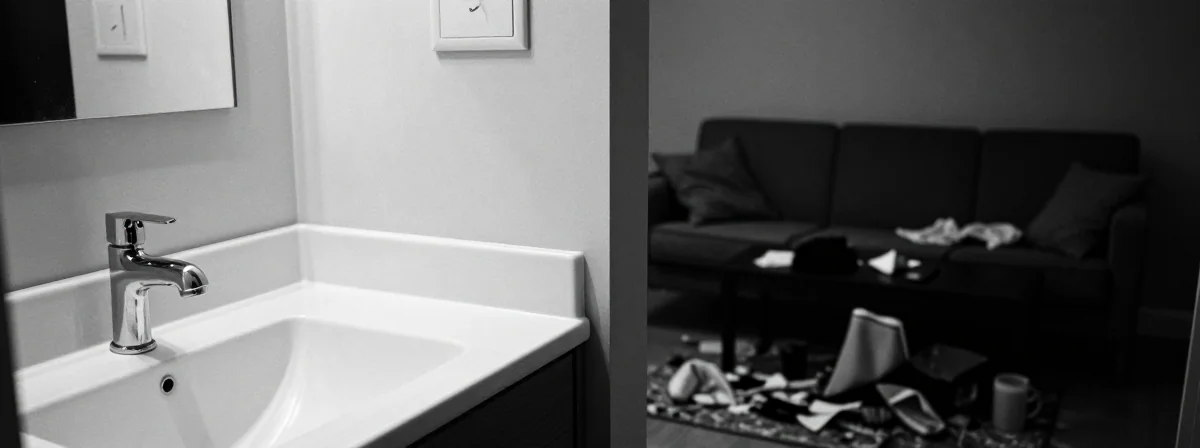
Some of us have been taught by generations of ancestors that a person’s environment is a direct reflection of their inner world. My grandmother, who survived the Great Depression, always said “A home speaks when its occupant is silent.” She didn’t just mean tidiness—she meant the nature of what’s left visible. I’ve seen too many relationships and friendships shattered because people didn’t learn this vital lesson until it was too late.
There’s a profound psychology to what people choose to display—or fail to hide—in their personal spaces. It’s not about judgment; it’s about awareness. Like the time I walked into what appeared to be a perfectly normal home, only to discover the hidden room filled with something that would change how I viewed that person forever. The warning signs were there all along, if only I’d known what to look for.
The truth is, our spaces unconsciously broadcast our priorities, our fears, and our hidden selves long before we ever utter a word.
What Does a Person’s Kitchen Reveal About Their Character?
The kitchen is the soul’s laboratory. My father, a former detective, always told me “A kitchen tells you more about a person’s truth than their words ever will.” He wasn’t exaggerating. The state of someone’s cooking space reveals their relationship with nourishment, responsibility, and even their capacity for nurturing others.
Consider the person who meticulously organizes their spices but leaves dishes piled in the sink for weeks. This contradiction speaks volumes about where they draw boundaries. Or worse, the individual who uses the same cutting board for raw chicken and vegetables without washing it—that’s not just about cleanliness; it’s about respect for others’ well-being. My grandmother’s cousin, who eventually showed signs of dementia, began with precisely these kinds of lapses in kitchen hygiene long before any diagnosis.
The truly revealing signs appear in the small details: the presence of basic cooking tools versus takeout containers, the way they store food (or fail to), even the expiration dates on their condiments. These aren’t trivial matters; they’re behavioral indicators that form a pattern only later becomes clear. When I saw the janitor’s home-made catering filled with cockroach egg casings, I realized the warning signs were in his kitchen habits all along—the neglected storage, the inconsistent cleaning routines.
The Bathroom: Where Vulnerability Cannot Be Faked
The bathroom is where the mask comes off. This is sacred territory, and what people choose to reveal—or accidentally expose—here speaks directly to their self-perception and self-care. My grandmother taught me to always observe the medicine cabinet first. “That’s where people keep their secrets,” she’d whisper, “and their truths.”
I’ll never forget the bathroom of the resident physician who seemed so together professionally. Dirty dishes weren’t the issue; it was the absence of basic hygiene products alongside elaborate professional grooming tools. The contradiction was jarring. Then there was the home with the sanitary pads and adult diapers scattered carelessly—a clear sign that someone’s priorities had fundamentally shifted, that self-care had been replaced by something else entirely.
The bathroom reveals our relationship with vulnerability. The person who meticulously hides every trace of personal care products might be hiding something deeper. The individual who leaves medical supplies in plain view might be seeking acknowledgment. And the worst sign of all? The bathroom that reeks of desperation, where basic functions have become chaotic—like the home where the pipes were plugged and they resorted to a “shit bucket” in the corner of the living room. That’s not just about plumbing; that’s about a complete breakdown of functional reality.
The Living Room: Where Social Facades Are Constructed
The living room is our stage. This is where people perform for visitors, where they curate their public image. But even the most carefully constructed facades have cracks. My grandmother called them “the edges of the rug,” those places where the performance naturally falters.
Notice how people arrange their seating. Is there a clear boundary between their space and yours? The date who offered a washed cup with a visibly disgusting sponge wasn’t just being lazy; they were testing your boundaries, seeing how much you’d accept without question. The person who has immaculate furniture but a floor littered with cigarette butts reveals a fundamental disconnect between their public self and private habits.
What’s truly revealing are the things people don’t remove when visitors arrive. The hidden corners of the room where the real self emerges—like the multi-million dollar home where an electrician was watching child sexual abuse material in the crawl space while maintaining a perfect facade upstairs. The warning signs were there in the living room’s contradictions: the expensive decor paired with unsettling details that didn’t quite fit.
The Bedroom: Where Dreams and Nightmares Are Born
The bedroom is the most intimate space, and what people reveal here is often the most telling. My grandmother always advised never to ignore the bedroom’s messages. “That’s where they go when no one’s watching,” she’d say, “and that’s where you’ll find their truest self.”
Consider the person who keeps their bedroom door closed at all times but leaves other areas accessible. What are they hiding? The bedroom with the moldy food in the closet, the maggots on the walls, the smashed insects on the bed—these aren’t random occurrences; they’re patterns of neglect that extend beyond physical cleanliness into emotional and psychological realms.
I’ve seen too many relationships fail because people didn’t recognize the bedroom’s warnings. The person who maintains a pristine exterior but has a bedroom that reeks of desperation or chaos. The space where they sleep—their most vulnerable state—tells you everything you need to know about their relationship with rest, with vulnerability, with their own inner world. When I saw the bare ass print under the teenage friend’s bed, I knew something was terribly wrong, even before she confided in me about the abuse happening in that home.
The Hallway and Entryway: First Impressions That Lie
The entryway is where deception begins. My grandmother called it “the threshold of truth.” What people choose to reveal—or hide—at their front door speaks volumes about their relationship with boundaries and authenticity.
Notice how people greet you at the door. Is there a clear transition between their space and yours? The home with the cat piss covering every inch of carpet from the moment you step inside isn’t just about pets; it’s about boundaries. The entryway that’s meticulously clean but leads to a home that’s chaotic suggests a deliberate effort to mislead.
What’s truly telling are the small details people can’t control. The smell that hits you when you first enter. The way the space immediately makes you feel—welcomed or warned. When I had to escape the home filled with syringes by jumping on a train, it was the moment I stepped through the door that gave me the first, visceral warning. The entryway wasn’t just messy; it felt hostile, unwelcoming in a way that went beyond physical cleanliness.
The Attic, Basement, and Hidden Spaces: Where Truths Are Buried
The hidden spaces of a home—attics, basements, crawl spaces—often hold the most profound revelations. My grandmother always advised checking these areas first when assessing someone’s true character. “That’s where they store what they don’t want to face,” she’d say.
Consider the person who keeps their living spaces immaculate but has a basement that’s a disaster zone. What are they hiding? The electrician who was caught with child sexual abuse material in his crawl space maintained a perfect home above ground. The warning signs were in the contradictions between his public spaces and private ones.
What’s truly revealing are the things people don’t know they’re hiding. The childhood friend whose parents had a bedroom filled with animal shit and trash—no one knew until someone had to use the room. The hidden corners where the real self emerges without warning. When I saw the needle while doing the dishes that belonged to the abusive father’s other girlfriend, I realized the hidden spaces weren’t just physical; they were psychological too.
The Unspoken Language of Space: What Your Environment Really Says
After decades of observing homes and the people who inhabit them, I’ve come to understand that spaces speak a language most of us never learn to read. My grandmother’s wisdom wasn’t just about cleanliness; it was about awareness, about understanding that what we choose to reveal—or fail to hide—creates a narrative that speaks volumes.
The truly dangerous people aren’t those with visibly messy homes; they’re the ones with perfectly curated spaces that hide something far worse. The warning signs aren’t always obvious; sometimes they’re subtle shifts in behavior, inconsistencies between different areas of the home, or the way certain spaces make you feel.
What I’ve learned is that the most important lesson isn’t about judging others; it’s about protecting yourself. When you learn to read the language of space, you gain a powerful tool for understanding the true character of those around you. The next time you enter someone’s home, pay attention to what’s not being said. The environment will tell you everything you need to know—if you know how to listen.
The cleanliness secret that reveals everything about a person’s soul isn’t about judgment; it’s about awareness. It’s the unspoken language of space that tells the truth before a single word is spoken. And once you learn to read it, you’ll never look at a home—or the person who inhabits it—the same way again.