
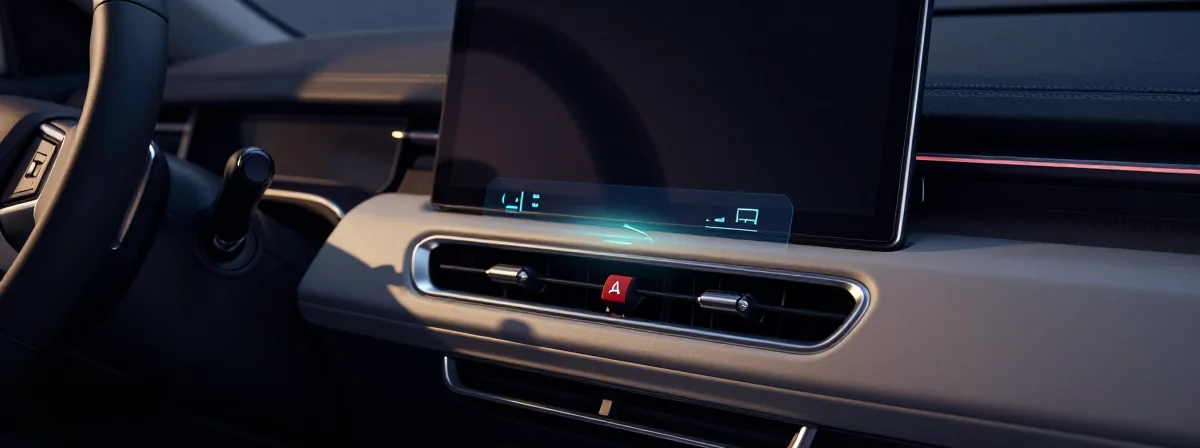
Ever wonder why your new car feels like you’re driving a tablet? The sleek, massive touchscreen that controls everything from climate to navigation might look futuristic, but it’s also a hidden hazard. Recent safety ratings are finally calling out this design flaw—and the backlash is forcing automakers to rethink their approach. Let’s peel back the layers on this automotive puzzle.
The clues are everywhere: European NCAP safety ratings now penalize cars that rely too heavily on touchscreens for core functions. It’s a move that feels overdue, given how many drivers struggle with these interfaces while trying to stay safe on the road. But the story goes deeper than just convenience—it’s about cost-cutting, distraction, and a regulatory push that’s long been needed.
Take the EU’s mandate for backup cameras in new cars (required since 2022). When automakers had to install screens anyway, it became cheaper to shove every other control—climate, radio, wipers—onto the same display. The result? A single point of failure and distraction. The evidence is clear: drivers who fiddle with touchscreens are more likely to miss critical driving cues. No wonder safety regulators are cracking down.
Why Are Physical Buttons Making a Comeback?
It’s not just nostalgia driving this shift. Automakers like Honda have already started adding buttons back after customer complaints. The Mazda CX-5 (2023) even uses a dial for many functions, proving that balance is possible. The key insight? Physical buttons reduce cognitive load. When you don’t have to look away to adjust the AC, you’re safer—and happier.
But here’s the counterintuitive part: touchscreens aren’t going away entirely. They’re still cheaper to manufacture than arrays of physical controls. One screen can handle infinite functions, while buttons require wiring, assembly, and customization. The math is tempting for automakers, even if it comes at your expense.
The Hidden Cost of Touchscreens (It’s Not Just Distraction)
Ever had your car’s screen glitch? Good luck fixing it—those repairs are expensive, and dealers love it. But there’s another angle few talk about: data collection. Every tap on that screen is logged. Your old car with knobs didn’t know you switched to sport mode at 11pm on a Tuesday; your new one does. It’s a privacy trade-off few consider when they’re wowed by a big, bright display.
Then there’s the distraction factor. Studies show that even a quick glance at a touchscreen can increase reaction times. Compare that to a physical button you can feel without looking. The difference isn’t subtle—it’s the difference between life and death on the highway. No wonder NCAP is finally penalizing this design choice.
The EU’s Bold Move (And Why the US Is Slow to Follow)
The European Union didn’t just nudge automakers; it issued a hard line: to earn a top safety rating, cars must have physical controls for essentials like wipers and hazard lights. The US, meanwhile, lagged—requiring backup cameras only in 2018 (and even then, some cars from early 2018 slipped through). The discrepancy raises questions: Are European roads inherently more dangerous, or is regulation simply more aggressive? The answer might lie in the prevalence of smaller cars with better rear visibility in Europe.
But here’s the kicker: even with the EU’s push, some automakers are finding loopholes. They’ll keep menus for climate control on screens while keeping stalks for wipers. It’s a start, but not a solution. The real change will come when physical buttons become standard again—not just an afterthought.
The Future of Car Controls (Hint: It’s Not All Touchscreens)
Automakers are starting to experiment. Some offer hybrid designs—touchscreens for navigation, buttons for everything else. Others, like Tesla, double down on the tablet approach, with predictably mixed results. The data is clear: drivers prefer tactile feedback. Even tech enthusiasts admit that fumbling with a screen while merging onto the highway is a recipe for disaster.
The irony? Big screens look fancy, which sells cars. But the fashion is shifting. As safety ratings tighten and consumer complaints mount, we’re seeing a backlash. The next frontier might be voice controls or AI assistants, but until then, expect more buttons to return.
The Single Idea That Makes It All Click
The touchscreen takeover wasn’t about innovation—it was about cost and aesthetics. But now, the scales are tipping back. Safety regulators, customer feedback, and even automakers themselves are realizing that driving is a physical act, not a digital one. The next time you sit in a new car, notice the controls. Are they intuitive? Safe? Or just another gimmick? The answer might save your life.