
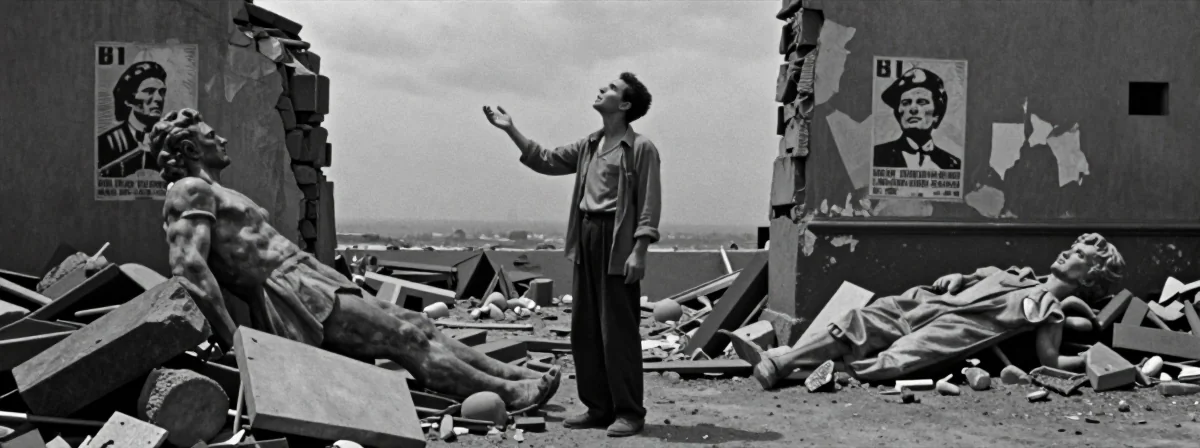
Some think the dust settles after a revolution. It doesn’t. You’re left standing in the wreckage, wondering who gets to keep what. Forget neat handoffs and clear rules — this is where the real world grinds the idealism into dust.
Here’s What Matters
- Governments Change, Promises Fade
It’s a giant mess, plain and simple. Whether your claims under the old regime get honored depends entirely on if the new guys feel like it. Usually, it ends in lawsuits — if the new power even lets you sue. Expect case-by-case chaos. Nazi-looted treasures occasionally surface, but finding the original owners? Good luck with that, especially if they or their heirs are gone. The British Empire’s global theft? Returning stolen artifacts is a nightmare, proving ownership for ancient relics is practically impossible now.
The New Boss’s Rules Are the Only Rules
They could keep the old system running — debts, contracts, the whole nine yards. Or they might offer a clean slate: “Join us, and we’ll wipe your debts.” Or they could go full revolutionary: “Cancel all debts! Break free from your landlords!” There are no guarantees.Law Is Just a Suggestion
International and domestic law might offer principles, but enforcing them fairly? That’s up to the victors. Peace treaties might set up joint commissions or have each side handle its own citizens’ claims. Sometimes, like after the American Revolution, they can’t agree, and people just have to flee or tough it out.History Is Full of Screwed Veterans

Nazi-annexed Belgium men got German army pensions after the war — unless they deserted. African soldiers who fought for Imperial Germany? Nothing when colonies changed hands. It took West Germany until 1968 to pay pensions to elderly Askari, who had to prove service by reassembling weapons. Belgian forced laborers in concentration camps? Decades passed before German companies offered restitution. Confederate bondholders after the Civil War? Told to “eat mud” when their government collapsed. The pattern is clear: you’re lucky if you get anything at all.
- Even Governments Can’t Fix Everything

The Congolese Force Publique became the Congolese army at independence, but payments fell to a struggling Congo. Belgium gave a lump sum to WWII veterans in the 70s — Mobutu’s clan stole it. So they built hospitals instead. Ukraine kept paying pensions in occupied territories to assert sovereignty — until Russia’s full-scale invasion. These aren’t exceptions; they’re the rule.
The Move
Stop expecting fairness after a power shift. The only constant is uncertainty. Your best bet? Assume nothing will go your way and prepare for the worst. Because when the world turns upside down, the only thing you can count on is that you’re on your own.