
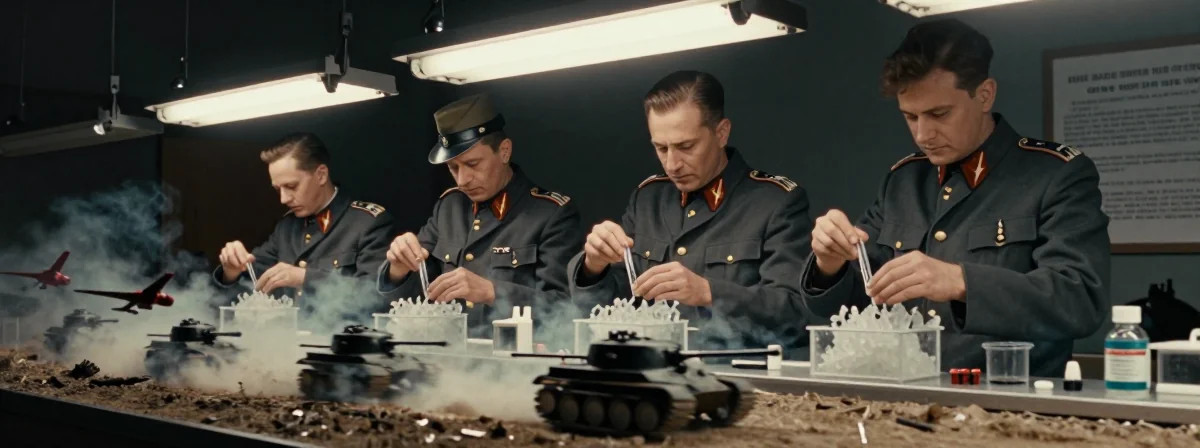
The German invasion of France in 1940 was so swift it defied belief. Within six weeks, Hitler’s forces had shattered Allied defenses and marched into Paris. Generations later, we still marvel at the speed of the Blitzkrieg—but what if the secret weapon wasn’t just strategy or technology? What if it was something far more dangerous, something still legal in pharmacies today?
The evidence suggests that methamphetamine, distributed to German troops under the brand name Pervitin, played a pivotal role in the early war victories. What we can verify is that millions of doses were handed out like candy, turning soldiers into hyper-focused, fearless machines. But this wasn’t without consequences. This remains unconfirmed but debated: Did methamphetamine also erode moral judgment, contributing to the war’s atrocities?
Hitler’s own doctor, Theodor Morell, kept meticulous records of the Führer’s drug regimen. While some claims of Hitler being a “meth tweaker” are exaggerated, there’s strong evidence he was heavily reliant on Oxycodone and bizarre experimental treatments. The truth is murkier than fiction—and far more disturbing.
Did Methamphetamine Create “Super Soldiers” in WWII?
The idea of meth-fueled soldiers sounds like science fiction, but it’s rooted in reality. Pervitin, marketed as a fatigue cure, was distributed to German forces at unprecedented scale. What we know for sure:
- Panzer crews took it to stay awake for days.
- Soldiers reported heightened alertness and reduced fear.
- The drug’s effects mimicked the “superhuman” feats witnessed on the front lines.
But this wasn’t without cost. The evidence suggests that methamphetamine led to recklessness, aggression, and severe crashes. One Finnish soldier, Aimo Koivunen, survived a staggering overdose—consuming an entire patrol’s supply—and skied 400 km through enemy territory with a heart rate of 200 bpm. He survived only because his overclocked meth heart kept him alive in subzero temperatures.
Why Did the Nazis Ban Meth Use by 1941?
It’s a myth that methamphetamine was the sole reason for Blitzkrieg’s success. The strategy’s brilliance lay in speed, surprise, and overwhelming force. However, the drug’s drawbacks became impossible to ignore.
- Health problems scaled with usage.
- Discipline collapsed as troops acted rashly.
- The “crash” after meth wore off left soldiers exhausted and disoriented.
By 1941, the German high command restricted Pervitin, recognizing it was a short-term fix with long-term liabilities. The Allies, meanwhile, experimented with their own stimulants—but found methamphetamine made soldiers feel better without actually improving performance. Some historians argue this is why the Allies never matched Germany’s early-war drug strategy.
The Modern Paradox: Meth Is Still Legal Today
While Pervitin is long gone, its chemical cousin—Desoxyn—remains a prescription drug in the U.S. and elsewhere. What we can verify:
- Doctors prescribe it for ADHD and obesity.
- Its effects are identical to street meth, just regulated.
- The military still uses amphetamines (like Adderall) for pilots and special forces.
This raises a chilling question: Have we learned nothing? The U.S. Air Force, for example, issued amphetamines to pilots until the mid-2000s, when a friendly-fire incident in Afghanistan exposed the risks. Provigil (modafinil) is now used by some ground units, but the cycle of performance-enhancing drugs in warfare continues.
What Does This Reveal About Human Nature?
The story of meth in WWII isn’t just a historical footnote—it’s a mirror. We’re still tempted by shortcuts to strength, focus, and endurance. The evidence suggests that when pushed to extremes, societies will rationalize dangerous solutions. What we can’t ignore is the human cost:
- Soldiers who couldn’t sleep, eat, or think clearly.
- A generation haunted by altered states of consciousness.
- The thin line between innovation and self-destruction.
The next time you hear about a “miracle drug” or a military breakthrough, ask yourself: What’s the real price? The history of methamphetamine in WWII isn’t just about Hitler’s Germany—it’s about the choices we all make when pushed to the edge. And that’s a lesson that never gets old.