
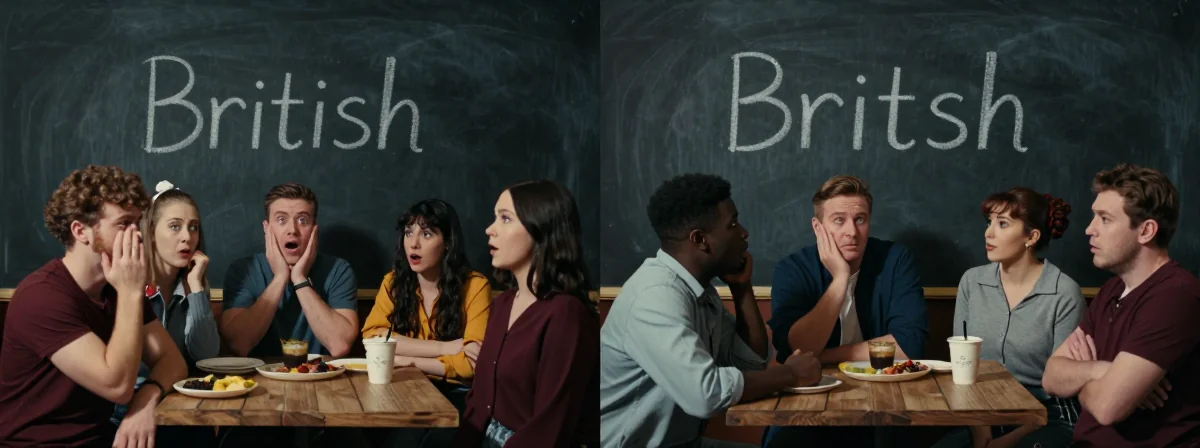
Ever dropped a “bloody” in conversation and felt like you’d just unleashed a curse? If you’re American, you probably haven’t. But in the UK, that same word might earn you a side-eye. The disconnect isn’t just funny—it’s a perfect example of how language systems operate like software patches across cultures. Some words get updated with new meanings, while others remain in beta.
The word “bloody” is a prime case study. To Americans, it’s about as offensive as saying “dang.” To Brits, it’s a mild swear word—though one so normalized that many don’t even register it as profanity anymore. The difference isn’t arbitrary; it’s baked into how each culture’s linguistic “operating system” evolved.
Let’s break down why this matters.
Is “Bloody” Even a Swear Word? The Cultural Divide
The simplest answer: Yes, in the UK and Australia, “bloody” is considered a swear word—but a very mild one. No, in the US, it’s barely a blip on the radar. This isn’t just a “different strokes” thing; it’s rooted in historical usage. “Bloody” originated as a minced oath, a way to avoid saying something more offensive (like referencing Christ’s blood). Over centuries, it softened in the UK while Americans never adopted it as profanity in the first place.
Think of it like software updates. The UK’s linguistic system patched “bloody” into its swear-word registry, while the US system left it in the “miscellaneous” folder. The result? A Brit saying “bloody hell” might feel like dropping an F-bomb to an American, even though the actual impact is closer to saying “shoot.”
Why Americans Find “Bloody” Harmless (But Brits Don’t)
Americans tend to associate profanity with blasphemy or sexual/taboo topics. “Bloody” doesn’t hit those triggers—it’s about violence, which isn’t inherently taboo in US culture. Brits, however, grew up with “bloody” as a go-to expletive, even if it’s now as common as “damn.” The intensity has faded, but the classification remains.
This is like comparing how gamers react to glitches. In one game, a minor visual bug might be ignored; in another, it’s treated as a game-breaking exploit. The underlying code is the same, but the community’s perception dictates the severity.
The Surprising History: When “Bloody” Was the Ultimate Insult
Before it softened, “bloody” was extremely offensive. In Shakespearean England, using “bloody” could get you fined or even arrested—it was seen as a blasphemous reference to Christ’s blood. Over time, as with many swear words, its shock value diluted. But the UK’s linguistic system retained its “swear word” flag, while the US system never bothered to add it.
This is like an old programming convention that gets carried forward even after its original purpose is obsolete. The word didn’t change; the cultural context did.
How Regional Swears Create Social Landmines
The “bloody” divide isn’t unique. Americans might use “goddamn” casually, while some religious communities find it deeply offensive. Australians might say “fuck me dead” with zero malice, but an American workplace would implode. These aren’t moral failings—they’re system mismatches.
Imagine trying to run Windows software on a Mac without a compatibility layer. The words are the same, but the operating systems interpret them differently. The only way to avoid crashes is to learn the local “drivers.”
When “Mild” Swears Become Cultural Identity
For Brits, using “bloody” can be a subtle marker of cultural identity. It’s like wearing a team jersey without saying a word. Americans might use “bloody” ironically, as a nod to British culture, but it rarely carries the same weight. This is why a Brit might apologize for saying “bloody” in front of an American—they’re operating on different cultural protocols.
It’s the linguistic equivalent of wearing flip-flops to a formal event. You’re not breaking any universal rules, but you’re violating the local dress code.
The Ultimate Lesson: Words Are Just Data, Context Is the Compiler
At the end of the day, “bloody” isn’t inherently good or bad—it’s just a string of characters. Its meaning is determined by the cultural compiler reading it. The real insight? The most “offensive” words are those that trigger a system mismatch. A Brit saying “bloody” to an American isn’t being intentionally rude—they’re just using a word that the American system doesn’t flag as problematic.
The next time you encounter a word that feels “wrong” in a certain context, remember: you’re not just dealing with the word itself. You’re dealing with the entire system that interprets it. And that system is different everywhere.