
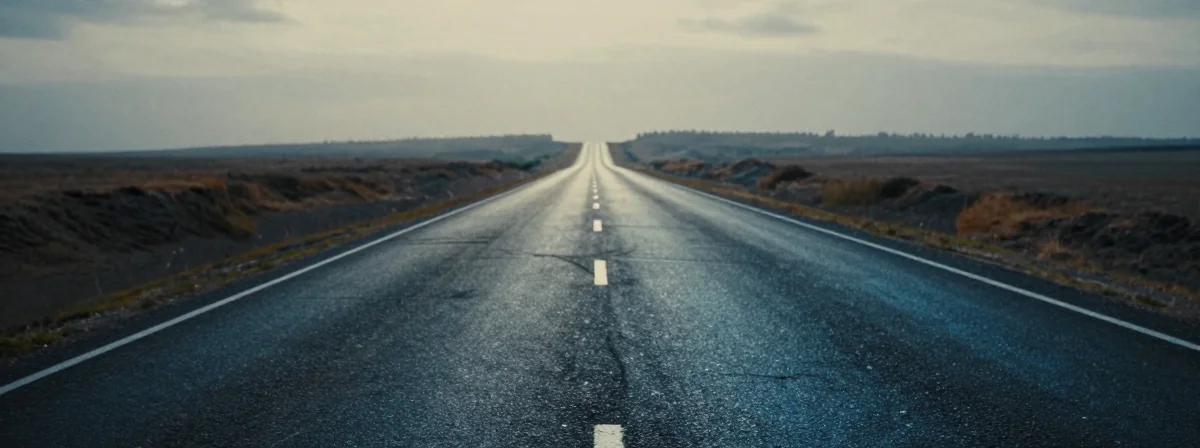
Have you ever stared down a highway on a scorching day, only to see what looks like a shimmering pool of water ahead? You slow down, expecting relief, but as you get closer—it vanishes! What’s happening here isn’t magic, but something far more fascinating. It’s the way light behaves in extreme heat, and it’s rewriting the rules of what we see.
This isn’t just about heat haze—it’s about how the air itself becomes a lens, bending light in ways that trick your brain into seeing things that aren’t there. Think about it: the sky is blue, the road is dry, but your eyes are playing tricks on you. It all makes sense now!
Scientists have known for ages that temperature changes air density, but the sheer elegance of how this creates mirages is mind-blowing. Let’s break down the secrets behind those shimmering blue roads.
Why Does Light Bend in the First Place?
Light doesn’t always travel in a straight line. When it moves through air of different temperatures, its path curves. Cooler air is denser, so light slows down; hotter air is thinner, so light speeds up. In extreme heat—like over a sunbaked road—the hot air near the ground creates a layer that acts like a lens. The cooler air above it bends light upward, reflecting the blue sky onto the road.
It’s like looking at a straw in a glass of water: the straw looks bent because light changes speed when it hits the water. Here, the “water” is just layers of air with different temperatures. What if I told you that every shimmer you see isn’t just heat—it’s light being physically manipulated by the air itself?
Mirages Aren’t Water—They’re Sky Reflections
When you see that “puddle” on the road, you’re actually seeing the sky! The hot air above the road bends sunlight upward, reflecting the blue sky onto the ground. Your brain, expecting a straight line of sight, interprets this as water because that’s the most logical explanation. But it’s not water at all—it’s light being redirected like a mirror.
This is why mirages often look like distant oases. The brain’s pattern recognition kicks in, and suddenly, a trick of light becomes a vision of relief. It’s nature’s ultimate prank, and we fall for it every time.
Your Brain Is the Ultimate Deceiver
Here’s the kicker: the distortion isn’t just visual—it’s perceptual. Light gets bent, absorbed, and shifted as it travels through turbulent air, creating a smeared, rippling effect. Your brain tries to make sense of this chaos by assuming the light is coming from where you’re looking, even though it’s not.
That’s why mirages look like wavy water—they’re the brain’s best guess at interpreting bent light. It’s not that the light is faulty; it’s that your perception is doing all the heavy lifting. Think about it: you’re seeing the sky’s reflection, but your mind insists it’s water. Talk about a mind-bender!
The Physics of a “Puddle” That Never Was
Mirages happen when the temperature difference between ground-level air and the air above is extreme. Heat expands air, making it less dense. When light rays hit this boundary, they bend—just like they would when passing through water. If the bend is sharp enough, it can reflect light like a mirror, creating that illusory pool.
This isn’t just theory; it’s observable physics. The next time you see a mirage, remember: you’re witnessing light being physically altered by the air. It’s like a natural lens, shaping reality in ways we barely notice.
Why We Keep Falling for the Same Trick
Humans have been seeing mirages for millennia, yet we still mistake them for water. Why? Because evolution wired us to recognize patterns quickly. A shimmering blue surface? That’s water, right? Our brains take shortcuts, and sometimes those shortcuts lead us astray.
But here’s the amazing part: even though we’re being tricked, the physics behind it is pure genius. The air isn’t just hot—it’s acting as a medium that manipulates light in ways we’re only beginning to fully appreciate.
The Next Time You See a Mirage, See It Differently
So the next time you’re driving and see that “water” ahead, don’t just dismiss it. Look closer. See the ripples, the distortions, the way the blue seems almost solid. You’re not seeing water—you’re seeing the sky, bent and twisted by the air.
It’s a reminder that reality is far more complex than it seems. Light, air, and perception all dance together to create something that isn’t quite what it appears. And that, my friend, is the true magic of the world.