
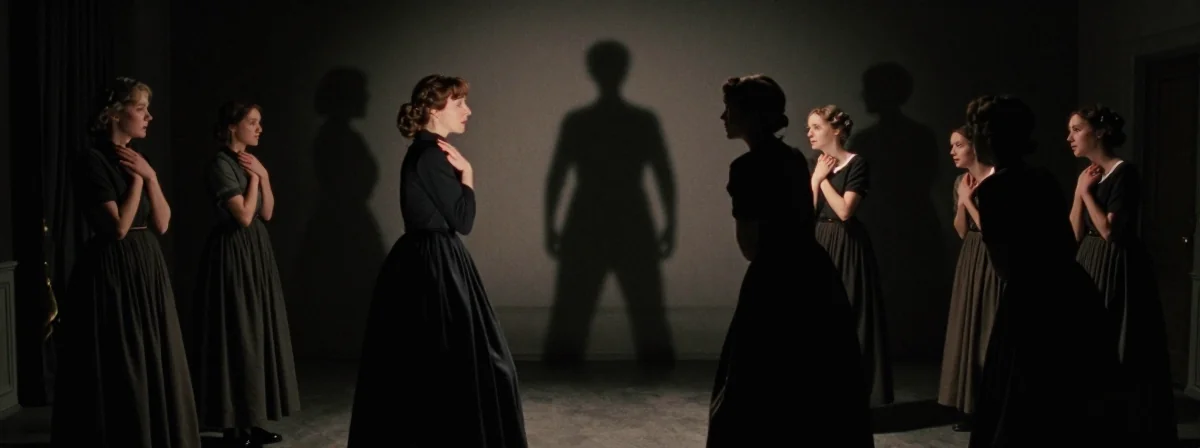
Some relationships are just… off. Like, “creepily off” off. We’re talking about Adolf Hitler and the women in his life, where the line between obsession and control blurs into something truly disturbing. Forget the grand speeches and military strategies for a moment — let’s talk about the personal side of history’s most infamous dictator, because it reveals something chilling about his character.
What Research Shows
- A Pattern of Pain: Suicide Attempts Follow Hitler Like a Shadow

Hitler had a knack for attracting women who ended up harming themselves. His half-niece Geli Raubal died by suicide in 1931, likely with his own pistol. Then there was Eva Braun, who attempted suicide twice during their early relationship. And don’t forget Unity Mitford, another admirer who shot herself when war was declared. It’s not a coincidence — it’s a pattern that speaks volumes about the toxic dynamic at play.
- The 19-Year-Old Who Couldn’t Escape

Eva Braun met Hitler when she was just 17, and they started dating two years later when she was 19. Their relationship began after Geli Raubal’s death, and it quickly became intense. But beneath the surface, Braun was desperate for Hitler’s attention. Her first suicide attempt in 1932 — shooting herself in the chest — wasn’t the last. A few years later, she overdosed on sleeping pills when Hitler ignored her. Each attempt was a cry for help in a relationship where she had little power.
“Not Serious”? Maybe Just Misunderstood Historians often dismiss Braun’s first attempt as “not serious,” suggesting it was just a bid for attention. But here’s the thing: shooting yourself in the chest with a pistol isn’t exactly a walk in the park, even with older firearms. Maybe she didn’t know exactly how to end her life effectively — after all, you don’t need Google in the 1930s. Or perhaps, as some suggest, there was more to it than a simple plea for attention. Her sister even hid parts of her diary around the time of the attempt. Sometimes, the simplest explanations aren’t the whole story.
From Shot in the Chest to Sleeping Pills Braun’s methods evolved over time. The first attempt was violent and immediate — a gunshot to the chest. The second, years later, was a quiet overdose of sleeping pills. The shift is telling. Maybe the initial attempt was a true cry for help, while the later one was more calculated, a way to signal her distress without crossing the line into certain death. Either way, it shows a woman trapped in a relationship with a man who demanded everything and gave little in return.
Unity Mitford: The Attempt That Lingered Hitler’s circle of troubled admirers included Unity Mitford, a British aristocrat who was utterly devoted to him. When war was declared in 1939, Mitford shot herself in the head with a pistol Hitler had given her. Unlike Braun, she didn’t survive. The gunshot wound led to long-term health issues, and she died two years later. In a twisted way, Mitford’s attempt was more final — a true statement of her devotion, or perhaps her inability to live without the man she idolized.
Geli Raubal: The First Break Before Eva Braun and Unity Mitford, there was Geli Raubal. Hitler’s half-niece, she lived with him in Munich and was, by many accounts, the great love of his life. Their relationship was intense and complicated, and on September 18, 1931, Raubal was found dead in Hitler’s apartment, shot through the chest with his own pistol. Hitler was away at the time, but the loss devastated him. Some say her death freed him to pursue other relationships, including the one with Braun. It’s a dark irony: one woman’s death paved the way for another’s entanglement.
The Grooming That Never Ends Hitler’s relationships with these women, especially the younger ones, raise uncomfortable questions about power dynamics. Braun was just 17 when she first met him, and their relationship began when she was barely legal. It wasn’t just a case of an older man dating a younger woman — it was a dictator leveraging his influence over someone with far less power. The grooming wasn’t just physical; it was emotional and psychological, trapping these women in a cycle of devotion and desperation.
Maurice: The One Who Got Away Not all of Hitler’s connections ended tragically. His nephew, William Patrick Hitler, had a son named Alexander Adolf Hitler (often called “Maurice”). Maurice had Jewish ancestry, which Hitler initially tried to hide. Despite this, Hitler made Maurice and his family “honorary Aryans” and even allowed Maurice to join the SS. It’s a bizarre footnote in history — Hitler protecting his own bloodline, even with its Jewish ties. Maurice, it seems, got out relatively unscathed compared to the women who loved his uncle.
“Some people call me Maurice, Cause I speak of the Totenkopf of love…” That line, a playful take on a famous song, sums up the absurdity of Maurice’s situation. Here was a man connected to one of history’s most evil figures, yet he managed to carve out a life that wasn’t defined by tragedy. It’s a reminder that even in the darkest chapters of history, there are moments of unexpected humanity — or at least, moments that don’t end in heartbreak.
The Unspoken Truth About Hitler’s Personal Life When we think about Hitler, we think about genocide, war, and tyranny. But his personal life reveals another layer to his character — one that was just as controlling and destructive, albeit on a smaller scale. The women in his life weren’t just romantic interests; they were victims of his need for control and admiration. Their desperate acts weren’t just personal tragedies; they were symptoms of a larger pattern of manipulation. And until we acknowledge that, we’re only seeing half the picture of who Hitler really was.
The more you dig into Hitler’s personal life, the clearer it becomes: the man who orchestrated mass murder was also capable of destroying individual lives in more subtle ways. His relationships weren’t just affairs — they were experiments in power, where he played the role of god and his partners were mere subjects. And the tragic ends they often met? They weren’t accidents. They were the inevitable result of loving a man who could never love anyone back.