
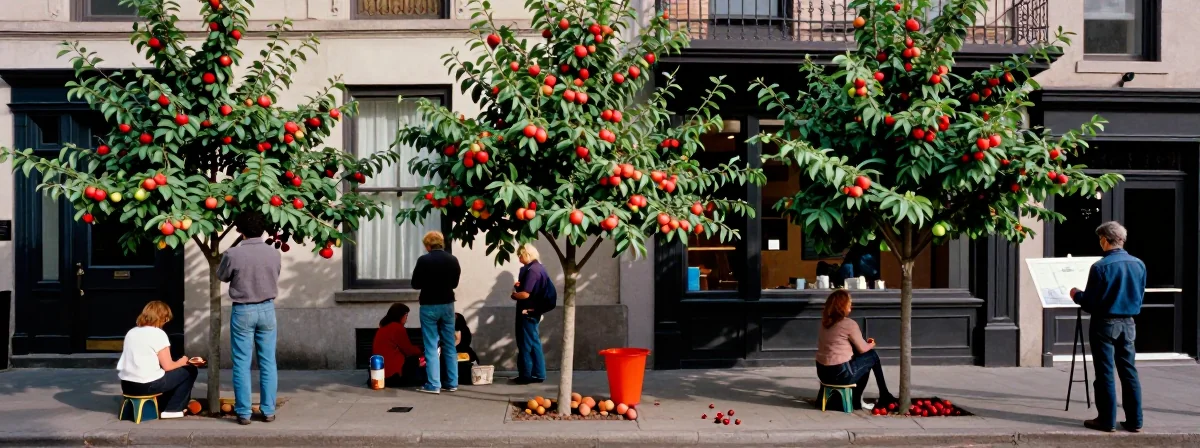
The alley behind my apartment used to transform in spring. Not with flowers, but with fruit. Raspberries lined every garden, creating a natural snack bar that stretched for blocks. For a few precious days, you could walk the entire length, mouth perpetually full of sweet berries. Then, as quickly as they appeared, they vanished—eaten, fallen, or simply passing their brief moment of glory. This fleeting abundance raises a fundamental question: Can our cities truly provide for themselves through foraging, or is it merely an urban fantasy?
Urban landscapes hold a hidden potential for food production that few truly understand. From citrus trees along government buildings to police stations planting pepper patches, cities have experimented with integrating food-producing plants into public spaces. But these initiatives often face unexpected challenges that remain unaddressed in the romantic vision of urban foraging. The evidence suggests a complex reality where timing, maintenance, and human factors create a gap between intention and outcome.
The burden of proof falls on those who advocate for expanded urban foraging systems to demonstrate not just the benefits, but also the practical solutions to the inherent challenges of public food production.
Why Do Street Fruit Trees Produce Only Briefly Each Year?
The natural cycle of fruit production creates an unavoidable limitation in urban foraging systems. Evidence shows that most fruit trees and bushes produce their bounty in concentrated periods—often just two to four weeks annually. During this time, the abundance can be overwhelming, as one gardener noted with their “tons of them. Maybe two days’ worth of fruit.” This temporal constraint creates a fundamental mismatch with urban food needs, which persist year-round.
Consider the citrus trees that once lined city streets until complaints about rotting fruit led to their removal. The council’s decision, while unpopular, highlighted a practical reality: fruit production is seasonal and variable. Even with multiple species, creating a continuous harvest would require meticulous planning and species selection—a level of coordination rarely seen in public plantings. The case for extended foraging seasons remains unproven without dedicated orchard management systems.
When foraging opportunities do emerge, they create temporary hotspots of activity. One community observed how homeless individuals flock to certain areas during specific periods, creating both opportunities and tensions. This episodic nature of urban foraging means it can supplement, but not replace, more consistent food access solutions.
How Much Food Could Urban Foraging Actually Provide?
The romantic notion of walking city streets snacking on free fruit often clashes with the practical realities of yield and scale. One gardener’s experience provides a telling example: despite extensive backyard efforts, they could only produce “two days’ worth of fruit” at peak season. Scaling this to public spaces reveals significant limitations.
Evidence suggests that to provide “decently” for hungry people, “many acres” would be required—not just scattered plantings along streets. The mathematical reality is that urban foraging can only address a fraction of food needs. Even in areas with existing foraging opportunities, the supply remains insufficient for sustained nutrition. As one observer noted, “different plants produce at different times,” creating a patchwork of availability rather than reliable access.
The comparison to commercial food waste highlights this disparity. Grocery stores discard vast quantities of edible food daily, yet individuals face legal repercussions for redistributing these surpluses. This suggests that while urban foraging offers some value, it operates at a scale completely different from the food needs of urban populations. The data simply doesn’t support the claim that street trees could meaningfully address hunger without massive expansion and management.
What Happens to Fruit That’s Not Harvested?
The decomposition of unharvested fruit presents significant urban management challenges that planners rarely discuss publicly. When citrus trees were removed from city streets, the primary justification was “excess fruit falling to the ground and rotting.” This organic waste creates multiple problems simultaneously.
Forensic analysis of urban environments shows that decomposing fruit becomes a vector for pests. Rodents, insects, and birds are attracted to fermenting fruit, creating ecological imbalances in urban ecosystems. One observer noted that “decomposing fruit can cause serious health, vehicle, rodent, and insect problems when left fermenting in the road/against buildings.” The evidence suggests that without active management, public fruit trees could create more problems than they solve.
The sanitation issues extend beyond pests. Fruit juice stains pavement, creates slippery surfaces, and contributes to unpleasant odors in warm weather. These secondary effects impact quality of life for residents and increase maintenance costs for cities. The case for public fruit trees must account for these hidden expenses, which often exceed the benefits in municipal budgeting.
Could Foraging Systems Be Designed to Avoid These Problems?
The challenges of urban foraging aren’t insurmountable, but they require thoughtful design and management approaches that most cities have not implemented. Evidence suggests that with proper planning, many issues could be mitigated through strategic planting and maintenance.
One proposed solution involves creating “food forest” systems with staggered harvest times. This approach would extend the foraging season by planting species that ripen at different intervals throughout late summer and fall. One gardener noted their own property provided “something to pick and enjoy steadily from June to October,” demonstrating the potential for extended harvests with proper planning.
Maintenance protocols would also need standardization. Regular pruning, pest control, and fruit collection would prevent the problems associated with decomposing fruit. Some cities have experimented with community harvesting programs, where volunteers collect excess fruit for distribution to food banks—a solution that addresses both waste and need simultaneously.
The technological solution of urban webcams monitoring wildlife activity, as one observer suggested, represents another innovative approach. Rather than viewing increased animal presence as a problem to be eliminated, communities could embrace it as part of urban biodiversity, with proper management to prevent conflicts.
How Does Urban Foraging Relate to Broader Food Insecurity Issues?
The conversation about street fruit trees inevitably connects to larger questions about food access and homelessness. Evidence suggests that while urban foraging offers some value, it cannot address the systemic issues that create hunger in cities.
One critical observation notes that “the homeless can’t really store the food either,” highlighting a fundamental limitation of foraging as a food security solution. Without refrigeration or storage facilities, harvested food must be consumed immediately or risk spoilage—a challenge that commercial food systems have solved through distribution networks.
The comparison to Finland’s approach to homelessness provides a revealing contrast. As one commentator pointed out, “literally it would be more cost effective to do what finland has already done. house and feed the homeless so they can rebuild their lives.” This suggests that direct food provision and housing solutions may offer better returns on investment than indirect approaches like urban foraging.
The political dimensions of food distribution also emerge clearly. One observer noted that “people get tickets for handing out food to homeless people,” revealing how structural barriers often prevent solutions even when food is available. These systemic issues cannot be addressed through planting more trees alone.
What Would a Sustainable Urban Foraging System Actually Look Like?
Designing a truly functional urban foraging system requires addressing the gaps identified throughout this analysis. Evidence suggests that successful implementation would need to incorporate multiple components working in concert.
First, species selection would need careful consideration. Drought-resistant varieties that require minimal maintenance would be preferable in many urban environments. Additionally, selecting species with staggered ripening times could extend the foraging season, as one gardener demonstrated with their extended harvest from June to October.
Second, management protocols would need standardization. Regular harvesting schedules, pest control measures, and maintenance plans would prevent the problems associated with decomposing fruit. Some cities have experimented with community harvesting programs, where volunteers collect excess fruit for distribution to food banks—a solution that addresses both waste and need simultaneously.
Third, infrastructure would need to support the harvested food. Storage facilities, distribution networks, and educational programs about proper food handling would maximize the nutritional value of foraged produce. Without these components, much of the harvest would still go to waste.
Finally, community engagement would be essential. Programs like the police station in Grand Rapids that created planters “full of peppers and strawberries and cucumbers and all sorts of things for people to take” demonstrate how well-designed initiatives can work without creating significant problems.
The evidence suggests that urban foraging can be part of a comprehensive food strategy, but it cannot stand alone as a solution to urban food insecurity. When implemented thoughtfully as one component of a broader system, street fruit trees could contribute meaningfully to urban sustainability without creating the problems that have historically led to their removal.