
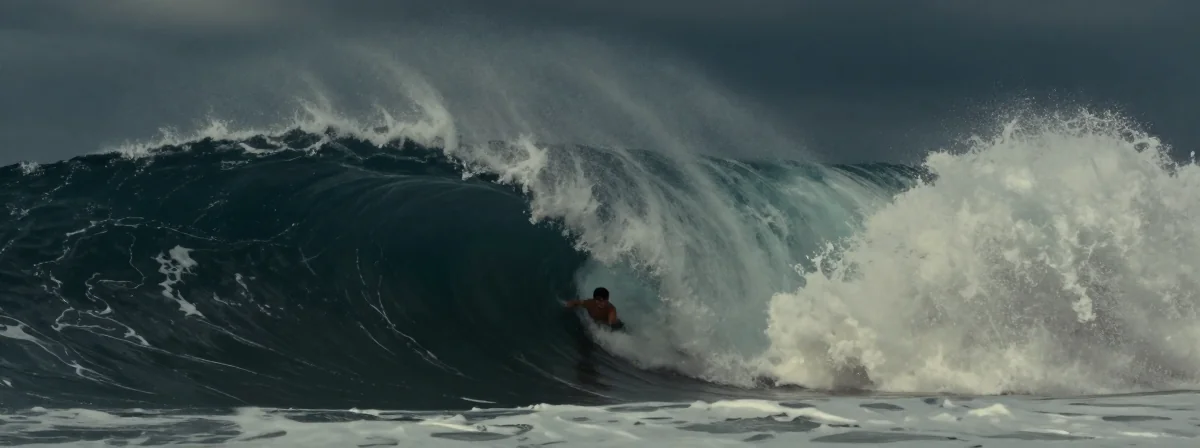
Some days you’re just walking along, maybe splashing in the waves, and then it hits you—the ocean is not your friend. It’s a 326 million trillion tons of liquid indifference, and it could end you in a million ways you haven’t even imagined. We spend our lives looking at the surface, but the truth is down there, waiting. Let’s talk about what’s really in those dark waters.
Spec Check
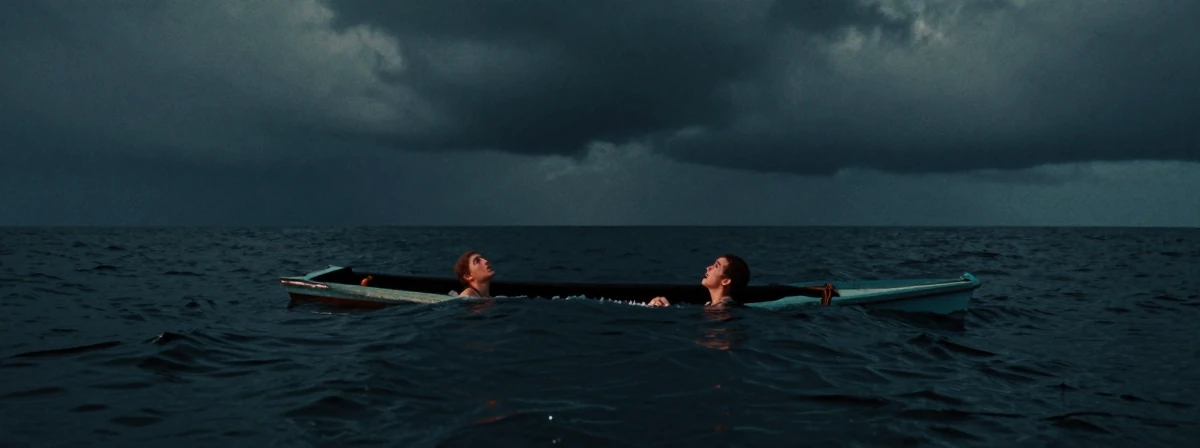
- Rogue holes are worse than rogue waves. You’ve heard of rogue waves—those towering monsters that come out of nowhere. But what about the opposite? A “rogue hole” is a sudden, massive void in the ocean that swallows boats whole. Johnny Savage’s 56-foot boat was destroyed instantly when he hit one, leaving him and his captain in the water with no time to even call for help. Imagine the terror of seeing the ocean just… disappear ahead of you. That’s not a wave coming at you—it’s the ocean deciding to eat your boat.
The ocean is life’s original birthplace—and it keeps spawning new life. Those deep-sea vents, the ones with the bone worms? They’re not just weird. They might be where life on Earth first began—and they’re still creating life in brand-new places. The vents spew minerals and heat, creating ecosystems from scratch in the deepest, darkest parts of the ocean. It’s like the Earth is constantly trying to invent life all over again, just to keep us on our toes.
You’re swimming in a bacterial soup. Every time you take a dip, you’re moving through billions of cells per teaspoon. And we’re not talking friendly bacteria—this is a microbial free-for-all, with hundreds of millions of viruses actively bursting open microbes around you. It’s the ocean’s own immune system, and you’re right in the middle of it. Don’t worry about sharks—worry about what’s too small to see.
Point Nemo is the loneliest place on Earth. It’s not an island, just a GPS coordinate in the South Pacific. The nearest human? On the International Space Station. When you’re at Point Nemo, you’re farther from civilization than anywhere else on the planet. It’s the ocean’s middle finger to human ambition—no matter how far we go, there’s always somewhere more remote.
The ocean is darker than you can imagine. Ninety percent of it gets zero sunlight, ever. We’ve explored more of the moon than this pitch-black abyss. Down there, entire ecosystems exist in complete darkness, and we’ve barely seen them. It’s the ultimate unknown—and it’s right here, covering more than 70% of our planet.
The 52 Blue whale: the loneliest voice in the ocean. This whale has never been seen, only heard. It calls at 52 hertz—a frequency no other known whale uses. Scientists call it the “loneliest whale,” assuming no other whale can hear or understand it. Maybe it’s just a weirdo with a high-pitched voice, maybe it’s something else entirely. Either way, it’s out there, singing into the void, and we have no idea what it is.
The ocean’s brine pools are death traps. Somewhere in the deep sea, there are lakes of super-salty water so dense they don’t mix with the surrounding ocean. Fish and other creatures that wander in just… die. It’s like a natural kill zone, surrounded by dead bodies. And there’s not just one—there are dozens of these brine pools, each one a reminder that the ocean doesn’t play by our rules.
The dinosaur extinction created waves taller than the Titanic’s wreck. When that asteroid hit 66 million years ago, it caused a megatsunami over 330 feet tall. But here’s the scary part: that was in relatively shallow water. If it had hit the deep sea, the wave could have been nearly 3 miles tall. Imagine that—waves so huge they’d make the ocean itself look small. It’s the kind of power that makes you realize how insignificant we really are.
You can’t outrun the ocean’s pressure. At 1,000 feet, the pressure will collapse your lungs. At 20,000 feet, your body just stops working. Even with diving gear, the deep sea is a death trap. Decompression sickness, crushing pressure, the sheer darkness—it’s no wonder we’ve barely scratched the surface. The ocean doesn’t just want to kill you; it’s built to do it in a thousand different ways.
Bottom Line
The ocean is the ultimate reminder that we’re not in charge. It’s bigger, older, and far more creative at killing than we’ll ever be at surviving. Every time you see the waves, remember—there’s a whole other world down there, and it doesn’t care about you at all. Maybe that’s the scariest part.