
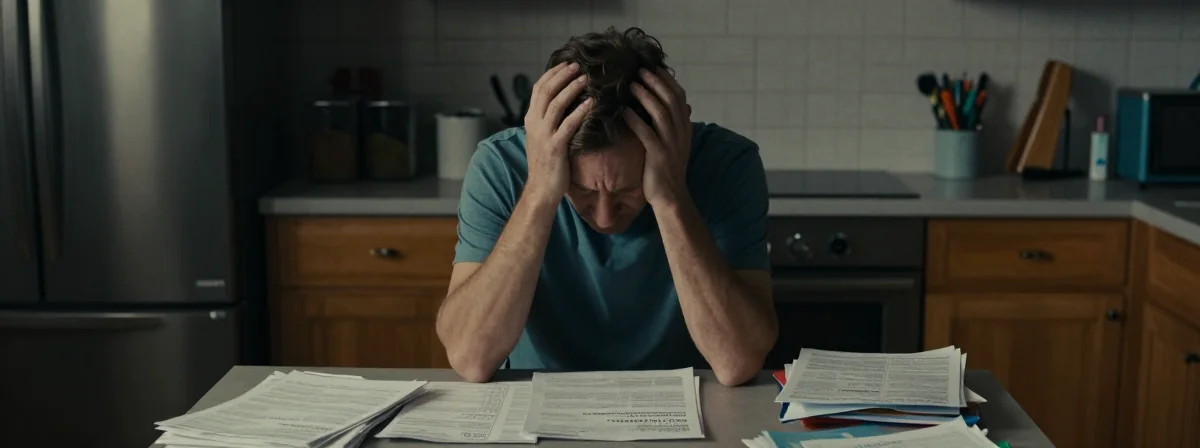
Some days, you open your mail and find a letter that feels like a physical blow. That’s what happened to my coworker last week when he learned his wages were being garnished for a medical bill from 2008. The system we live in has a way of turning yesterday’s mistakes into today’s crises. And if you think you can just ignore those hospital bills, you might be in for a rude awakening.
The Narrative
The Rule That Wasn’t a Rule Anymore
Remember when medical debt wasn’t supposed to count against your credit score? That was a brief, beautiful lie. In 2025, the rule got overturned, and suddenly, those old bills that you thought were ancient history could resurface like ghosts. It’s like the government said, “Just kidding—we changed our minds.” And you’re left wondering who’s really in charge here.The Older Gentleman and the Garnished Wages

My coworker is a kind soul, a little slow to catch on to things, which is why he didn’t realize the seriousness of the court notice he received. His mother used to handle all the complicated stuff, but now she’s in her 90s and can’t help anymore. The system didn’t care about his circumstances—it just took what was owed, plus interest, plus the cost of collection. It’s a cold, mechanical process that forgets humans are involved.
The $100 Bill That Haunted My Credit
I still remember the day I saw that $100 medical bill from my childhood appear on my credit report. My guardian had fought with the insurance company for months, arguing it should have been covered. When it wasn’t, they refused to pay. For years, I couldn’t figure out why I kept getting rejected for credit cards. It wasn’t until I saw that tiny bill that I understood. The worst part? I had no idea how to fight it. I was just a kid trying to grow up.The 2025 Court Ruling That Changed Everything
Some debts used to have a statute of limitations, a legal cutoff after which they couldn’t be collected. Not anymore. The 2025 ruling abolished some federal protections, meaning old bills can suddenly appear out of nowhere. That’s why most people pay them or negotiate them instead of ignoring them. The system has a way of catching up.The Child’s Condition and the Hospital’s Ultimatum

Imagine this: your child has a health condition, and the hospital tells you, “Pay up or we won’t see them anymore.” It’s not a one-time issue—it’s a lifelong condition. Not paying isn’t an option if you actually want your child to get care. The system forces you into a corner, and the only way out is to play by its rules, even when they feel unjust.
The States That Still Protect You (For Now)
Fifteen states still prevent medical debt from affecting your credit score, but that’s a minority. The federal rule might be gone, but some states are fighting back. If you live in one of those places, consider yourself lucky—for now. The tide could turn again, and you might find yourself in the same boat as everyone else.The Hospital That Turned Debt Into a Loan
I once owed $4,000 from surgery. The hospital didn’t just send it to collections—they sold it to a bank, which made it like a loan. Every month, I had to pay, and if I was late, there was a late fee—and they’d report it to the credit bureau. It was legal. It was predatory. And it felt like I was being punished for needing healthcare in the first place.The Mortgage Broker Who Said ‘Fuck It’
I know someone who worked as a mortgage broker straight out of college and discovered that your credit isn’t affected by medical bills. So they decided not to pay them. Over the years, it saved them around $100k. Their bottom line? “Our healthcare system SUCKS and needs a complete overhaul.” They’re right. But what happens when the system catches up to them? Will they be able to afford care then?The Richest Nation, the Sickest People
We’re the richest nation in history, yet we can’t provide free healthcare and education to everyone. Everything is about money. We have the resources to feed and house the homeless, but we don’t because there’s no profit in it. If we could monetize the homeless problem, we’d solve it overnight. That’s the twisted logic we live with.The Unspoken Consequences of Not Paying
Not paying medical bills isn’t just about credit scores. It’s about being blacklisted from certain healthcare providers, about being turned away for routine care, about having to drive hours to see a doctor because local facilities won’t take you. It’s about the quiet, systemic ways the system punishes you for needing help.
The next time you get a medical bill you can’t afford, remember this: the system is designed to make you pay, no matter what. It’s a game you can’t win by playing by your own rules. The only question is whether you’ll bend to its will or keep fighting—and what that fight will cost you.