
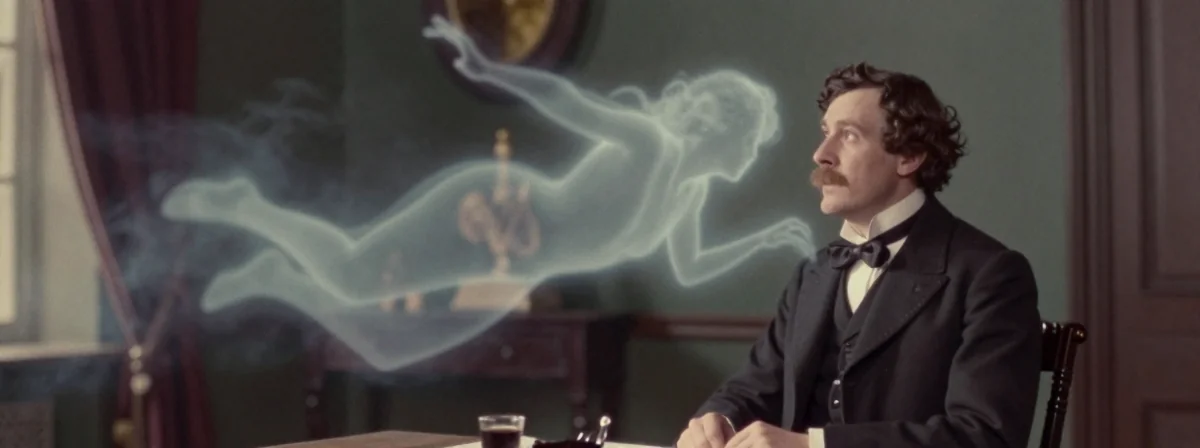
Ever wonder how the ghosts in Disneyland’s Haunted Mansion seem to float or how Tupac appeared at Coachella? The secret isn’t advanced holograms or reanimated corpses—it’s a 160-year-old trick so simple it’s almost insulting. Yet, it’s still baffling audiences today. The pattern here is clear: what the data shows is that we’re still falling for the same illusion, just with shinier names.
This isn’t about fancy optics or cutting-edge engineering. It’s about understanding how a single sheet of glass can make the impossible seem real. The anomaly suggests that even in 2026, we’re still romanticizing ancient magic as futuristic tech. Let’s break down how this works—and why you’ve likely seen it without realizing it.
How Does Pepper’s Ghost Actually Work?
The trick, originally called the “Dircksian Phantasmagoria” (invented by British engineer Henry Dircks in 1862), uses a transparent sheet of glass or acrylic placed at a 45-degree angle. On one side, you have a hidden stage with actors, props, or even pre-recorded scenes. On the other side, you see the main performance. The glass reflects the hidden scene while remaining nearly invisible to the audience.
What the data shows is that the reflection appears to float in mid-air, creating the illusion of a ghost, a hologram, or even a resurrected performer. The key insight? It’s not about the image itself but how the audience perceives it. This is why the Haunted Mansion’s ghosts seem to interact with the scene—they’re reflections of actors in a hidden room. The technology wasn’t about reanimating dead people; it was about exploiting human perception.
Why Do We Still Call It a Hologram?
The term “hologram” has become a buzzword for anything that looks three-dimensional and projected. But engineers will tell you: 99% of what’s called a hologram today is just Pepper’s Ghost. The Haunted Mansion, Tupac’s performance, and even the ABBA Voyage show all use the same principle. The pattern here is marketing—calling it a hologram makes it sound futuristic, even though the tech is older than the phonograph.
This isn’t just about semantics. The illusion works because we’ve been conditioned to believe “hologram” means advanced, otherworldly tech. When you see a “hologram,” you’re not expecting smoke and mirrors—you’re expecting photons and force fields. The counterintuitive point? The simpler the trick, the harder it is to spot. That’s why even tech-savvy audiences fall for it.
The Haunted Mansion: A Case Study in Illusion
Disneyland’s Haunted Mansion is the perfect example of Pepper’s Ghost in action. The ghosts you see aren’t floating; they’re reflections of actors in a room below the ballroom. The glass is floor-to-ceiling, but because it’s angled just right, you don’t notice it. The trick is older than the Mansion itself, yet it still creates a spine-tingling effect.
What’s fascinating is how the illusion evolves. Early versions required perfect lighting and positioning. Modern implementations, like the ABBA Voyage show, add motion capture and live performers to enhance the effect. But the core remains the same: a reflection, not a projection. This is why the Haunted Mansion’s ghosts look so lifelike—they’re real actors, just hidden.
Beyond Ghosts: Modern Applications of an Ancient Trick
Pepper’s Ghost isn’t just for haunted houses. It’s used in concerts, museums, and even phone “holograms” (the viral phone trick where you place a video over a pyramid of mirrors). The pattern here is versatility—the same principle works whether you’re projecting a ghost, a musician, or a dancing Hatsune Miku.
Even phone teleprompters use a similar concept, reflecting text so speakers can read without looking down. The illusion is so ingrained in our tech that we’ve normalized it. The unexpected insight? The “hologram” you saw at Coachella or in a music video is likely just a high-budget version of the same Victorian trick.
The Future of Illusion: When Tech Meets Tradition
While true holograms (volumetric projections) are emerging, Pepper’s Ghost remains a go-to for immersive experiences. The ABBA Voyage show, for instance, combines motion capture with the illusion to create lifelike projections of the band. The trick is older than the band itself, yet it still feels revolutionary.
What the data shows is that we’re drawn to illusions that feel both nostalgic and futuristic. The Haunted Mansion’s ghosts evoke Victorian horror, while modern “holograms” promise sci-fi magic. The key takeaway? The best illusions are those that blend old and new, making us question what’s real.
The Single Idea That Makes It All Click
The Victorian trick that makes ghosts appear isn’t about advanced tech—it’s about understanding perception. What the data shows is that we’re still mesmerized by reflections, not projections. The next time you see a “hologram,” pause and ask: Is it really a hologram, or just a ghost in a sheet? The answer might surprise you.