
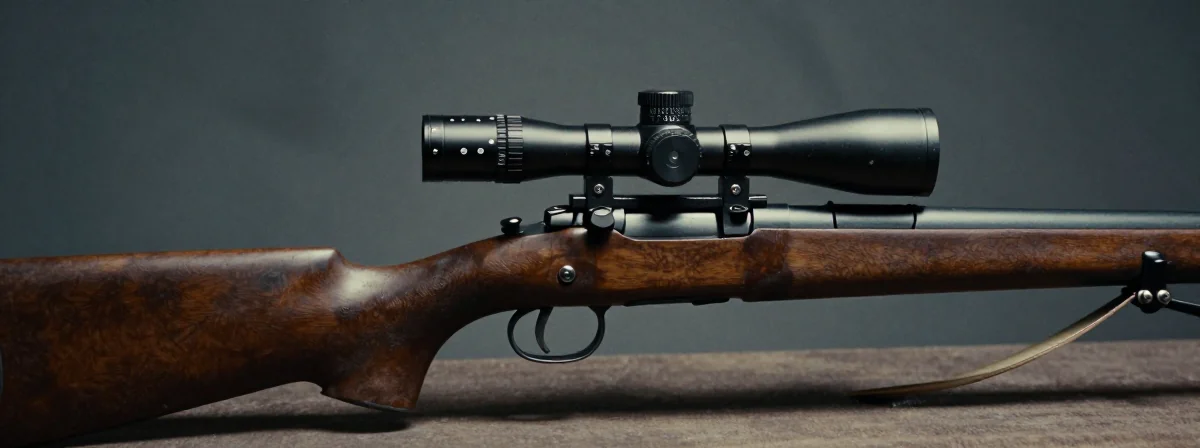
Ever heard the story of General John Sedgwick’s last words? “They couldn’t hit an elephant at this distance,” he supposedly said before a Confederate sharpshooter proved him wrong with a single, fatal shot. The rifle that took his life wasn’t just any firearm—it was a Whitworth rifle, a marvel of 19th-century engineering that still leaves experts in awe. But its legacy goes far beyond that tragic moment.
The Whitworth rifle wasn’t just deadly; it was a blueprint for innovation. From its unmatched accuracy to the manufacturing techniques it pioneered, this rifle changed the game in ways that still echo in modern technology. Let’s unpack why this Civil War-era weapon remains a topic of fascination for engineers, historians, and gun enthusiasts alike.
Could a Rifle from the 1860s Really Hit a Target from 1,000 Yards?
Today, long-range shooting is a niche sport. Back in the 1860s, it was a revelation. The Whitworth rifle, with its hexagonal barrel and precision scope, could hit targets smaller than two feet wide from over 1,000 yards—far beyond what Union soldiers believed possible. The Confederates knew it, which is why they used it to devastating effect.
What made it so accurate? The answer lies in polygonal rifling. Unlike traditional grooves, the Whitworth barrel had a six-sided bore that spun the bullet with incredible consistency. This design minimized air resistance and ensured the bullet maintained its trajectory over extreme distances. Modern firearms like the Glock still use polygonal rifling, proving that some ideas are timeless.
Why Did the Union Underestimate Confederate Rifles?
The Union thought Confederate rifles were reliable only up to 500 yards. They had no idea some sharpshooters were using Whitworth rifles to pick off targets from twice that distance. This miscalculation wasn’t just a tactical blunder—it was a failure of imagination. The Confederates, with fewer resources, leveraged British innovation to gain an edge.
The Whitworth rifle was an import from England, designed by Sir Joseph Whitworth, a man who wasn’t just a gunmaker but a mechanical genius. His innovations weren’t limited to firearms. Whitworth also standardized screw threads, invented machining blue (still used today to check surface finishes), and developed polygonal rifling. His work saved manufacturing from chaos, ensuring parts could be interchangeable—a concept we take for granted now but was revolutionary then.
The Whitworth Screw Thread: A Hidden Legacy in Your Camera Tripod
You might not know it, but Sir Joseph Whitworth’s influence extends to your camera equipment. The standard 1/4-20 thread on most tripods? It’s a direct descendant of Whitworth’s work. While some debates swirl around which specific thread he influenced, his commitment to standardization laid the groundwork for everything from camera mounts to automotive parts.
Imagine a world where every screw was slightly different—a nightmare of incompatibility. Whitworth’s standards eliminated that headache. Even today, 90% of screws you encounter follow one of a handful of standards, a testament to his foresight. It’s a reminder that some of the most impactful innovations aren’t flashy—they’re the quiet systems that make everything else work.
How Polygonal Rifling Went from Civil War to Modern Handguns
Polygonal rifling isn’t just a historical curiosity. It’s a design choice that still appears in cutting-edge firearms. Heckler & Koch and Glock both use it in their pistols, citing improved accuracy and durability. The Whitworth rifle proved this design could work over a century ago, but it took modern manufacturing to perfect it.
What makes polygonal rifling so effective? The smooth, multi-sided bore creates a tighter seal around the bullet, reducing gas leakage and ensuring a more consistent spin. Traditional rifling, with its grooves, can wear down over time, but polygonal rifling maintains its integrity longer. It’s a perfect example of how a 19th-century innovation can outlive its era by simply being better.
The Cost of Nonstandardization: One Man’s BSA Motorcycle Nightmare
Standardization isn’t just theoretical—it’s practical. One enthusiast learned this the hard way when he bought a 43-foot BSA motorcycle in a crate. None of his tools fit properly because the bike used Whitworth threads. He could rethread everything to metric or standard, but the hassle was too much. He sold it instead.
This isn’t an isolated incident. Before Whitworth, workshops across Britain and America used their own thread pitches. A bolt from one shop might not fit a nut from another. It’s a reminder that innovation isn’t just about creating new things—it’s about making them work together. Whitworth’s standards didn’t just save lives on the battlefield; they saved countless hours in workshops and factories.
What Modern Engineering Can Still Learn from a Civil War Rifle
The Whitworth rifle was more than a weapon. It was a symbol of how precision, innovation, and standardization can transform industries. Today, we see echoes of its influence in everything from firearm design to manufacturing processes.
The next time you adjust your camera tripod or admire a Glock’s accuracy, remember the legacy of Sir Joseph Whitworth. His work taught us that true innovation isn’t just about breaking records—it’s about building systems that last. And sometimes, the most impactful ideas come from the unlikeliest places.