
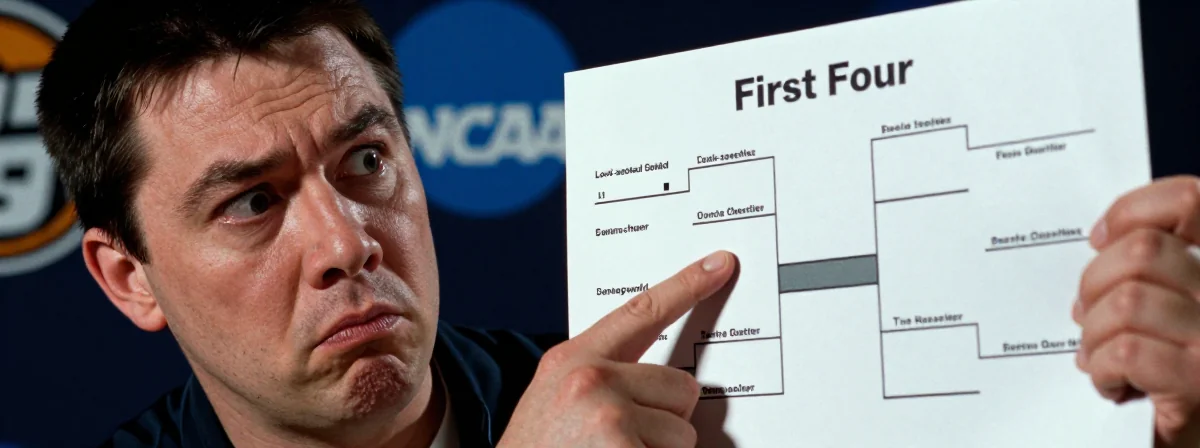
The NCAA Men’s Final Four is one of America’s most beloved sporting events, drawing more viewers than any other college sports competition. Yet for all its popularity, the tournament’s structure contains a persistent puzzle that confounds even dedicated fans: why do the lowest-seeded teams in the First Four games—those playing for an 11 seed—appear to receive better seeding than many teams that earned automatic bids by winning their conference tournaments? This discrepancy seems counterintuitive until you understand the historical evolution and practical considerations that shaped the modern tournament format.
Historical precedent suggests that the current system developed as a compromise between competing interests. The tournament expanded from 64 to 68 teams not simply to add games, but to create a more equitable system that balanced conference championship traditions with competitive integrity. From an academic perspective, this structure represents a fascinating case study in how institutional practices evolve to accommodate competing values.
Why Do Automatic Qualifiers Sometimes Get Lower Seeds Than At-Large Teams?
The fundamental tension in NCAA tournament selection lies between two qualification paths: automatic bids awarded to conference champions and at-large bids given to the best teams that didn’t win their conference tournaments. Currently, 31 teams receive automatic bids (one per Division I conference), while 37 teams are selected at-large by the tournament committee.
The research indicates that in many cases, the weakest at-large teams are still stronger than some conference champions from smaller conferences. This creates an interesting paradox: teams that earned their way in by winning their conference might be less accomplished on paper than teams that narrowly missed winning their conference but maintained stronger overall records. The seeding system reflects this reality by placing the weakest at-large teams at 11 seeds, while many automatic qualifiers occupy the 12-16 seed slots.
Consider this example: A team like Texas that barely misses winning its conference tournament might still boast a stronger resume than Long Island University, which won its conference championship but played in a weaker league. From a competitive standpoint, the selection committee prioritizes creating fair matchups in the main tournament bracket, which sometimes means giving the weakest at-large teams seeding advantages over some automatic qualifiers.
How Did the First Four Games Evolve to Address This Problem?
The First Four games weren’t always part of the tournament structure. The expansion from 64 to 68 teams occurred in 2001, initially adding just one team to give the newly formed Mountain West Conference an automatic bid. The subsequent addition of three more at-large teams created the need for additional games to accommodate the expanded field.
The tournament committee developed the First Four format as a solution to two competing problems. First, they needed to determine how to seed the weakest at-large teams (who would typically be around the 11 seed) against the weakest automatic qualifiers (who would typically be 16 seeds). Second, they wanted to create a system where these teams had a meaningful chance to advance rather than being immediately eliminated by power conference teams.
Historical records show that the selection committee decided to pit the four weakest at-large teams against each other in two games, with winners earning 11 seeds. Simultaneously, the four weakest automatic qualifiers play each other, with winners earning 16 seeds. This structure ensures that the weakest at-large teams (who might otherwise not make the tournament at all) get a chance to compete for an 11 seed, while the weakest automatic qualifiers still receive tournament berths through their conference championships.
What’s the Strategic Implication for Tournament Watchers?
Understanding this seeding structure changes how you should approach your bracket selections. The First Four games aren’t merely exhibition matches—they represent legitimate opportunities for Cinderella stories. The winners of these games have historically performed better than their seeding might suggest, with multiple instances of 11 seeds advancing to the Sweet Sixteen.
From a practical standpoint, this means you should consider the First Four winners as viable threats rather than immediate afterthoughts. Teams that win these games often gain confidence and momentum that carries into the main tournament. Additionally, the knowledge that some 11 seeds are actually the weakest at-large teams (rather than typical 11 seeds) might influence your upset predictions.
The research indicates that the probability of an 11 seed winning their first-round game is actually higher than traditional projections suggest, precisely because these teams often represent the bubble teams that narrowly missed higher seeds. This statistical nuance provides bracket-fillers with an edge if they understand the underlying selection dynamics.
Why Does the Location of First Four Games Matter?
The selection of sites for First Four games also reveals interesting aspects of the tournament’s structure. Unlike the main tournament games that rotate among predetermined regional sites, the First Four games have historically been played in Dayton, Ohio, at the UD Arena—home of the Dayton Flyers basketball team.
This tradition began as a way to honor the Dayton community’s long history with college basketball. The city has hosted early-round tournament games since the 1950s, and maintaining this connection adds a layer of historical continuity to the expanded tournament format. However, in recent years, the NCAA has occasionally moved these games to other locations, sparking debate about whether this tradition should continue.
What’s interesting is that the selection of these sites isn’t merely ceremonial—it affects team performance. Studies have shown that teams playing closer to home (even in the First Four) tend to perform better than expected. This factor adds another layer of complexity to understanding tournament dynamics, as geographic considerations interact with seeding decisions in ways that influence actual outcomes.
How Does This System Affect Tournament Fairness?
The current structure represents a compromise between competing values: rewarding conference champions for their achievements versus creating a tournament that’s competitive and entertaining for fans. From an academic perspective, this balance is difficult to achieve perfectly, as evidenced by the persistent confusion about First Four seeding.
The selection committee faces a dilemma: if they strictly seeded all 68 teams from best to worst, they would violate the long-standing tradition of giving conference champions automatic bids. Yet if they strictly honored automatic bids without considering relative strength, they would create uncompetitive matchups that diminish the tournament’s excitement.
The solution they’ve implemented—having the weakest at-large teams play each other for 11 seeds while the weakest automatic qualifiers play for 16 seeds—represents a practical compromise. It allows the weakest at-large teams a chance to prove they belong in the tournament while still giving all conference champions a berth, albeit with appropriate seeding based on their relative strength.
What Does This Mean for the Future of Tournament Selection?
The current system isn’t without its critics. Some argue that the First Four games create artificial matchups that don’t reflect true team strengths, while others contend that the selection process could be more transparent. There are also periodic discussions about further tournament expansion that would complicate the seeding structure even more.
However, the research indicates that the current system has proven relatively stable and effective at balancing competing interests. The First Four games have become an accepted part of the tournament experience, generating their own excitement and occasionally producing memorable upsets that enhance the overall narrative of March Madness.
For fans, understanding this seeding logic transforms how you watch the tournament. Rather than viewing the First Four as merely preliminary games, you can appreciate them as meaningful contests that reflect the complex balancing act behind tournament selection. The apparent discrepancy between seeding and qualification methods actually reveals the sophisticated thought process that goes into creating a fair and entertaining championship format.
Ultimately, the NCAA tournament’s structure reflects a tension between tradition and practicality that continues to evolve. The next time you watch the First Four games, you’ll recognize that what appears as a seeding anomaly is actually a carefully constructed solution to a complex problem—one that enhances both the competitive integrity and the dramatic excitement of college basketball’s most beloved event.