
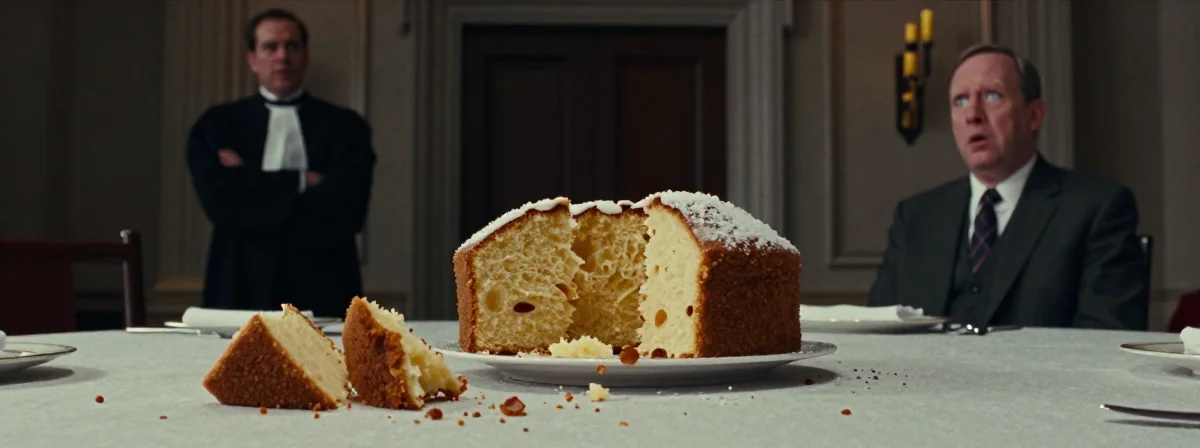
The most unexpected courtroom battles often begin with the smallest details. A security camera recording. A moment of confusion. A pound cake sitting on a table. These elements combined to create one of the most bizarre legal disputes of our time—one that has challenged our understanding of justice, privacy, and accountability. What starts as a simple police raid ends as a courtroom showdown that has captivated millions.
When authorities enter someone’s home under the guise of law enforcement, they carry with them the weight of public trust. But what happens when that trust is broken? What happens when the evidence doesn’t match the narrative? This case began with a warrant based on fabricated information and ended with a song that captured the raw frustration of being wronged. The pound cake became more than just dessert—it became a symbol of the little things that matter when your rights have been violated.
The legal system moves at its own pace, but when justice finally catches up, the results can be extraordinary. This particular case, which began years ago, has only recently reached its courtroom climax, revealing uncomfortable truths about how power operates when it intersects with personal dignity.
Did the Police Really Eat the Pound Cake?
The most enduring question from this incident centers around a simple dessert. Security footage captured an officer pausing at a table where a pound cake sat. Did he eat it? The official record states clearly: no, the cake was not consumed. Yet the image has taken on a life of its own, becoming a cultural touchstone for the absurdity of the situation.
What makes this detail so compelling isn’t the cake itself, but what it represents. It’s the small, human moment that disrupts the official narrative. It’s the visual evidence that something wasn’t quite right in that home invasion, even beyond the stolen money and damaged property. The cake became a metaphor for the little things that get lost when power runs roughshod over individual rights.
Legal experts note that such symbolic details often carry disproportionate weight in public perception. They humanize complex cases and provide emotional anchors that statistics alone cannot. In this instance, the cake became the focal point not because of its culinary significance, but because it represented the intrusion into everyday life that occurred during the raid.
When Song Becomes Evidence
Music has always been a powerful medium for expressing dissent, but rarely does it become part of the legal record itself. In this case, the artist created songs documenting the incident, complete with specific references to the officers involved. These musical compositions weren’t just artistic expressions—they became evidence in a defamation lawsuit filed by the police.
The songs detailed specific allegations against individual officers, including claims about their appearance and conduct during the raid. When these songs were played in court, they provided a stark contrast to the official police narrative. The courtroom, typically a place of formal testimony and documented evidence, suddenly echoed with music that captured the emotional impact of the incident in a way that police reports could not.
This intersection of art and law raises fascinating questions about free expression. Where does creative license end and defamation begin? Can music serve as a form of witness testimony? The court’s handling of these songs set precedents that will likely influence how creative works are treated in future legal proceedings.
The Surprising Legal Outcome
After years of legal maneuvering, the case reached its verdict. Against expectations, the artist won the defamation lawsuit. The jury’s decision sent ripples through both the legal community and the general public, suggesting that accountability may still exist even when power appears overwhelming.
What made this outcome particularly significant was how it balanced competing interests. It acknowledged the officers’ right to professional reputation while simultaneously validating the artist’s right to express his experience. The verdict wasn’t just about who told the truth—it was about how truth itself is constructed in situations where official accounts conflict with personal experiences.
Legal analysts point to this case as a potential turning point in how we view police accountability. It suggests that the scales of justice can tip toward transparency, even when powerful institutions are involved. The decision reinforces that public servants are not above criticism, especially when their actions impact private citizens.
Why Did It Take So Long to Reach Trial?
The delay between the initial incident and the courtroom proceedings offers valuable insights into how our justice system operates. Complex cases involving multiple parties and sensitive evidence naturally require thorough preparation. However, the timeline in this instance stretched beyond typical expectations, raising questions about efficiency in our legal processes.
Such delays often occur when cases involve conflicting accounts and substantial evidence review. Each party must have adequate opportunity to present their perspective, examine evidence, and prepare arguments. While frustrating for those seeking immediate resolution, these procedural safeguards ensure that when verdicts are reached, they rest on comprehensive consideration of all factors.
The extended timeline also allowed for public awareness to build gradually. What might have been a localized incident instead gained national attention as details emerged over time. This slow burn of public awareness created the perfect conditions for the Streisand Effect—the phenomenon where attempts to suppress information only increase its visibility.
What Really Happened During the Raid?
The core of this controversy began with a police raid justified by a warrant based on fabricated information. An informant claimed to have witnessed drug activity that never occurred, leading authorities to search the home. What they found—and what the security cameras recorded—told a different story.
The raid resulted in property damage, stolen cash, and traumatic experiences for those present. More concerning, allegations emerged that officers pointed guns at children during the incident. These details, corroborated by security footage, formed the basis for the artist’s artistic response and subsequent legal claims.
What makes this case particularly troubling is the apparent lack of due process. A warrant based on false information represents a fundamental breakdown in law enforcement procedures. When authorities operate on faulty premises, the consequences extend far beyond the immediate incident, eroding public trust in the institutions meant to protect us.
The Streisand Effect in Action
When powerful entities attempt to suppress information, they often achieve the opposite effect. This principle became vividly apparent in this case when the police department sued the artist for his musical response to the raid. Rather than quieting the controversy, their legal action amplified it.
The Streisand Effect occurs because attempts to suppress information create narratives of censorship and unfair treatment. People naturally become curious about what someone would want to hide, and the controversy spreads organically through social networks. In this instance, what might have remained a local story instead became a national conversation about police conduct and accountability.
This phenomenon highlights an important truth about information in the digital age: control is increasingly difficult. Once information is recorded and shared, attempts to contain it often backfire spectacularly. The more aggressive the suppression effort, the more widespread the eventual dissemination.
Beyond the Cake: The Bigger Picture
While the pound cake became the most memorable detail, the case raises profound questions about police conduct, accountability, and the balance of power between citizens and law enforcement. These issues extend far beyond one particular incident or one specific dessert.
The case highlights how easily power can be abused when oversight mechanisms fail. It demonstrates how routine police procedures can become traumatic experiences for those subjected to them. And it shows how artistic expression can serve as a vital check on institutional power when traditional avenues for accountability prove insufficient.
Most importantly, this case reminds us that justice isn’t just about legal outcomes—it’s about how we treat each other in positions of authority. When those entrusted with power act with transparency and respect, they strengthen public trust. When they don’t, the consequences can be far-reaching and long-lasting.
Accountability in a System of Power
The ultimate significance of this case lies in what it reveals about accountability within systems of power. When those with authority are held responsible for their actions, it reinforces the social contract that allows civilization to function. When they’re not, the foundations of trust begin to erode.
This particular legal battle didn’t just resolve a dispute between two parties—it sent a message about the boundaries of acceptable conduct. It affirmed that even those who wear badges and carry weapons are subject to the same principles of fairness and respect that apply to everyone else.
As we reflect on this unusual courtroom saga, we’re reminded that justice isn’t just about winning or losing—it’s about creating systems where power is balanced by responsibility. And sometimes, it takes a pound cake and a catchy song to bring that truth to light.