

You’re driving down your street, minding your own business, when BAM — a bright yellow sign screams at you: “SLOW DOWN!” Suddenly, you’re hitting the accelerator. Why? Because nobody likes being told what to do, especially when it feels like you’re being scolded like a child. It’s a tiny moment, but it hits something deep inside. Something primal.
This isn’t just about road rage. It’s about the way we respond to any kind of unsolicited advice, moral instruction, or “friendly suggestion.” Even when we agree with the message, the delivery can make us want to rebel.
The Twist
- Your Brain Hates Being Wrong (Even When It’s Not)
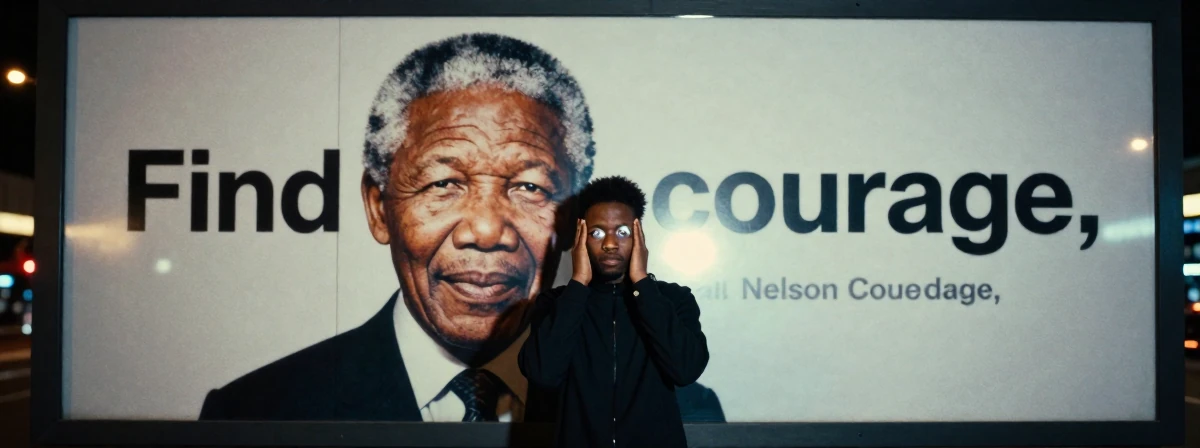
Think about it: you’re at the airport, scrolling through your phone, when a giant billboard featuring Nelson Mandela tells you to “Find courage.” You nod along — yeah, courage is good. But then something shifts. It’s not the message you object to, it’s the audacity of the sign to tell you what to do. That little spark of irritation? That’s your brain entering cognitive dissonance — the uncomfortable feeling of holding two conflicting thoughts at once. You agree with the quote, but you hate being preached at. The moment someone starts telling you what to think or believe, your brain doesn’t just disagree — it goes on high alert, ready to fight back.
Preaching Is About the Preacher, Not the Listener
Ever met someone who just has to tell you why your diet is wrong, or why their favorite band is the best thing since sliced bread? It doesn’t matter if you secretly agree — the way they deliver it feels like a personal attack. That’s because, more often than not, preaching isn’t about converting you. It’s about reinforcing the preacher’s own beliefs. They need to feel like they’re part of a select group, the “enlightened ones” who know the truth. Your agreement or disagreement is irrelevant; the act of preaching makes them feel superior. It’s like a self-fulfilling prophecy: the more you push back, the more convinced they are they’re right.The “Educate Yourself” Backfire

There’s a certain phrase that makes even the most open-minded person bristle: “Educate yourself.” Whether it’s about politics, health, or even just a different way of doing things, this phrase sounds less like an invitation and more like a command. It’s the digital age’s version of wagging a finger. The irony? When you use language that sounds condescending, even if your intentions are pure, you push people further away. You’re not educating anyone; you’re creating more distance. The key isn’t to talk at people — it’s to talk with them, in a way that doesn’t make them feel like an idiot for not already knowing.
Street Signs vs. Street Design
Remember those “SLOW DOWN” signs? They’re a perfect example of how preaching doesn’t work. People don’t respond well to being told what to do, especially when it feels arbitrary. But change the street itself — narrow the lanes, add speed bumps, plant trees along the curb — and suddenly, you don’t need signs. The environment itself encourages slower driving. It’s the same with people: instead of shoving your beliefs down someone’s throat, create an environment where they can arrive at the same conclusion on their own. It’s not about removing choice; it’s about making the right choice feel natural, not forced.The Hypocrisy of the Preacher
We’re all guilty of it sometimes. You might roll your eyes at the guy evangelizing about his favorite anime, but then turn around and lecture your friend about their coffee habit. It’s the “do as I say, not as I do” trap. We love preaching when it aligns with our ego, but hate it when it challenges us. The double standard is glaring, yet we rarely notice it in ourselves. The moment you realize you’re doing the same thing you despise in others? That’s when the real growth happens. It’s not about being right; it’s about being human.Sometimes, You Do Want to Be Preached At
Here’s the twist: people do love being preached at — as long as the message confirms what they already believe. Think about churchgoers, or fans of a certain political pundit. They show up week after week, eager to hear the same ideas repeated. It’s not about learning something new; it’s about belonging. The dopamine hit of hearing your own beliefs validated is powerful. The problem isn’t preaching itself; it’s preaching at people who don’t want to hear it. If you want to change minds, you can’t just preach to the choir — you have to find a way into the pews of the skeptical.
Story’s End
So next time you feel that familiar urge to tell someone they’re wrong, or to share that “inspirational” quote you just read, pause. Ask yourself: Am I trying to educate, or am I trying to win? The line is thin, but it matters. Because the truth is, we’re all just trying to navigate this messy world the best we can. Some of us just need a little more space to figure it out on our own.