

Some people die because they didn’t know enough. Others die because they knew too much — and still gambled. The story of a scientist who bled out from a snakebite while documenting his own demise isn’t just tragic. It’s a masterclass in how systems fail, and how even the smartest among us can be undone by the gap between theory and reality. Let’s walk through the wreckage.
What the Data Reveals
The Slow Burn of Certainty
Boomslang venom doesn’t scream for attention. It whispers. Hours pass before you realize you’ve been poisoned — a design that evolved to let the snake escape while the meal slowly collapses. The scientist, Karl Patterson Schmidt, knew this. He also knew antivenom existed. But he didn’t keep any. Why? Because the odds of a small lab in Illinois having it were about as good as finding a unicorn in a broom closet. Systems thinking tells you to prepare for the worst-case scenario. He bet on the best-case. And lost.
The pattern here: Overconfidence isn’t a character flaw. It’s a system failure. You’re not just betting on your knowledge — you’re betting on the entire ecosystem around you. And sometimes, that ecosystem isn’t as smart as you are.The Journal of Bleeding Orifices
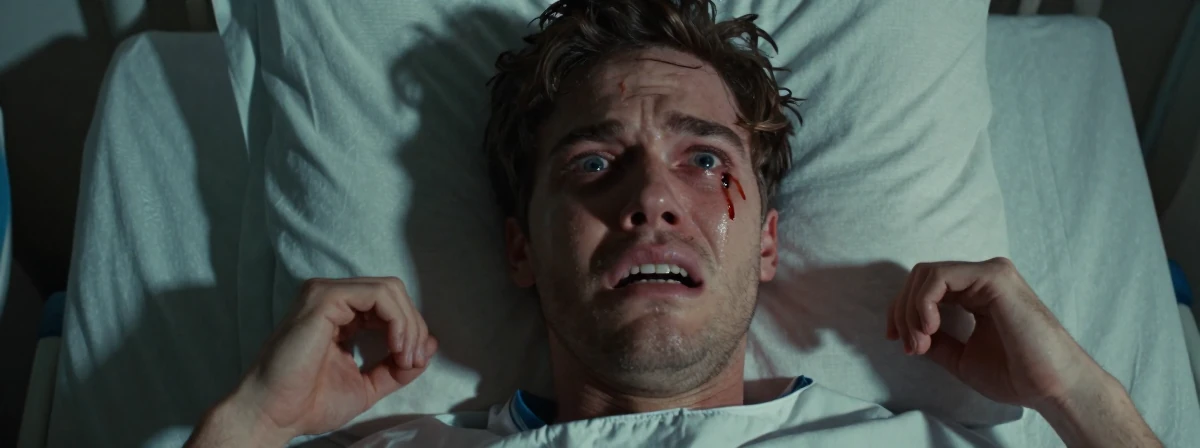
Schmidt’s death notes read like a horror movie script, except he was the main character. “Blood and shit poured out of my eyeballs. One of my fingers exploded. Ate some milk toast.” It’s darkly funny until you realize this wasn’t performance art. It was a desperate attempt to document what a boomslang bite actually does. Because before him, no one had recorded such a complete case. The data was thin. His body became the lab rat.
What the data shows: Sometimes the only way to understand a system is to let it break you. But you have to survive to share the results. Schmidt didn’t. The irony? His notes saved lives later. He became the system’s own antivenom.
The Antivenom Paradox
Here’s the kicker: Boomslang antivenom had been around since the 1940s. It wasn’t some mythical cure. But it had a shelf life, and it wasn’t stored in every hospital. Schmidt’s lab probably had better odds of having it than the local ER. So why not keep a stash? Maybe he didn’t believe he’d ever need it. Maybe he thought the young snake couldn’t deliver a fatal dose. Or maybe he just didn’t think that far ahead.
This anomaly suggests: In high-risk work, the preparation isn’t just technical. It’s psychological. You have to convince yourself that the worst can happen — even when your gut screams it’s impossible. Otherwise, you’re just playing Russian roulette with a snake.The Systems Gap
Think of it like software development. You write code, you test it, you deploy it. But sometimes the real-world conditions aren’t in your test cases. Schmidt’s system had a critical flaw: no failsafe. No backup plan. No “if all else fails” protocol. He was the failsafe. And when the system crashed, he crashed with it.
Short punch point: Smart people die from stupid mistakes. Because smart people think they’re immune to stupid mistakes.The Documented Death as Data Point
Schmidt didn’t just record his symptoms. He timed them. He noted the progression. He turned his own body into a case study. It’s the ultimate act of a researcher: even in failure, contribute to the knowledge base. But here’s the brutal truth: he didn’t have to die to do that. A quick trip to the hospital, even hours after the bite, might have saved him.
Expanded point: There’s a difference between “documenting for posterity” and “documenting because you’re too stubborn to seek help.” At some point, the data stops being the priority. Your survival does. Schmidt crossed that line, and the system didn’t correct him. It just recorded his final data point.The Mirror in the Lab
This isn’t just about snakes. It’s about every time you push the boundaries of safety because “it’s probably fine.” It’s about every time you skip the backup because “nothing ever goes wrong.” It’s about every time you trust your gut over the system. Because eventually, the system will remind you who’s in charge. Schmidt’s death is a warning label on the human ego.
Short punch point: The only guaranteed fatal dose is hubris.
What We Can Prove
The systems we build to protect us — hospitals, safety protocols, even antivenom supplies — are only as good as our willingness to use them. Schmidt’s story isn’t just a cautionary tale. It’s a reminder that the smartest among us are still just humans, prone to the same cognitive glitches, the same overconfidence, the same deadly underestimation of risk. The next time you’re tempted to skip the safety check, to gamble with fate because “it won’t happen to me,” remember the man who bled out while writing his own autopsy. He was wrong. Don’t be wrong too.