
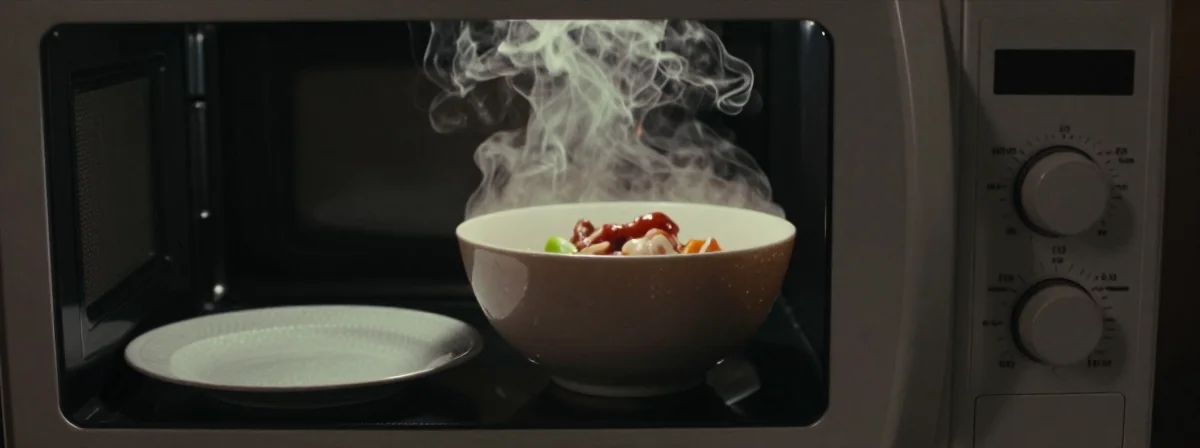
I’ve spent years watching people microwave food—some with plates that scorch, others with plates that stay freezing cold. The difference isn’t magic. It’s science. And if you’ve ever wondered why your plate stays icy while your food turns to lava, you’re about to uncover the truth that most people never learn.
Microwaves don’t heat things randomly. They target specific molecules, and your plate’s fate depends on whether it contains those molecules or not. Forget what you’ve been told—this isn’t just about water. It’s about the hidden physics of your kitchen.
The first time I saw a microwave explode a plate, I knew something was off. Not because of some viral video—I saw it happen in my own kitchen. A plate split down the middle, steam hissing out like a pressure cooker. That’s when I dug into the real science, not the myths.
Why Does Your Plate Stay Cold While Your Food Boils?
The answer is simpler than you think: microwaves heat polar molecules. Water is the obvious one, but your plate might not have any. If your plate is made of plastic, ceramic, or glass without water or metal particles, it won’t absorb microwave energy. Instead, the microwaves pass right through—or reflect off—leaving the plate untouched while your food heats up.
Think of it like this: microwaves are a targeted weapon. They’re tuned to frequencies that make polar molecules vibrate. If your plate doesn’t have those molecules, it’s invisible to the microwaves. That’s why some plates stay cold while others get scorching hot.
But here’s the kicker: even “microwave-safe” plates can surprise you. Some ceramics have enough metal in their glaze to act like tiny antennas, absorbing microwave energy and heating up like crazy. Others might have polar molecules you never expected.
The Hidden Danger of Hot Plates
If your plate gets hot in the microwave, it’s not just annoying—it could be dangerous. I’ve seen plates crack, explode, or even shatter because they weren’t designed to handle microwave energy. That’s why microwave-safe labels exist. But here’s the truth: even plates labeled “safe” can fail over time. A chip, a scratch, or a compromised coating can turn a safe plate into a ticking time bomb.
One reader shared their story: a small chip in their plate led to water seeping into the ceramic. When microwaved, the trapped water turned to steam, building pressure until—snap—the plate split. This isn’t rare. It’s physics in action.
Metal is another culprit. If your plate has metallic paint or handles, it can absorb microwaves like a sponge, heating up to dangerous temperatures. That’s why microwave manuals warn against metal. But many people ignore the fine print—until it’s too late.
Polar Molecules: The Real Reason Some Plates Heat Up
Not all plates stay cold. Some get scorching hot, even without metal. Why? Because they contain polar molecules other than water. IKEA dinnerware, for instance, might have polar molecules in its plastic or ceramic composition. That’s why some users report their plates heating up while others don’t.
Here’s the counterintuitive part: microwaves don’t just target water. They can heat sugar, fat, and even some types of plastic. If your plate has these molecules, it will heat up. If not, it won’t. That’s why two identical microwaves can produce such different results.
One user joked about “polar bear particles” in Swedish dishware. It’s funny, but there’s a kernel of truth. Polar molecules are everywhere—even in unexpected places. Your microwave isn’t picky; it just responds to what’s inside.
Why Your Frozen Hot Pocket Is Lava on One Side, Ice on the Other
This ties back to microwave heating. Microwaves penetrate food unevenly. They heat thawed areas first, leaving frozen parts untouched. That’s why your hot pocket is boiling in spots while the rest is still frozen. The plate’s role? Minimal. If it’s not absorbing energy, it won’t affect the heating pattern.
But if your plate is absorbing energy, it’s stealing heat from your food. That’s why some plates get hot while food stays cold. It’s a battle for energy, and your food loses if the plate is too greedy.
The Role of Your Microwave’s Design
Ever noticed how some microwaves have rotating plates? It’s not just for show. It’s to distribute energy evenly. If your plate stays still, hot spots form. If it rotates, the microwaves hit different areas, preventing uneven heating. That’s why some plates heat up more—they’re in the path of concentrated energy.
But here’s the twist: some microwaves are worse than others. Cheaper models might not distribute energy well, leading to plates that heat unpredictably. That’s why your neighbor’s plate might stay cold while yours gets hot. It’s not you—it’s the microwave.
Stop Microwaving Until You Understand This
Before you nuke your next meal, ask: Is this plate safe? Does it contain metal? Does it have polar molecules? If you don’t know, don’t risk it. I’ve seen too many plates shatter to ignore the warning signs.
Microwave safety isn’t common knowledge. It’s hidden in physics textbooks and forgotten warnings. But now you know. Your plate’s fate isn’t random—it’s determined by science. And the next time you microwave food, you’ll understand why some plates stay cold while others turn into infernos.
The Real Reason It Matters
This isn’t just about convenience. It’s about safety. A hot plate can burn you. A compromised plate can explode. A plate that steals heat from your food wastes energy and time. Understanding microwave heating isn’t just smart—it’s essential.
So the next time you hear “jiggle jiggle” in your microwave, remember: it’s the molecules dancing. Some plates join the party. Others sit cold on the sidelines. And now you know why. The mystery is solved. The science is clear. Your kitchen will never look the same.