
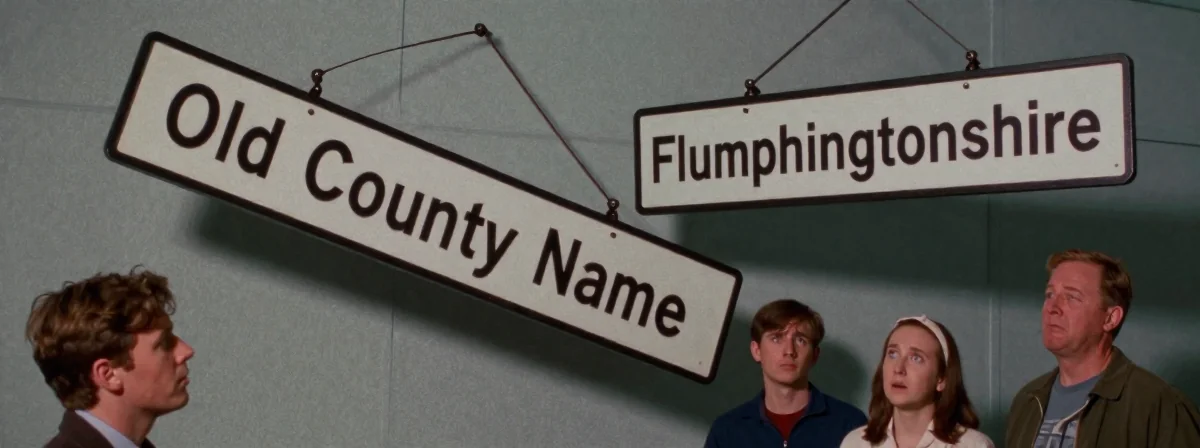
Every town has its origin story, but some are stranger than fiction. Imagine naming a place after someone, only to decide years later that you actually meant to name it after someone completely different. Sound ridiculous? It happens more than you think. Place names carry weight, history, and sometimes just plain weirdness that few people ever stop to consider.
The story of King County in Washington State is a perfect example. Originally named after William R. King, a vice president so obscure you’ve probably never heard of him, the county decided in 2005 that they were “really” named after Martin Luther King Jr. Despite King’s only notable achievement being taking his oath of office in Cuba and dying 45 days later, the county just… changed its mind. They even redesigned the county logo to feature MLK’s image. No one seemed to care, but the change stuck.
Why Do Places Get Renamed?
Place renaming isn’t just about correcting historical mistakes—it’s often about political messaging. King County’s transformation from William R. King to Martin Luther King Jr. wasn’t a correction; it was a deliberate shift in identity. The county wanted to associate itself with a civil rights icon rather than a forgotten politician. This kind of rebranding happens all the time, though usually more subtly.
Take Cleveland, Ohio. The city was named after General Moses Cleaveland, who surveyed the area in 1796. The “A” was dropped from the name because a newspaper couldn’t fit the full spelling on its masthead. Historians debate whether this was intentional or just local legend, but the shorter spelling caught on and stuck. Now, Cleveland is known for its baseball team, not its full original name.
The Politics of Place Names
Renaming places can be controversial. Douglas County in Kansas, home of the University of Kansas, has recently debated changing its name from Stephen Douglas to Frederick Douglass. The obvious issue? One name has one “s” and the other has two. But beyond the spelling, there’s a deeper political message at play. Douglas was a prominent opponent of Abraham Lincoln, while Douglass was a renowned abolitionist. The proposed change isn’t just about spelling; it’s about aligning with values that resonate with the community today.
This isn’t a new phenomenon. Throughout history, places have been renamed to reflect changing social norms. Washington, D.C., was named after George Washington, but if you think about it, the name itself is a political statement. It’s a constant reminder of the nation’s first president and the ideals he represented.
The Weirdness of Historical Naming
Some place names have origins so bizarre they sound like jokes. Take Peculiar, Missouri, or Truth or Consequences, New Mexico. These names weren’t chosen randomly; they often reflect a community’s sense of humor or a historical quirk. In the case of Peculiar, the story goes that a settler asked how the town should be named and was told, “Be peculiar.” And so it was.
Then there’s the case of Grover Cleveland, the only U.S. president to serve two non-consecutive terms. His name itself is a bit of a historical oddity. His stepmother named him after the family’s grove of trees. But the name “Grover” wasn’t common then, and it still isn’t today. It’s a reminder that even the most powerful figures in history have names with unusual origins.
How Place Names Reflect Social Change
Place names can be a mirror to society’s values. When a community decides to rename a place, it’s often a reflection of what that community values at that moment. King County’s shift to Martin Luther King Jr. is a prime example. It’s not just about changing a name; it’s about acknowledging the contributions of African Americans and aligning the county’s identity with the civil rights movement.
Similarly, the renaming of streets, buildings, and even entire cities after historical figures is a way to keep their memory alive. But it’s also a way to control the narrative. By naming something after a particular person, a community is essentially saying, “This person matters to us.” It’s a powerful tool for shaping collective memory.
The Future of Place Names
As society continues to evolve, so too will our place names. The debate over whether to rename Douglas County after Frederick Douglass is just one example of how communities are grappling with their identities. In the future, we may see more places renamed to reflect more inclusive and progressive values.
But renaming isn’t always straightforward. It can be divisive, and not everyone agrees with the changes. The key is to find a balance between honoring history and reflecting the values of the present. After all, place names aren’t just labels; they’re part of our collective story.
What’s in a Name?
At the end of the day, place names are more than just words on a map. They’re symbols of identity, history, and values. Whether it’s King County deciding it was “really” named after Martin Luther King Jr. or Cleveland dropping an “A” from its name, these changes tell us something about who we are and what we believe in.
The next time you hear a place name, take a moment to think about its story. There’s often more to it than meets the eye. And who knows? Maybe your town has a renaming story waiting to be told. After all, place names are never set in stone—they’re always evolving, just like we are.