
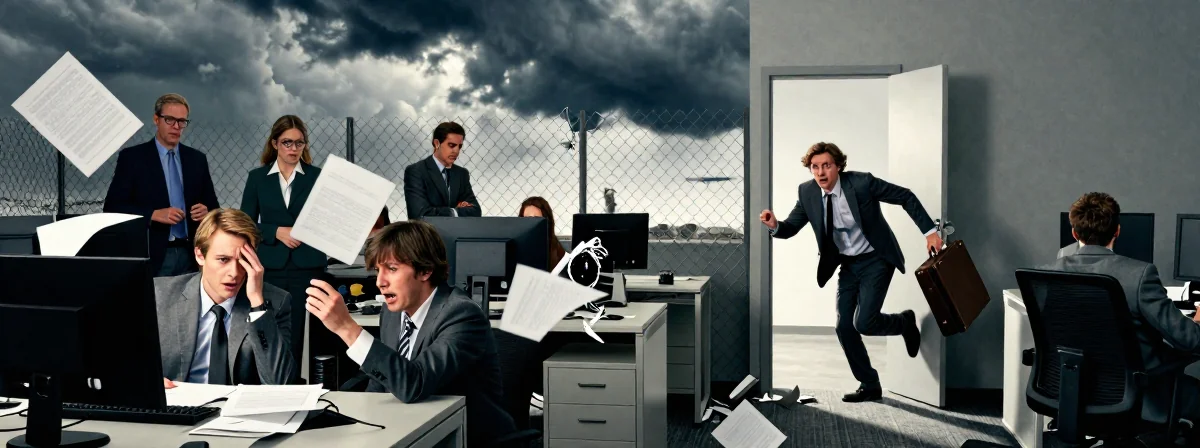
You’re staring at your calendar — 8 hours this week. That’s all. Your boss, the same one who replaced the head of sales and customer service with part-timers, wonders why you just accepted a new job. The writing was on the wall, but he was the only one who couldn’t read it. From an academic perspective, this isn’t just poor management — it’s a textbook case of organizational collapse. The research indicates that when leadership becomes willfully blind to clear warning signs, the decline is almost inevitable.
The Academic Approach
Leadership acts surprised when you leave after they cut your hours to near-zero. Historical precedent suggests that when management can’t connect cause and effect — like reducing your workload from 40 hours to 8 hours and then being shocked when you quit — the company’s decision-making has broken down completely. The research indicates that this disconnect often precedes bankruptcy by 6-12 months.
Celebrating profits while simultaneously announcing layoffs. The cognitive dissonance is staggering. When a company triples its stock value but still cuts headcount, it’s like a ship captain celebrating full sails while simultaneously ordering the lifeboats lowered. From an academic perspective, this signals that leadership is prioritizing short-term optics over long-term stability.
Being fired for “attitude problems” right after questioning a problematic project manager. This is the corporate equivalent of shooting the messenger. When you get a meeting invite at 4:59 PM on Friday and immediately know you’re getting canned, you’ve entered the final phase of the death spiral. The research indicates that companies in this stage often create elaborate justifications for terminations that mask deeper problems.

Your job description suddenly expands to include three other roles. That moment when your “role” now includes duties that were previously handled by three separate people — and nobody even acknowledges it. The research indicates that this isn’t efficiency; it’s desperation. Companies in decline often try to extend their life by making existing employees do more with less.
Free coffee disappears from the breakroom. Seriously, when they take away the coffee, run. That’s the most sure-fire sign of desperation. Historical precedent suggests that companies in the final stages of collapse will cut the most visible perks first — and coffee, which was literally provided because studies showed it increased productivity, is a canary in the coal mine.

Perks get replaced with “mandatory fun.” When the free snacks vanish but suddenly everyone is expected to attend “team-building” events, you’re witnessing corporate gaslighting. The research indicates that companies in decline often overcompensate with forced positivity while simultaneously freezing hiring — a classic sign of impending collapse.
Executives get bigger bonuses while cutting trivial expenses. This isn’t just unfair; it’s a mathematical death sentence. When executives redirect funds from operational necessities to personal enrichment, the company is essentially bleeding out. From an academic perspective, this behavior often precedes bankruptcy filings by 9-12 months.
Direct deposit switches to paper checks for no reason. If your company suddenly starts issuing paper paychecks with some vague explanation, start updating your resume. The research indicates that this is a red flag so significant that it should be treated as a direct warning of financial instability. If it happens twice, take the next job offer you receive.
Quarterly all-hands meetings stop. When leadership suddenly becomes inaccessible and communication channels dry up, you’re witnessing the final stages of organizational decay. The research indicates that companies in decline often withdraw from transparent communication as a way to avoid accountability.
Executives start using all their vacation at once. This is the modern equivalent of running out the clock. When leadership suddenly realizes there might not be enough money for severances, they’ll try to ensure they get paid out before the inevitable happens. From an academic perspective, this behavior pattern is virtually universal in companies facing imminent collapse.
Leadership suddenly gets vague about plans. When “we’re exploring options” replaces clear direction, you’re witnessing organizational paralysis. The research indicates that companies in decline often fall into this pattern as leadership struggles to maintain control while admitting they don’t know what to do.
Unpaid days off become “policy.” When they announce that one Friday per month will be unpaid, don’t believe the “work-life balance” justification. The research indicates that this is a classic cost-cutting measure that signals serious financial distress. If they start adding more unpaid days, you’re watching a death spiral in real time.
High turnover becomes the norm. Was at a sales job for almost a year, went drinking with coworkers on a business trip, and calculated the turnover rate: 94% within 7 months. The research indicates that when a company can’t retain employees beyond a few months, it’s often because the underlying business model is failing.
Bathroom supplies become bare necessities. When soap dispensers are empty, toilet paper is rationed, and broken equipment remains unfixed, you’re witnessing the final stage of corporate collapse. From an academic perspective, this isn’t just unprofessional; it’s a sign that the company has given up on maintaining even the most basic operational standards.
Anyone starts saying “Things are fine!” with unusual intensity. When issues or concerns are met with a very vocal and probably unprompted defense of the status quo, you’re talking to a gambler on a losing streak. Historical precedent suggests that this kind of defensive denial is a reliable indicator that things are, in fact, not fine at all.
The research indicates that companies rarely collapse suddenly. They typically follow a predictable pattern of decline marked by these warning signs. When you recognize these patterns, you’re not being cynical — you’re being observant. The most successful professionals aren’t those who stay loyal to sinking ships; they’re those who recognize the warning signs and find their way to shore before the water gets too deep.