
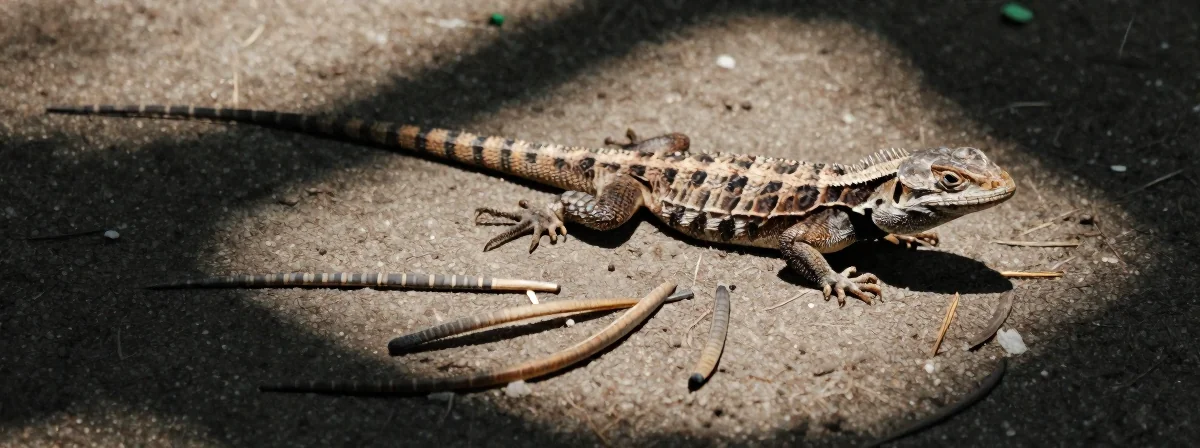
Ever watched a lizard zip away after its tail falls off and thought, “Okay, but can it do that again?” Yeah, turns out it can—but with a twist. Most lizards can drop their tails multiple times, but each new break has to happen closer to their body than the last one. Weird, right? It’s like their tail has a built-in rulebook for emergencies.
So, let’s unpack this whole tail-dropping thing. It’s not just a one-and-done deal, but it’s definitely not infinite either. Here’s the lowdown:
Here’s the Thing
Breakage Points Are Key
Lizards have special spots in their tail vertebrae—called fracture planes—that let them snap their tails off cleanly. These spots also seal blood vessels fast to stop the bleeding. But here’s the catch: once a lizard regrows a tail, that new tail is made of cartilage, not bone, and it doesn’t have those fracture planes. So if the lizard needs to drop its tail again, it has to break it higher up, closer to its body. Makes sense, right? It’s like a safety feature that runs out of uses.Regrown Tails Are Different
That new tail? It’s not the same as the original. It’s usually shorter, more stubby, and lacks the original bone structure. It’s like getting a replacement phone that’s missing some features. Still works, but not quite the same. Some lizards, like crested geckos, can’t regrow their tails at all—talk about a one-time deal.“Higher” Means Closer to the Body
Yeah, I know, “higher” sounds like it should mean further away. But in lizard terms, “higher” (or cranial) means closer to the head. So if a lizard drops its tail once, any future drops have to happen nearer to its body. It’s like a ladder you can only climb down one rung at a time.
Some Lizards Get Forked Tails
Bet you didn’t know this, but some lizards can partially drop their tails and end up with a forked tail. It’s not even that rare. Nature’s got some wild ways of keeping things interesting.Stress Isn’t the Only Trigger
You might think a lizard only drops its tail when it’s being chased, but sometimes it happens from accidents too. Like, say, an earthquake. A buddy of mine was super bummed when their lizard dropped its tail during a quake—totally not the dramatic escape scene they were expecting.
Cartilage vs. Bone: Not the Same Thing
Just because the regrown tail is softer doesn’t mean it’s boneless. It’s made of cartilage, which is still a structural element, just not as rigid as bone. So no, you wouldn’t end up with a floppy, boneless appendage if humans could do this—though that’s an oddly specific thought you had there.Lizards Can’t Just Keep Dropping Indefinitely
Even though they can drop their tails multiple times, each new drop is less effective. The tail gets shorter, and the lizard has fewer breakage points to work with. It’s like a safety net with holes in it—you’re glad it’s there, but you hope you don’t need it too often.
That’s About It
So yeah, lizard tails are pretty wild. They’ve got this built-in emergency feature that’s both brilliant and limited. It’s like a backup plan that only works a few times before it starts getting glitchy. Next time you see a lizard with a stubby tail, you’ll know there’s a whole story behind it—one of survival, adaptation, and a rulebook that even the lizard has to follow.
Nature’s got its own way of keeping things interesting, doesn’t it? Sometimes it’s just a reminder that even the coolest tricks come with a catch.