
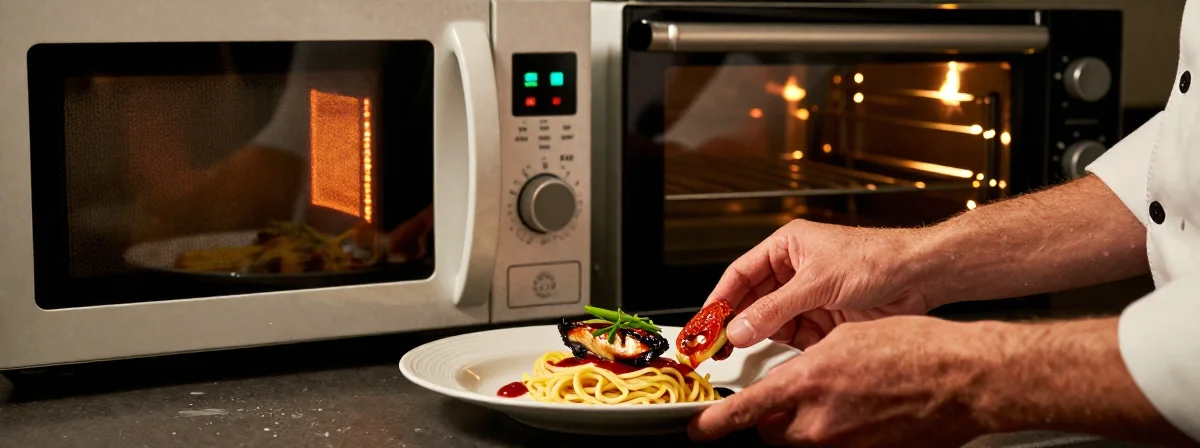
Have you ever noticed how a slice of bread transforms completely different depending on whether you warm it in the microwave or the oven? The same piece of bread emerges soft and steamy from the microwave, yet golden and crisp from the oven. It’s not magic—it’s science! The way these two kitchen appliances interact with your food is truly remarkable, and understanding their unique powers can transform how you cook forever. Could it be that these appliances are speaking different languages to your food, using completely different methods to create these contrasting results?
The fascinating truth is that microwaves and ovens don’t just heat food—they fundamentally change it in different ways. Microwaves are like tiny molecular conductors, orchestrating a symphony of water molecules throughout your food, while ovens are more like patient sculptors, carefully shaping your food from the outside in. What if I told you that these differences aren’t just about convenience—they’re about unlocking entirely different culinary possibilities that most home cooks never even consider?
Let me share a little secret: professional chefs understand these differences intimately, and they use this knowledge to create dishes with specific textures and flavors. It’s not about being “better” at cooking—it’s about having more tools in your culinary toolkit. Could it be that understanding this simple distinction could revolutionize your home cooking without requiring any special skills or equipment?
How Do Microwaves Actually Heat Your Food?
Could it be that microwaves are actually high-speed steamers in disguise? The magic happens at the molecular level! Microwaves send out waves that directly excite water molecules throughout your food. It’s like giving tiny water molecules a energetic dance party—they vibrate so rapidly that they generate heat. This process is called dielectric heating, and it’s absolutely fascinating to consider how these invisible waves can penetrate your food and make water molecules wiggle with such enthusiasm.
I can’t help but wonder about the sheer efficiency of this process. Unlike ovens that work from the outside in, microwaves heat your food from the inside out (well, almost—about 2 inches deep). This means that much of the water in your food turns into steam almost simultaneously throughout the food. This steam doesn’t just disappear—it gets trapped inside your food, making everything wonderfully soft and moist. That’s why microwaved bread feels so different from oven-warmed bread—it’s literally filled with steam that makes it pliable and soft.
What if I told you that even the driest foods contain water molecules? Even a cracker has about 2-3% water content. This is why you can actually heat up seemingly dry foods in a microwave—they’re just not water-rich enough to heat effectively. I once accidentally microwaved a dry lightbulb out of curiosity (don’t try this at home!), and it got incredibly hot because glass contains trace amounts of water molecules that can be excited by microwaves. It’s these kinds of unexpected discoveries that make cooking such a wonderful adventure!
Why Do Ovens Create That Perfect Crisp Exterior?
Have you ever noticed how oven-baked goods develop that beautiful golden-brown crust while remaining soft inside? Ovens work on a completely different principle—they’re essentially hot boxes that heat your food from the outside in. The high temperatures in an oven (often 350°F or higher) cause the surface of your food to heat up rapidly, leading to the Maillard reaction and caramelization that create those delicious flavors and textures we love.
I can’t help but marvel at how ovens carefully balance heating and drying. The hot air in an oven has a tremendous capacity to absorb moisture, which is why foods tend to dry out in ovens. Think about baking bread—the exterior becomes crusty and golden while the interior remains soft. This happens because by the time the heat penetrates to the center, the exterior has already lost much of its moisture to the dry, hot air. It’s like nature’s perfect timing mechanism!
What if I told you that bakers have discovered clever ways to manipulate this process? Professional bakers often place a pan of water in the oven when baking bread to increase humidity, creating a steamy environment that helps the crust develop properly. This little trick demonstrates how understanding the science of ovens can lead to professional-quality results at home. Could it be that the difference between a good baker and a great baker often comes down to understanding these subtle interactions between heat and moisture?
Can You Really Cook Everything in Either a Microwave or an Oven?
I’ve often wondered about the limits of these cooking methods. While microwaves are incredibly efficient at heating foods with water content, they struggle with foods that are frozen solid. This is because ice molecules don’t absorb microwave energy as effectively as liquid water molecules do. That’s why frozen foods often have uneven heating—some spots of ice melt first and get extremely hot while other areas remain frozen.
Could it be that the real magic comes from understanding when to use each appliance? For example, microwaves are perfect for reheating leftovers, softening bread, or creating steamy textures, while ovens excel at creating crispy exteriors, baking bread, and developing complex flavors through caramelization. I once tried to bake a cake in a microwave and ended up with something more like a dense, rubbery brick—proof that not everything works in every appliance!
What if I shared a little experiment you can try at home? Take two identical slices of bread, one fresh and one stale. Warm one in the microwave (with a damp paper towel to prevent it from getting too soggy) and the other in the oven. The microwave will make the stale bread temporarily soft by redistributing moisture, while the oven will make it crispier. The microwave version will likely become stale again faster, while the oven version might actually improve in texture. It’s these kinds of small discoveries that make cooking such a rewarding journey!
How Does Your Kitchen Environment Affect Cooking Results?
Have you ever noticed how food seems to dry out differently depending on the humidity in your kitchen? The moisture content of the air around your food can significantly impact how it cooks. In a humid environment, foods tend to retain more moisture during cooking, while in dry environments, they can lose moisture more quickly. This is why recipes sometimes need adjustment based on your local climate!
I can’t help but wonder about the subtle ways our environment influences our cooking. For example, if you live in a very humid climate, microwaved foods might stay moist longer, while oven-baked goods might need slightly longer baking times to achieve the same crispness. Conversely, in dry climates, microwaved foods might become overcooked more quickly, while oven-baked items might develop crusts more rapidly. Could it be that understanding these environmental factors could help you adjust recipes to achieve perfect results no matter where you live?
What if I told you that you can actually control this to some extent? For instance, if you find your microwave making foods too soggy, try venting the microwave slightly by opening the door briefly during cooking. If your oven seems to dry foods out too much, you might try placing a small dish of water on the bottom rack (away from direct heat) to increase humidity. These small adjustments can make a world of difference in your cooking outcomes!
Could There Be a Perfect Combination of Microwave and Oven Cooking?
Have you ever considered that the most amazing cooking results might come from combining these two methods? Many professional chefs actually use a combination approach—preparing certain elements in a microwave for efficiency and finishing them in an oven for texture and flavor development. This hybrid approach allows them to create dishes that would be impossible using either method alone.
I can’t help but wonder about the untapped potential of this combined approach. For example, you could use a microwave to quickly rehydrate dried mushrooms before sautéing them in a pan, or microwave potatoes partially before roasting them for a crispy exterior and fluffy interior. The possibilities are truly exciting when you start thinking about how these methods complement each other rather than competing!
What if I shared a simple technique that combines both methods? Try microwaving bread for about 20 seconds to make it pliable, then finishing it in the oven for a minute or two to develop a slight crust. The result is bread that’s warm throughout with a pleasant crust—something neither method could achieve alone. Could it be that the future of home cooking lies not in choosing between methods, but in skillfully combining them to create perfect results every time?
The Hidden Connection Between Cooking Methods and Food Texture
Could it be that the fundamental difference between microwave and oven cooking comes down to one simple concept: moisture management? Microwaves excel at redistributing moisture throughout food, making everything soft and pliable, while ovens excel at removing moisture from the surface, creating textures ranging from crisp to chewy. Understanding this fundamental difference can transform how you approach cooking!
I can’t help but marvel at how this simple principle explains so many cooking mysteries. Why does microwave popcorn get soft and chewy while stovetop popcorn gets light and crispy? Why does microwave pizza become soggy while oven-baked pizza develops a beautiful crust? The answers all come back to how these appliances manage moisture in different ways. What if I told you that once you understand this principle, you can adapt almost any recipe to your available equipment and achieve wonderful results?
What if I shared a final revelation that ties everything together? The most successful cooks aren’t necessarily those with the most expensive equipment—they’re the ones who understand the science behind their tools and can adapt their techniques accordingly. Whether you’re using a microwave, an oven, or both, the real magic comes from understanding what each tool does to your food and using that knowledge to create exactly the texture and flavor you desire. Could it be that the most important kitchen tool isn’t an appliance at all—it’s your understanding of how they work?