
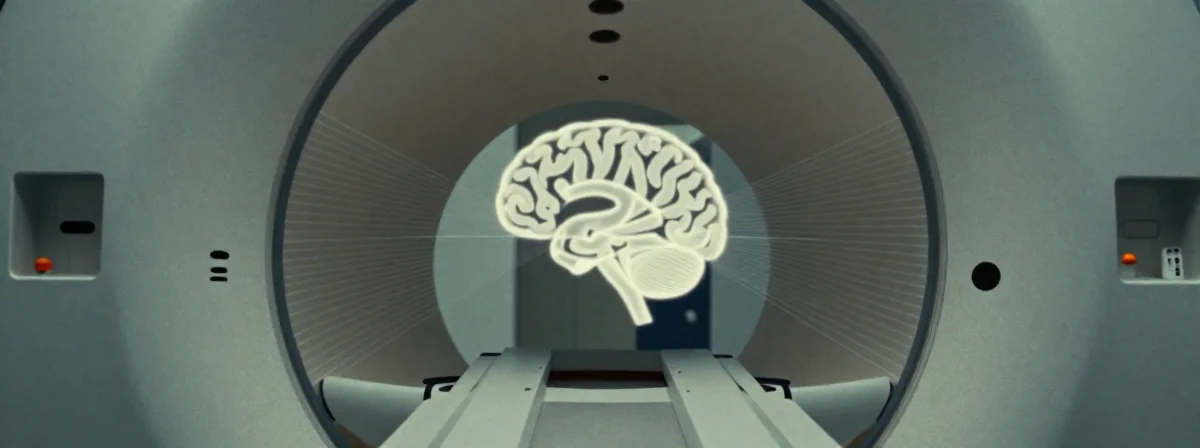
Medical imaging has revolutionized healthcare, but most of us only interact with these technologies when we’re already stressed about health issues. You’ve probably had that moment when your doctor orders a scan—either an MRI or CT—and you’re left wondering what the difference is, why one test was ordered over another, and why one might find something the other missed. The truth is, these aren’t just fancy cameras taking pictures of your insides; they’re sophisticated tools that actually see different things in fundamentally different ways. Understanding this can help you be a more informed patient and appreciate the incredible science happening right under your nose.
When I worked in radiology, I saw countless patients who were confused about why they needed both types of scans or why one test came back negative while another revealed critical information. The most common frustration was when a CT scan showed nothing, but an MRI later revealed the exact problem causing their pain. This isn’t about one test being “better” than the other—it’s about each technology having unique strengths that make them better suited for specific conditions. Let’s break down what’s actually happening inside these machines and why they see different things.
Why Do Doctors Order Both MRI and CT Scans?
Your doctor isn’t playing favorites when they order different types of scans. Each technology excels at visualizing different types of tissues and conditions. Think of it like having two different types of flashlights—one gives you a bright, wide beam that’s great for seeing the big picture, while the other provides a narrow, intense beam perfect for examining fine details. Your medical team selects the right “flashlight” based on what they’re trying to find.
For example, if you have back pain, a CT scan might be ordered first because it’s excellent at showing bone abnormalities, fractures, or spinal alignment issues quickly. If those results come back negative but your pain persists, an MRI might be ordered next because it’s far superior at visualizing soft tissues like herniated discs, nerve compression, or inflammation that a CT might miss entirely. This sequential approach isn’t redundant—it’s strategic problem-solving using the right tool for each investigative stage.
How MRI Actually Works (It’s Not Magic, Just Physics)
When you slide into that MRI tube, you’re entering one of the most powerful magnets ever created. Your body is mostly water, and water contains hydrogen atoms with single protons that act like tiny magnets. In the MRI’s powerful magnetic field, these protons align like tiny compass needles. Then, radiofrequency waves are pulsed through your body, knocking these protons out of alignment. When the pulses stop, the protons realign, releasing faint electromagnetic signals as they do. The MRI machine detects these signals, and sophisticated computer algorithms convert them into detailed images.
The key insight is that different tissues realign at different rates. Bone, fluid, muscle, and fat all emit unique signal patterns because their hydrogen atoms behave differently. This is why MRI is so good at showing soft tissue problems—it can distinguish between subtle differences in tissue composition. Importantly, this entire process uses non-ionizing radiation (just strong magnetic fields and radio waves), which is why MRI doesn’t carry the same radiation risks as CT scans.
Why CT Scans Are Like 3D X-Rays (And When That Matters)
CT scans, on the other hand, work much like a sophisticated X-ray machine. Instead of taking a single flat image, CT scanners rotate X-ray tubes and detectors around your body, capturing hundreds of thin cross-sectional images (slices). A computer then stacks these slices to create a detailed 3D model of your internal structures.
The magic here is in how different tissues absorb X-rays. Dense materials like bone absorb more radiation and appear white, while softer tissues absorb less and appear in various shades of gray. Air appears black. This contrast makes CT scans exceptionally good at showing bone fractures, bleeding in the brain, lung abnormalities, and other conditions where density differences are key. The process does involve ionizing radiation, which is why radiology teams carefully limit exposure to only the necessary areas—following the ALARP principle (As Low As Reasonably Practicable).
The Critical Difference: What Each Scan Actually “Sees”
Here’s where most patients get confused: MRI and CT don’t just show your body from different angles—they actually visualize fundamentally different things. MRI primarily detects hydrogen protons (mostly from water in your tissues) and how they behave in a magnetic field. This makes it ideal for soft tissues, brain structures, ligaments, and other areas where water content varies significantly.
CT scans, meanwhile, measure how much X-ray radiation is absorbed by different tissues. This makes them superior for visualizing bone structures, calcifications, lung abnormalities, and acute bleeding. Think of it this way: if you’re looking for a tiny crack in a bone, CT is your best bet. If you’re looking for a torn ligament or a brain tumor, MRI will likely provide the clearer picture.
Why One Scan Might Miss What the Other Finds
This brings us back to the original question: why did your CT scan show nothing while the MRI revealed the problem? The answer lies in what each technology excels at detecting. If you had back pain and the CT showed no bone abnormalities, your doctor likely suspected a soft tissue issue—a herniated disc compressing a nerve, inflammation, or a ligament problem. These conditions are virtually invisible on CT but stand out clearly on MRI due to the differences in water content and tissue composition they reveal.
Similarly, if someone has a suspected stroke, a CT might be ordered first to quickly check for bleeding (which appears bright white), while an MRI would be better at detecting the subtle changes in brain tissue that indicate ischemic stroke. Each test provides different information, and sometimes both are necessary to get the full picture.
Are These Scans Safe? Understanding the Risks and Benefits
MRI uses strong magnetic fields and radio waves, which don’t damage tissues or cells. The main concerns are with metal implants (like pacemakers or aneurysm clips) and the need to remain perfectly still during the scan. CT scans do use ionizing radiation, which carries a small risk of DNA damage and potential cancer risk with repeated exposure. However, the dose from a single diagnostic CT scan is relatively low, and the diagnostic benefits almost always outweigh these minimal risks.
Modern radiology departments carefully justify each scan and optimize the dose to use only what’s necessary. The ALARP principle ensures patients aren’t exposed to more radiation than needed while still getting the diagnostic information required. For comparison, the radiation dose from a chest CT is roughly equivalent to a few years of natural background radiation, and the risk remains statistically small for diagnostic scans.
Beyond MRI and CT: The Amazing World of Medical Imaging
While MRI and CT are among the most common advanced imaging techniques, they’re just two tools in an expanding arsenal. PET scans (Positron Emission Tomography) visualize metabolic activity by tracking how tissues process a radioactive tracer, making them excellent for detecting cancer and monitoring treatment response. SPECT (Single Photon Emission Computed Tomography) combines nuclear medicine with CT technology to show blood flow and function in organs. Each technology offers unique insights that complement the others.
The next time you or a loved one needs a medical scan, you’ll have a better understanding of what’s happening. These aren’t just mysterious procedures—they’re carefully designed scientific tools that have saved countless lives by providing non-invasive views into our bodies. While the technology is complex, the principles behind it are fascinating and worth understanding. After all, being an informed patient is one of the most powerful tools you have in healthcare today.