
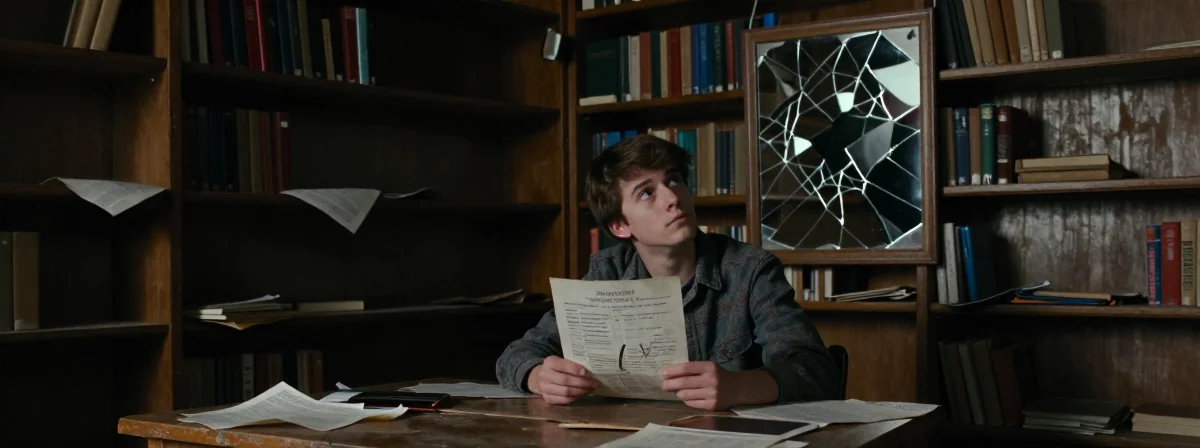
You think you remember what you had for breakfast this morning? Good luck. Now try remembering what you had for breakfast three days ago. See? That’s how history works — except it’s been “three days” since the invention of writing, and we’re still arguing about what really happened. It’s like a game of telephone played across millennia, with everyone adding their own dramatic flair. Let’s break down why history is less “what actually happened” and more “what someone really wanted us to believe happened.”
Let’s Be Honest
N. Memory Isn’t Reliable — And Neither Is History You can’t trust your own brain to remember what you did yesterday, yet we expect ancient accounts to be the gospel truth? Of course, they’re not. History is just a series of people making educated guesses, padding their numbers, and maybe even throwing in a space shuttle for good measure. It’s like that one friend who always exaggerates their stories — except this time, it’s written down and taught in schools. Fun, right?
N. History Is More Like Civil Law Than Criminal Law In criminal law, you need proof beyond a reasonable doubt. In civil law? Just a preponderance of evidence. History operates on the civil law model: “Yeah, it probably happened this way, but who’s going to argue with the guy who wrote it down 700 years later?” It’s the legal equivalent of “I swear, I saw it with my own eyes — even though I wasn’t there.”
N. 700 Years Later? That’s Not “History” — That’s Fan Fiction If a source is written 700 years after the fact, it’s not credible. It’s like trying to write a biography of your great-great-great-grandparents based on family legends passed down through generations — but with more battles and fewer awkward dinner conversations. You’re bound to get things wrong. You’re bound to make things up. You’re bound to include a random space shuttle because why not?
N. Numbers in Ancient History Are Just Placeholders Ever notice how every ancient battle involves armies in the millions, even when the entire population of the known world was probably less than that? It’s like when your grandpa says he fought in a war where “hundreds” of people were involved, but you know he just means “a few dozen.” Ancient chroniclers just added a zero because big numbers sound more impressive. It’s the oldest trick in the book — and the oldest trick in the history book.
N. Propaganda Was Invented Before the Printing Press Ancient people weren’t any more objective than we are today. They just had fewer ways to spread their propaganda. A battle account that says “our brave warriors fought against 50,000 evil enemies and only lost 10” is no different from a modern political ad. The only difference? Today’s propaganda is just better produced. Ancient propaganda was basically a guy standing on a hill yelling, “We won! They had, like, a ton of people! Trust me!”
N. Cats, Gods, and Stupid Decisions The idea that ancient Egyptians surrendered because Persians put cats in front of them is adorable — until you realize it’s probably just as made-up as the rest of the story. And even if it’s true? That’s some Darwin Award-level reasoning. “Oh no, we can’t attack because the enemy has cats, and cats are sacred!” Meanwhile, the Persians are just sitting there, thinking, “Damn, this is working.” It’s like a military version of a vegan restaurant — nobody expects you to fight when there’s cute animals involved.
N. Bias Is Built In — Even the “Objective” Historians Every historian, ancient or modern, has an agenda. Even the ones who think they’re being objective are just filtering events through their own cultural lens. It’s like trying to watch a movie with sunglasses on — you think you’re seeing the truth, but you’re just seeing a filtered version of it. Ancient historians were no different. They just had fewer sunglasses and more togas.
Food for Thought
History isn’t a record of what happened — it’s a record of what people wanted us to think happened. The next time you read about some epic battle or ancient miracle, remember: it’s probably more like a bad memory than a factual account. And maybe, just maybe, the real story is that nobody really knew what they were doing back then — and they still don’t. So the next time you feel confident about your own memory, take a deep breath. You’re probably just making things up, too.