
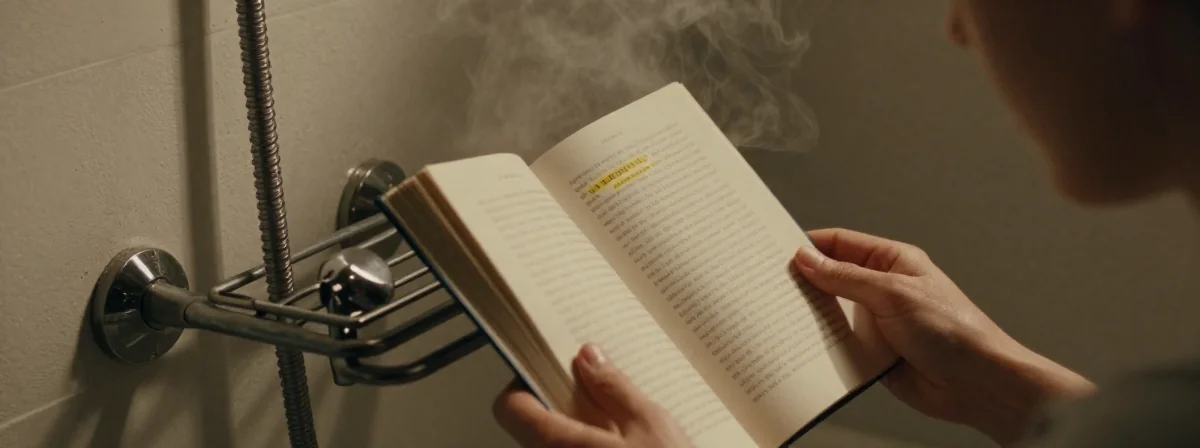
Ever notice how some random facts stick with you for decades—like the ingredients in a shampoo bottle or a bizarre story from an old magazine? These aren’t just random memories. They’re artifacts of a deeply ingrained habit: bathroom reading. The pattern here isn’t accidental. What the data shows is that for generations, bathrooms became accidental libraries, and those few minutes of forced downtime created a unique space for information to seep in. This anomaly suggests something deeper about how we process information when we’re unguarded.
For many of us, the bathroom was the first place we learned to kill time with words. Whether it was a stack of Readers Digest, an Uncle John’s Bathroom Reader, or even the back of a shampoo bottle, these moments weren’t just about passing time. They were training grounds for how we consume information in small, digestible chunks. The fact that you can still recite the ingredients of Head & Shoulders or remember a Guinness World Records fact from 1982 isn’t random—it’s evidence of a system that works.
Why Did Every Bathroom Have a Stack of Magazines?
The truth is, bathrooms were the perfect ecosystem for this habit. Think about it: a captive audience, a few minutes of forced solitude, and nothing else to do. The pattern here is obvious—bathroom reading became a ritual because it filled a void. But what’s fascinating is how this ritual evolved into something more. Readers Digest wasn’t just a magazine; it was engineered for this exact scenario. Short articles, quick facts, and bite-sized jokes meant you could open to any page and dive in. This wasn’t accidental. It was a calculated design to match the environment.
What the data shows is that these bathroom books and magazines weren’t just random clutter. They were curated experiences. Take Uncle John’s Bathroom Reader, for example. It wasn’t just a collection of facts; it was a yearly tradition, a book full of 5-10 minute stories and trivia designed to be consumed in pieces. The counterintuitive point here is that these books weren’t just for adults—they were often the first place kids learned to read independently. The soap-on-the-mouth bubble blowing kid who later had an existential crisis over the word “dye” on a soap bottle? That’s not just a funny anecdote. It’s evidence of how these moments shaped our relationship with language.
The Psychology of Forced Reading Time
What’s really interesting is how this habit reflects deeper psychological patterns. When you’re on the toilet, you’re in a state of forced mindfulness. There’s no multitasking, no distractions. Your brain is open to absorbing information without resistance. This is why you can still recall that Readers Digest article about Bill Cosby from decades ago, or the time you convinced yourself tampon packaging meant you’d get TSS if you didn’t track the time. These aren’t just memories; they’re proof of how our brains encode information when we’re in a low-stakes, high-attention environment.
The unexpected insight here is that bathroom reading wasn’t just about passing time—it was about creating a safe space for curiosity. Think about the kid who spent hours drooling over the toy section in the Sears catalog or the teenager who discovered Playboy had more than just pictures. These weren’t just idle moments. They were opportunities to explore the world in small, controlled doses. The pattern here is that bathrooms became the first place we learned to navigate information independently. No parents, no teachers—just you and the words on the page.
The Hidden Library in Plain Sight
What many of us forget is that these bathroom books and magazines were often the only literature in the house. The Far Side compilation books, the Guinness World Records, even the Farmers Almanac—they weren’t just bathroom reading material. They were the family’s reference library. The stack of Calvin & Hobbes books in the guest bathroom wasn’t just for guests; it was a curated collection of stories that everyone could enjoy. The fact that you can still recite the ingredients on a Dr. Bronners bottle from memory? That’s because those moments weren’t just filler—they were the only literature available.
The escalation here is how this habit persisted even as technology changed. While today’s kids might scroll through their phones, the principle is the same. The need for a few minutes of uninterrupted reading hasn’t disappeared—it’s just shifted platforms. The counterintuitive point is that the habit itself is timeless. Whether it’s a physical book or a digital screen, the bathroom remains a space where we’re willing to consume information in small, manageable pieces.
The Enduring Ritual of Bathroom Reading
What the data shows is that bathroom reading wasn’t just a childhood quirk. It was a ritual that shaped how we consume information for life. The fact that you can still find yourself scanning shampoo bottle ingredients or zoning out at wood grain patterns isn’t just nostalgia. It’s evidence of a habit that’s deeply wired into our routines. The pattern here is clear: bathrooms became the accidental library, and those few minutes of forced reading became a lifelong habit.
The final reframing is this: bathroom reading wasn’t just about killing time. It was about creating a space where curiosity could flourish without judgment. Whether it was learning about Bill Cosby’s past, discovering the meaning of “Sodium Lauryl Sulfate,” or even having a full-blown existential crisis over a soap bottle, those moments weren’t wasted. They were the foundation of how we learn to navigate information in small, digestible pieces. And that, more than anything, is why you can still remember that weird fact from decades ago. It’s not just a memory—it’s a habit that’s still with you.