
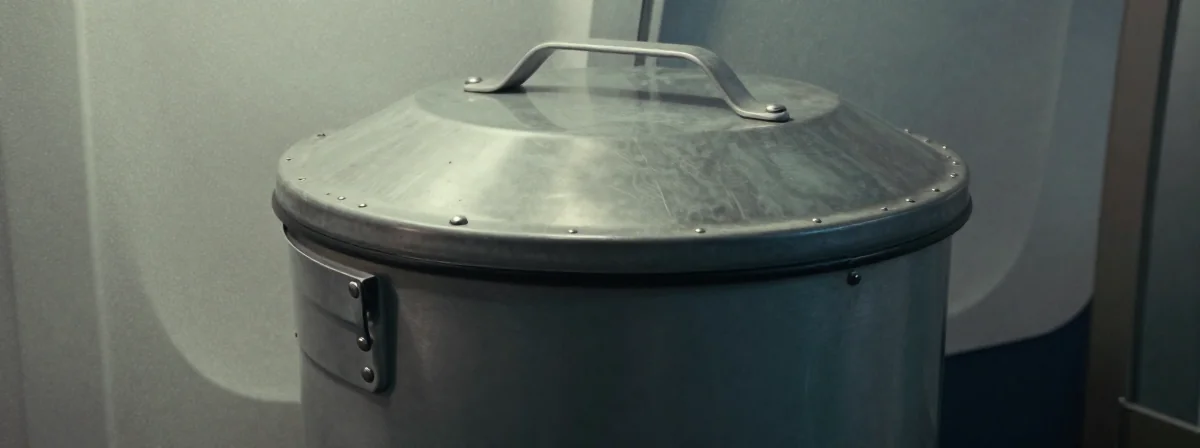
Every time you step onto an airplane, you’re surrounded by dozens of safety features designed to protect you at 35,000 feet. From redundant navigation systems to reinforced cabin structures, aviation engineers have thought of everything—except maybe the strange, airtight trash can in the bathroom. That peculiar design isn’t just an afterthought; it’s a carefully engineered safety system with a dramatic backstory that few passengers ever consider.
The small metal or plastic receptacle with the tight-fitting lid in airplane lavatories represents one of aviation’s most important fire prevention measures. While it might seem like a minor detail in the grand scheme of flight safety, this unassuming trash can has actually prevented numerous disasters and saved countless lives through its simple yet brilliant design.
Why Would a Trash Can Need to Be Airtight?
Imagine you’re thousands of feet in the air when suddenly a fire breaks out in the lavatory. On the ground, you might grab a fire extinguisher or call for help. In the air, there’s no escape route and limited resources. This is precisely why aviation engineers designed lavatory trash cans to be airtight—they create a controlled environment that can contain and extinguish fires before they spread.
The airtight design serves as a passive fire suppression system. In the event of a fire, the tight seal minimizes oxygen supply, effectively starving flames of the oxygen they need to grow. This isn’t just theoretical; there have been documented cases where lavatory fires were contained within these specially designed receptacles, preventing what could have been catastrophic in-flight emergencies.
Consider this analogy: It’s like having a miniature fireproof safe built into every airplane bathroom. When closed, the lid creates a seal so effective that it can contain a fire for a specified period—typically long enough for the aircraft to descend to a safer altitude or for crew to respond appropriately.
The Hidden Danger of Cigarette Butts
While smoking has been banned on commercial flights for decades, the airtight trash can design still includes a critical safety feature related to this now-illegal activity. Many passengers—and even some crew members—don’t realize that cigarette butts are often disposed of in these receptacles rather than the designated ashtrays.
The reason for this counterintuitive design requirement becomes clear when you understand the physics of flight. At cruising altitude, cabin pressure is carefully regulated, but during descent or emergency depressurization, pressure differentials can become significant. An improperly sealed trash can could become a conduit for fire to spread throughout the cabin’s ventilation system—a scenario that has been the cause of at least one major aircraft disaster in aviation history.
The airtight lid prevents this by creating a pressure barrier. Even if a fire starts in the bin, the seal contains smoke and flames, preventing them from being drawn into the cabin’s ventilation system. This simple design feature addresses a specific hazard that might seem obscure but has real-world consequences.
The Regulator’s Red Line: Why It’s a “No Fly” Item
Aviation regulators treat the integrity of lavatory trash cans with remarkable seriousness. Unlike many other aircraft components that might be deferred or repaired before the next flight, a damaged or improperly functioning trash can lid is considered a “no fly” item. This means an aircraft cannot legally take off with passengers if the lid doesn’t seal properly.
This strict regulation stems from a hazard assessment process used in aviation safety. Engineers and regulators identify potential failure points and assess their consequences. In this case, a failure of the trash can lid (whether through damage, misuse, or mechanical failure) creates a pathway for fire to spread—a hazard deemed unacceptable in the risk assessment matrix.
The minimum equipment list (MEL) for commercial aircraft explicitly includes the lavatory trash can as a critical safety component. This isn’t just about following rules; it’s about maintaining the delicate balance of safety margins that make air travel statistically safer than many other forms of transportation. While it might seem excessive to ground an entire aircraft over a trash can lid, the potential consequences of ignoring this safety feature make the regulation entirely justified.
The Design Dilemma: Function vs. Friction
If you’ve ever used an airplane’s bathroom trash can, you’ve likely noticed how the lid doesn’t just open easily—it requires a deliberate push to close properly. This design feature, while effective from a safety perspective, creates an interesting user experience challenge. The mechanism is engineered to create a tight seal, which means it needs to overcome the resistance of whatever’s been thrown in.
This friction point serves a dual purpose. First, it ensures that the lid closes properly after use, maintaining the airtight seal. Second, it discourages casual disposal of cigarette butts by requiring a conscious effort to close the lid. However, this design has its drawbacks—passengers often don’t push the lid down fully, leaving it partially open and defeating the purpose of the airtight seal.
The aviation industry has recognized this challenge and is gradually introducing alternative designs. Some newer aircraft now feature foot-operated trash cans that eliminate the need for hand contact while still maintaining the necessary seal. These designs represent a fascinating intersection of safety engineering and user experience design—balancing critical safety requirements with the practical realities of passenger behavior.
The Future of Flight’s Finest Trash Cans
Looking ahead, the evolution of airplane lavatory trash cans continues. The most advanced designs now incorporate sensor technology that opens the lid automatically when a hand approaches, closes when the hand moves away, and maintains the critical airtight seal when not in use. These systems eliminate the need for manual operation while preserving the safety features that make these receptacles so important.
The transition to these advanced systems isn’t happening overnight, however. Retrofitting existing aircraft with new lavatory systems is expensive and time-consuming, so the older, manual designs remain common on many commercial flights. Additionally, regulatory approval for new designs requires extensive testing and certification processes that can take years to complete.
Despite these challenges, the fundamental principle remains unchanged: airplane trash cans are about more than just waste disposal—they’re critical safety components in a complex system designed to protect passengers and crew during the rare but potentially catastrophic event of an in-flight fire. The next time you use an airplane bathroom, take a moment to appreciate the simple yet brilliant engineering that makes this small detail so important to your safety at 30,000 feet.