
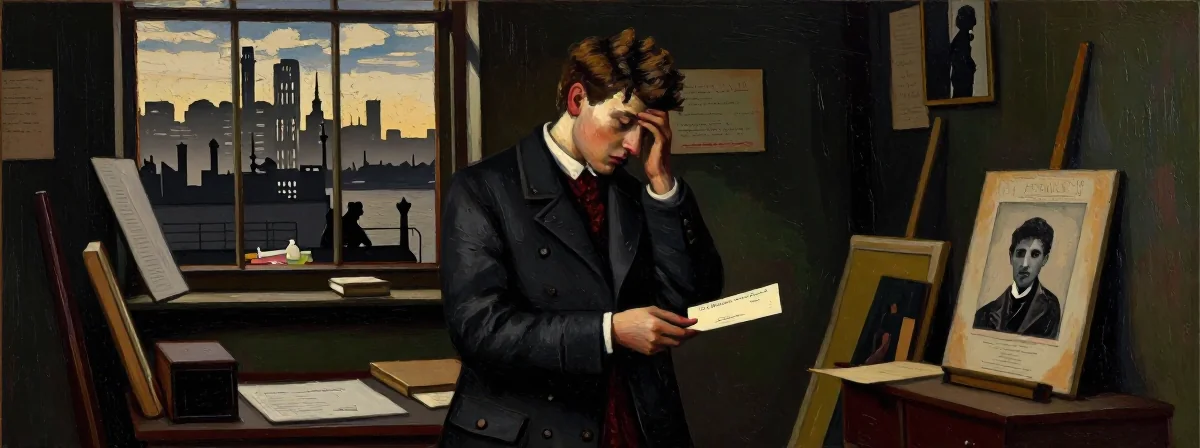
Every historical figure has moments that shape their trajectory, but few are as intriguing as Adolf Hitler’s double rejection from Vienna’s Academy of Fine Arts. Most accounts focus on how World War I transformed him, but what if that earlier rejection created a vulnerability that war only amplified? The connection between these two events might hold clues to understanding one of history’s most complex figures in a new light.
What we know so far is that Hitler, like many young men of his generation, wasn’t immune to the draft. Art school rejection didn’t grant him exemption, and the psychological impact of being denied a path to artistic expression might have altered how he perceived the war that followed. Multiple sources suggest that had he been accepted, his perspective on military service could have been fundamentally different—perhaps viewing it as an obstacle rather than an opportunity.
Reports indicate that Hitler’s personal letters from his Vienna period reveal a man already disillusioned with the political climate, struggling with identity issues that rejection from art school undoubtedly intensified. This pre-war psychological state may have created fertile ground for the nationalist sentiments that would later flourish during his military service.
Could Art School Acceptance Have Changed Hitler’s Path?
The conventional narrative positions World War I as the pivotal moment that forged Hitler into the figure history remembers. And indeed, the war did have profound effects on him and his generation. But what if we consider the possibility that his earlier rejection from art school created a specific kind of psychological wound that war only exploited?
Imagine being told your artistic vision isn’t worthy of an institution. Now imagine that same voice—the voice of authority—demanding you march into industrialized warfare. The contrast might have created a unique psychological tension. Had Hitler been accepted, he might have entered the war with a different mindset—one focused on returning to his artistic ambitions rather than finding glory in battle.
Historical analysis shows that many of Hitler’s contemporaries who had professional paths before the war viewed military service differently than those without clear civilian futures. The psychological impact of having a defined civilian identity before war seems to have created a buffer against the extreme nationalist fervor that swept through many veterans.
Why Hitler Didn’t Use Chemical Weapons in WWII
One of the most discussed peculiarities of Hitler’s military strategy is his refusal to use chemical weapons during World War II, despite having stockpiles available. Reports indicate this decision wasn’t simply about moral reservations. Multiple sources suggest his personal experience with mustard gas during WWI played a significant role.
What we know so far about Hitler’s mustard gas exposure comes from his own account in Mein Kampf. While some historians question the severity of his claimed injuries, there’s no doubt he was present during battles where mustard gas was deployed. The psychological impact of this experience—whether actual or perceived—appears to have created a lasting aversion to chemical warfare.
However, the decision was also pragmatic. The Nazi military machine relied heavily on horses for transport—a vulnerability chemical weapons would have exploited. Unlike mechanized forces, horses couldn’t wear gas masks, and their loss would have crippled the German war effort. This logistical reality, combined with Hitler’s personal aversion, created a unique situation in modern warfare where chemical weapons weren’t used despite their availability.
How the Treaty of Versailles Created Lasting Resentment
The Treaty of Versailles is often cited as a primary catalyst for Hitler’s rise, and with good reason. But the story is more complex than simply “harsh terms led to revenge.” Historical analysis reveals that the treaty’s impact was amplified by pre-existing conditions in German society.
Reports indicate that while the treaty was indeed punitive, it wasn’t as devastating as often portrayed. What we know so far suggests that Germany’s post-WWI recovery was actually quite robust in many sectors. The real damage came from the psychological impact—the sense of national humiliation that political opportunists like Hitler could exploit.
Multiple sources suggest that Hitler’s personal narrative about the war and its aftermath resonated because it tapped into this collective wound. His “stab in the back” theory—that Germany hadn’t been defeated militarily but betrayed internally—provided an explanation that many Germans found more palatable than acknowledging defeat. This narrative wasn’t unique to Hitler but he became its most effective propagator.
The Psychological Impact of Military Defeat on a Generation
Hitler wasn’t unique in being shaped by World War I. Reports indicate that an entire generation of European men was profoundly affected by industrialized warfare. What we know so far about the psychological toll suggests that Hitler’s experience, while extreme, wasn’t fundamentally different from many of his peers.
Historical analysis shows that the trauma of trench warfare, the senseless loss of life, and the introduction of new technologies of destruction created a psychological landscape ripe for extremist ideologies. Multiple sources suggest that the breakdown of traditional social structures during and after the war created a vacuum that political movements could fill.
What makes Hitler’s case distinctive is how he transformed this collective trauma into a personal narrative of victimhood and revenge. His ability to articulate the unspoken resentments of his generation gave him a unique position in German politics. The war didn’t create these resentments—it merely amplified ones that were already present.
Comparing Hitler’s Narrative to Modern Political Strategies
The parallels between Hitler’s political messaging and modern political strategies are striking. Reports indicate that modern leaders facing perceived national decline often employ similar narrative techniques—blaming external forces, resurrecting past glories, and creating enemies to unify against.
What we know so far about propaganda effectiveness suggests that Hitler’s approach—combining national humiliation with a promise of restoration—remains a potent political tool. Multiple sources suggest that the specific historical context changes, but the psychological mechanisms remain consistent.
Historical analysis reveals that Hitler’s success wasn’t just about his personal charisma but about how effectively he tapped into existing social and economic conditions. The Great Depression, not art school rejection or WWI alone, created the perfect storm that allowed his message to take root. His earlier experiences merely provided the narrative framework he would later deploy.
Revisiting the Complexities of Hitler’s Formative Years
When examining Hitler’s path to power, it’s tempting to simplify—a single cause, a clear trajectory. But historical analysis reveals a more complex interplay of personal, social, and political factors. What we know so far suggests that art school rejection, WWI experience, the Treaty of Versailles, and the Great Depression all played roles, but their relative importance shifts depending on perspective.
Reports indicate that focusing solely on one factor—whether personal trauma or political context—provides an incomplete picture. Multiple sources suggest that Hitler’s rise was a convergence of his personal psychology, the specific historical moment, and the vulnerabilities in German society that made his message resonant.
What remains clear is that understanding these interconnected factors provides a more nuanced view of how historical figures emerge and how societies respond to crisis. The story of Hitler’s rise isn’t just about one man—it’s about the conditions that allow certain narratives to flourish.