
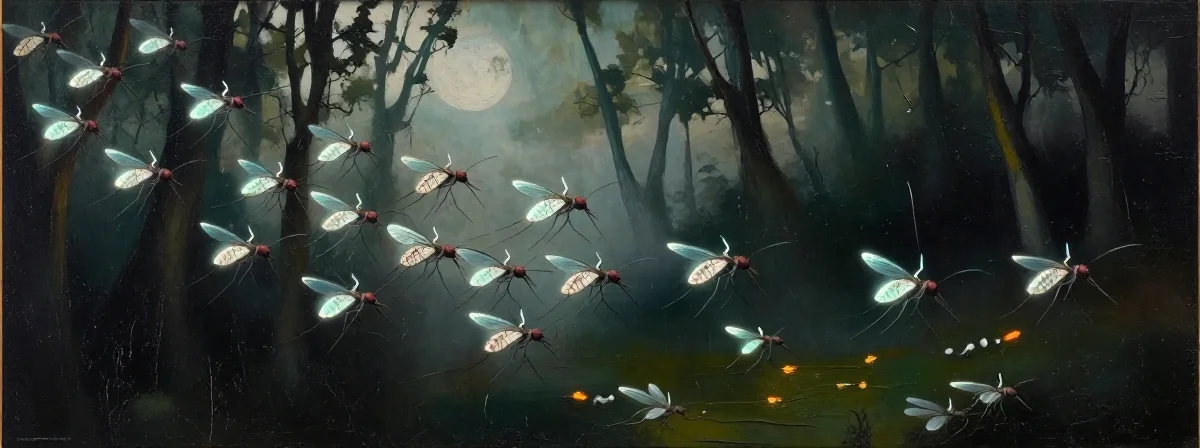
You’re sweating through your shirt, slapping at your arm—again. That tiny mosquito, the one that just landed and left a red welt, is part of an evolutionary code that’s been optimized for billions of years. It’s not just annoying; it’s a masterclass in resilience and ecological design. Let’s decode it.
Mosquitoes are the ultimate pests, but they’re also nature’s forgotten engineers. They don’t just exist—they run critical background processes in ecosystems. Think of them as the system administrators of the natural world, handling tasks you never knew needed doing.
System Analysis
Mosquitoes pollinate (even if they’re bad at it)
Yes, really. Females drink blood for protein when laying eggs, but males and females alike sip nectar from flowers. They’re not as efficient as bees, but they’re part of the pollination ecosystem—like a buggy open-source project that still gets the job done. Nature doesn’t care about efficiency; it cares about existence.They’re the ultimate data brokers of nutrients
Mosquitoes take tiny bites from large animals and redistribute those nutrients to smaller predators. It’s like a microtransaction system in nature—small, frequent transfers that keep the food web running. When a frog eats a mosquito, it’s consuming carbon that was once part of a mammal. This is how ecosystems recycle energy at the micro level.Their breeding code is unhackable

Mosquitoes breed in vast numbers because 99% of them get squashed or eaten. It’s a brute-force algorithm for survival. They’re like cryptocurrency miners—constantly replicating to stay relevant. Eradicate 900 siblings? No problem, the 1 survivor will make 900 more.
They’re not nutritious, but they’re everywhere
Individual mosquitoes are like digital one-liners—small but numerous. A frog might ignore a single mosquito, but a swarm is a meal. It’s not about nutritional density; it’s about availability. They’re the spam folder of the food chain—annoying, but always there.CO2 traps are their kryptonite
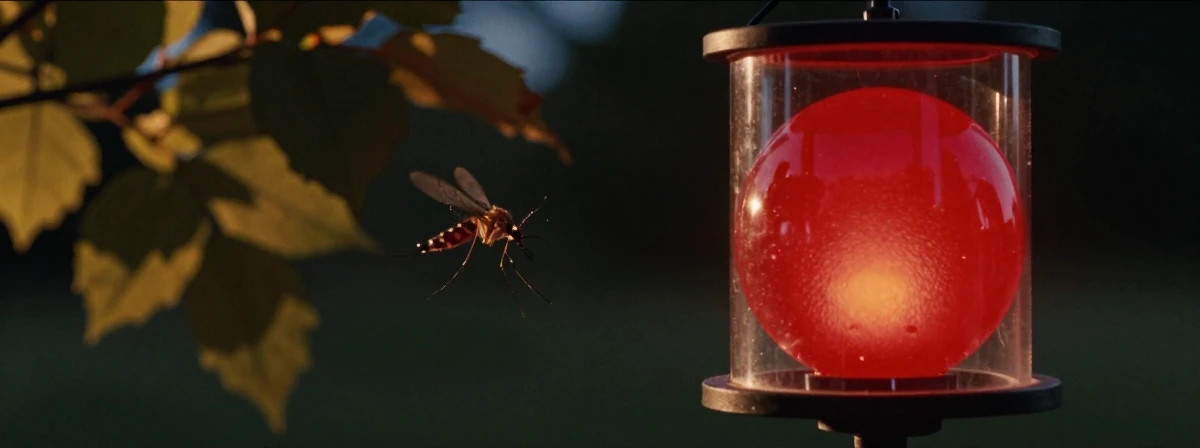
Mosquitoes are drawn to carbon dioxide like a hacker to an unpatched server. A CO2 trap is like a honeypot for bugs—it attracts them before they can find you. Set one up before people arrive, and you’ve patched the vulnerability before it’s exploited.
Bacterial donuts are nature’s kill switch
Mosquito dunks (Bacillus thuringiensis israelensis) are like a rootkit for larvae—they eat the young before they can become pests. It’s targeted elimination without collateral damage. Think of it as surgical strikes against the next generation.Gene drives could rewrite their code
With CRISPR, we could engineer mosquitoes to produce only sterile offspring. It’s like deploying a software update that bricks the next generation. This isn’t just killing them; it’s rewriting their genetic operating system.They’re not keystone, but they’re critical
No single plant depends on mosquitoes for pollination, and no animal exclusively eats them. But remove them, and the whole system has to recompile. It’s like removing a deprecated library—everything still works, but with unexpected bugs.Disease vectors are their dark feature
The blood-sucking isn’t just annoying; it’s a feature. Mosquitoes are nature’s disease spreaders, keeping populations in check. It’s like a natural antivirus—unpleasant but necessary for system stability.Fans are the simplest hack
A small USB fan creates airflow that disrupts their landing. It’s the ultimate low-tech solution—no chemicals, no traps, just physics. Nature’s bugs can’t handle a breeze—like a denial-of-service attack against pests.
Bottom Line
Mosquitoes aren’t just pests; they’re proof that even the most annoying systems have a place. They’re the background processes we curse but can’t live without. The next time one lands on your arm, remember—it’s not just trying to annoy you. It’s running code that’s been optimized for billions of years. Maybe instead of swatting, we should be studying. After all, understanding their system might be the only way to finally patch it.