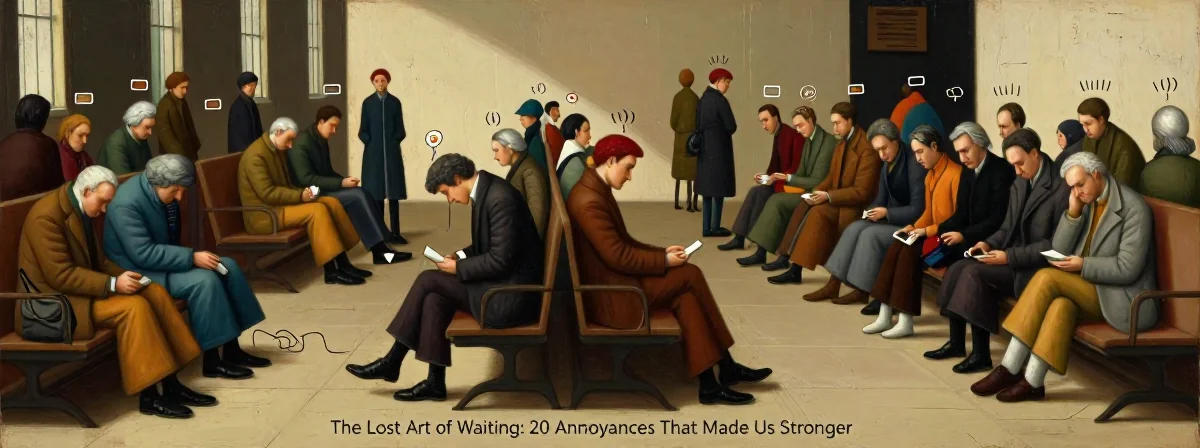
Some days I look at my teenager and wonder how they function without the constant digital umbilical cord. They don’t know a world where you had to plan your entire weekend’s finances before Friday’s close. They can’t fathom the terror of calling a crush’s house and getting their dad instead. We’ve traded patience for immediacy, and I’m not sure we’re all that better off for it.
The world we’re building today is made possible by the frustrations we overcame yesterday. Every convenience we take for granted was once a revolutionary solution to an unbearable problem.
The Future is Now
The Friday 5pm Deadline
No ATMs meant your weekend cash supply had to be carefully calculated. Withdraw too little and you’d ration purchases like a survivalist. Withdraw too much and you’d feel the guilt of “wasting” the bank’s trust. It taught us financial discipline in a way that today’s endless digital credit can’t replicate. Imagine explaining to a teenager that you had to physically transport your money between institutions.The Paycheck Hustle
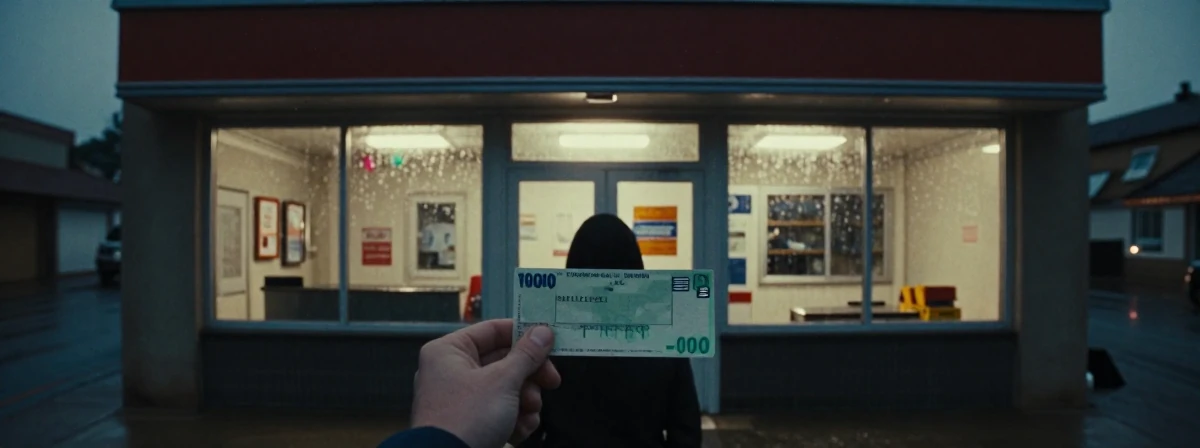
Cashing a check used to be an ordeal worthy of a movie plot. Before direct deposit and mobile banking, you either braved the bank after work or found the local “check-cashing” truck that parked strategically near businesses. Some even ran tabs for workers who promised to settle up Friday. It was a system built on trust that we’ve replaced with algorithms.
The DJ Sabotage
DJs intentionally talking over song endings wasn’t just bad luck—it was a form of copy protection. Before digital music, radio stations fought cassette recording with psychological warfare. The best DJs, though, played along with the game. A midnight call to your favorite station with a “recording request” might get you a clean version. It was a weird, beautiful collaboration between artist and audience.The Three-Year Movie Wait
Want to see a film again after theaters? You waited. First for VHS (often a year), then for TV rights (another two years). I saw Return of the Jedi in theaters at 10, then again at 14 when it finally hit home video. We built anticipation that way—each format felt like a special occasion because it was earned through waiting.The Landline Lottery
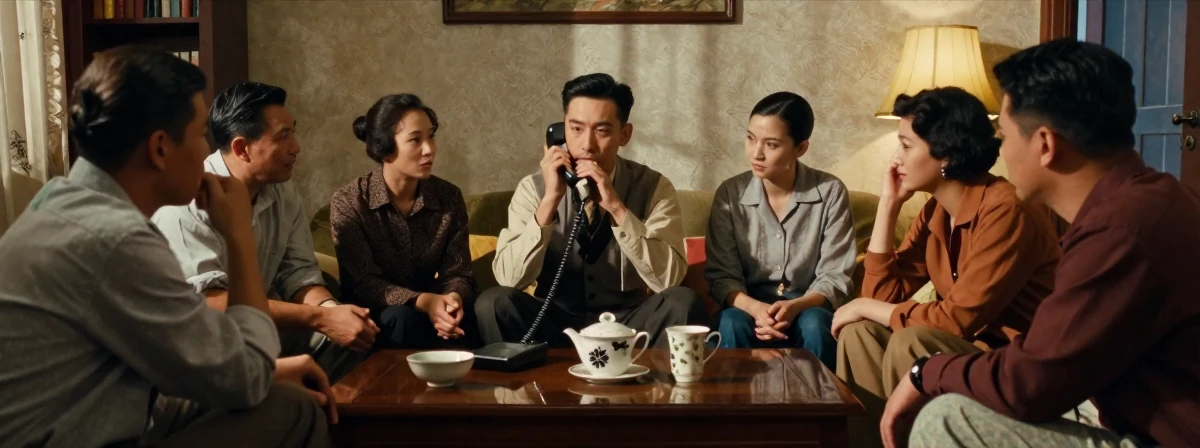
In many countries, having a phone number was a status symbol. Homes sold for premiums based on landline availability. In Argentina, neighbors would share numbers, creating a system where calls were relayed through trusted intermediaries. Want to reach someone? You called their neighbor first. It sounds inefficient now, but it built community in unexpected ways.
The Silent Hours
Remember when calls after 9pm were emergencies? When unanswered calls just meant trying again later? We weren’t expected to respond instantly. That pressure-free communication style feels like a superpower now. The expectation of immediate replies has fundamentally changed how we value our time and attention.The Internet-Phone Blockade
Modem users remember the terrifying disconnect sound when someone picked up the landline. It wasn’t just inconvenient—it was a daily reminder that our technologies were still learning to coexist. Today’s teenagers look at me like I’m from another planet when I explain that you literally couldn’t talk and browse at the same time.The Library Sisyphus
Research meant physically moving between reference materials. My state report required checking encyclopedias, atlases, and travel guides—each containing different fragments of the required information. Today’s students can’t imagine the physical labor of research before Google. But there was something profound about the hunt—each discovery felt earned.The Paper Mapabyrinth
Folding a map wasn’t just a skill—it was an art form. A wrong turn 30 years ago meant genuine panic. Now? We giggle at wrong turns because GPS recalculates before we even notice. The confidence that comes from digital navigation is wonderful, but we lost something in the process—the spatial awareness that came from physically manipulating a map.The Parental Gauntlet
Calling a crush meant navigating their family first. The teenage terror of “May I speak to [name]?” is a rite of passage that’s completely vanished. No awkward small talk with parents, no explaining why you’re calling. We lost a layer of social interaction that, while stressful, taught us how to navigate relationships through intermediaries.The Three-Channel Universe
Changing the TV meant physically getting up—often to select from three channels plus static. In my family of six, I was the remote. It taught patience for sure, but also a certain appreciation for limited choices. Now we complain about having too many options, forgetting the simple joy of knowing exactly what was available.The Photo Wait
Disposable cameras meant a week of anticipation before developing. The worst was finding blurry, disappointing photos after investing time and money. Today’s instant gratification has made us better photographers, but perhaps less patient artists. There was something magical about the delayed reveal of film.The Magazine Mentor
Stuck on a video game? You wrote to Nintendo Power or Tips & Tricks and waited months for advice. The anticipation built by that delay made the eventual solution feel like a revelation. Today’s instant walkthroughs are helpful, but they rob us of the problem-solving journey.The Carbon Copy Ceremony
Handheld credit card machines required manually entering every digit. Customers who can’t hold their cards still for tap-to-pay would have fled in terror. The ritual of carbon copies and signed receipts felt important—like a sacred transaction. Now it’s just a beep and a flash.The Manual Window Struggle
Rolling down windows required effort. In summer, it meant deciding whether the breeze was worth the physical work. It connected us to our vehicles in a way power windows can’t. Today’s teenagers look at me like I’m describing a medieval torture device when I explain this.The Interlibrary Odyssey
Want a book the local library didn’t have? You filled out forms, waited weeks for interlibrary loans, and hoped the fragile microfiche hadn’t degraded. The process taught resourcefulness that today’s instant digital access can’t replicate. We learned how to navigate systems before they were simplified for us.The Rewind Ritual
VHS tapes demanded active participation. Fast-forwarding through commercials wasn’t just an option—it was a necessity. The physical effort of navigating tape created a different kind of viewing experience. Today’s seamless streaming has its advantages, but we lost something in the automation.The Analog Clock Conspiracy
Kids today can’t read round clocks because we’ve optimized everything for digital displays. It’s a small loss, but symbolic of how we’ve traded foundational skills for convenience. There’s a certain elegance to understanding time in a circular format that’s been lost.The Bank Heist Logic
Before ATMs, banks stocked cash for payday—creating literal gold rushes. The NYC bank robber who chose the FBI office’s payday deposit is the perfect metaphor for our relationship with money then versus now. We understood its physicality in a way that’s now abstracted.The Check Float Calculation
Writing checks required financial calculus. “If I write this today, will it clear before my paycheck arrives?” was a weekly mental exercise. It taught us about banking systems in a way that today’s instant transfers can’t. We were more financially literate through necessity.
The convenience we enjoy today wasn’t always available. Each technological leap solved real problems that once defined our daily lives. But as we celebrate our progress, we should also remember what we’ve gained—and what we might have lost—in the transition from analog to digital, from waiting to instant, from struggle to solution.