

Ever stood in a stiff breeze on a cool day and felt like you were freezing—when the thermometer says the air isn’t actually colder? Most of us have, but few of us know why this happens. It’s not magic, and it’s not just “wind chill.” The truth is deeper, more surprising, and connected to how our bodies evolved to sense danger. Let’s unpack what’s really going on.
What Research Reveals
- Your body evolved to detect heat loss, not temperature.

Think about it like this: Your body is a heater, constantly generating warmth. If you’re losing heat faster than you can replace it, you feel cold—regardless of the air’s actual temperature. Historical precedent suggests this makes evolutionary sense. Just as you don’t sense your altitude but immediately notice if you’re falling, your body doesn’t track absolute temperature but detects when and how quickly you’re losing heat. This is why a stiff breeze feels colder than still air at the same temperature.
Wind carries away the air your body warmed.
When there’s no wind, a thin layer of air near your skin warms up to something between your body temperature and the ambient air temperature. Wind blows that warm layer away, replacing it with cooler air. This constant turnover means your body has to keep heating new air, accelerating heat loss. It’s like trying to keep a room warm by repeatedly opening the door to let out the warm air—eventually, you’ll lose the battle.Evaporation turns up the cold effect.
Even a tiny bit of sweat on your skin (or moisture from your breath) will evaporate faster in moving air. Evaporation is a cooling process—it pulls heat from your skin to change liquid water into vapor. Wind speeds this up, making you feel colder. This is why a breeze on a humid day feels more intense than on a dry one. The research indicates that evaporation can account for a significant portion of the cooling effect we associate with wind.Metal vs. wood: The same principle, different materials.
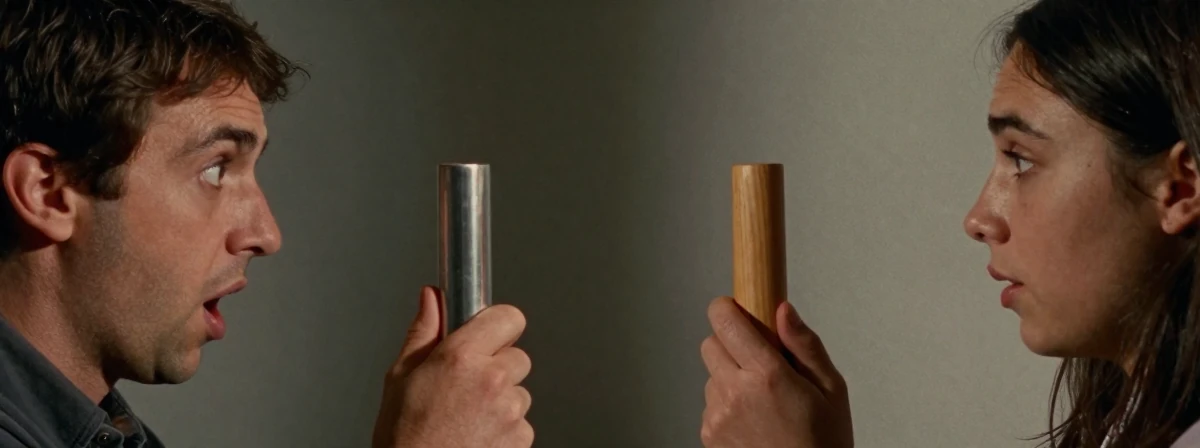
Ever touched a metal railing in winter and nearly jumped back, while a wooden railing felt fine—even though they’re the same temperature? Metal conducts heat away from your hand much faster than wood does. It’s not that the metal is colder; it’s that it’s better at stealing your heat. Wind works the same way—it’s like a fluid “metal” that conducts heat away from your body far more efficiently than still air.
Wind speed doesn’t change air temperature—but it changes heat transfer.
This is a counterintuitive truth: A 40 mph wind isn’t actually colder than still air at the same temperature. The molecules in both are moving at roughly the same average speed (about 1,000 mph at room temperature). What changes is how many molecules come into contact with your skin per second. More contact means more heat stolen. From an academic perspective, temperature is about the random motion of molecules, not their directed movement. Wind is directed movement, which doesn’t affect temperature but does affect how quickly heat transfers.Your perception of temperature is a lie.
We think we’re sensing how “cold” the air is, but we’re actually sensing how quickly heat is leaving our bodies. A pan feels colder than wood at the same temperature because it pulls heat from your hand faster. Wind feels colder than still air for the same reason. The research indicates that our thermal receptors are tuned to detect rapid heat loss as a warning signal—after all, hypothermia is a real threat. So when wind accelerates heat loss, your brain screams “cold!” even if the air isn’t actually colder.Hot wind can feel hotter for the same reason.
If you’ve ever been in a sauna and someone blew air on you, you know this already. Hot air feels hotter when it’s moving because it pulls heat into your body faster. The same principle applies: moving air (whether hot or cold) changes the rate of heat transfer. This is why a hair dryer feels hot, even though the air coming out isn’t much hotter than the room’s air. The movement does the work.
The next time you feel a chill in the wind, remember: You’re not feeling the air’s temperature. You’re feeling your own heat vanish. And that’s a sensation worth paying attention to—because your body is trying to tell you something important.