
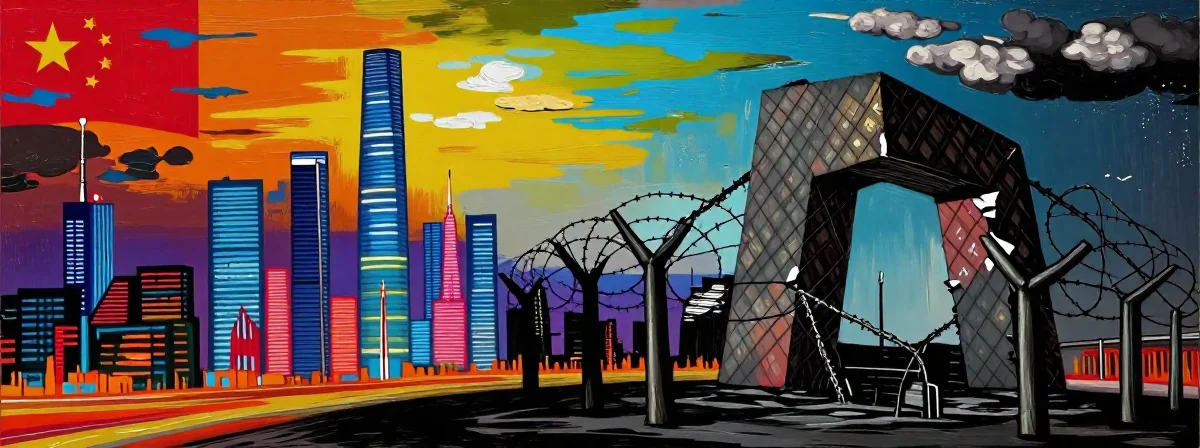
The Great Leap Forward wasn’t just a policy failure—it was a near-death experience for China’s ruling class. When Deng Xiaoping’s son was thrown from a fourth-floor window by Red Guards, the future wasn’t just uncertain—it was actively hostile. This isn’t ancient history; it’s the blueprint for how China built its modern economic miracle. Let’s break down how a system that nearly destroyed itself became the manufacturing engine of the world.
The Architecture
- Survivors’ Revenge: When Trauma Becomes Policy

Mao’s purges didn’t just eliminate rivals—they created a generation of leaders who knew exactly what didn’t work. Deng Xiaoping and his peers weren’t ideological converts to capitalism; they were pragmatic survivors who saw that Maoist economics had starved millions. Think of it like a game where the first level’s design was so broken that the only way to win was to rewrite the rules mid-play. The Great Famine wasn’t just a footnote—it was the moment the party realized its economic philosophy was a death sentence.
The Leninist Loophole
Deng didn’t invent market socialism—he just perfected it. Lenin’s New Economic Policy allowed small-scale private enterprise during the Russian Revolution, and Deng essentially turbocharged that approach. It’s like discovering a cheat code in a game you thought was impossible to beat. The key difference? China didn’t just tolerate markets—they weaponized them, using state control to direct private investment exactly where the party wanted it. Apple’s factories didn’t accidentally end up in Shenzhen—they were carefully placed chess pieces in a grand strategy.The 70-30 Gambit
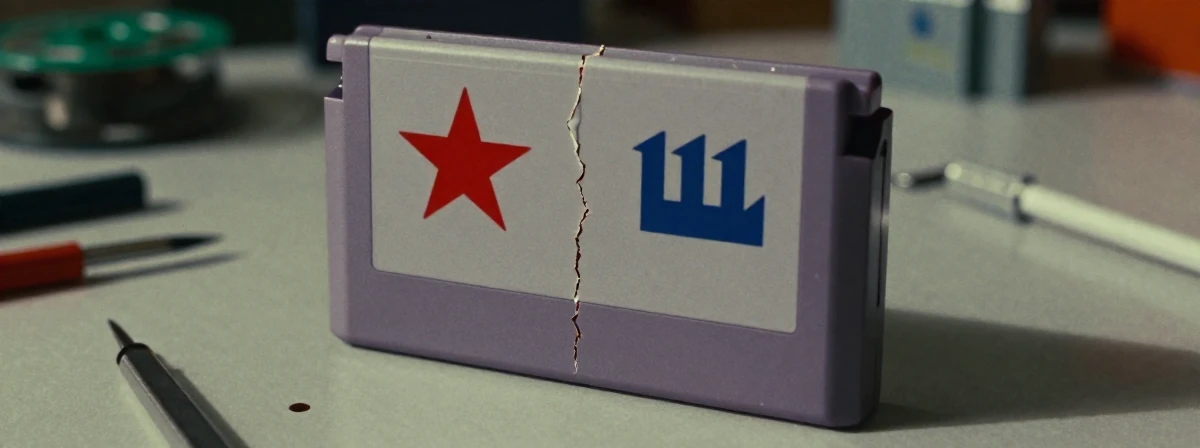
When China declared Mao “70% good, 30% bad,” it wasn’t just political spin—it was a masterclass in system preservation. This wasn’t about Mao’s personality; it was about separating the revolutionary founding myth from the economic failures. Imagine if a game’s tutorial level was so terrible that the developers had to pretend it was intentionally difficult. China kept Mao’s portrait and revolution narrative while quietly admitting his economic policies were a disaster. The party didn’t abandon its founding myth—it just patched the game.
State Capitalism as a Firewall
China’s economic system isn’t “capitalist” in the American sense. It’s state-directed capitalism where the CCP controls the banks, land, and strategic industries. Think of it like a video game where the developers still control all the cheat codes—even if players get to build their own levels. The most important companies aren’t privately owned—they’re state-owned enterprises with private management. It’s the ultimate corporate governance system: profit incentives with no shareholders to answer to.The Local Party Boss Effect
With only 7% of the population in the CCP, you might think the system is disconnected from daily life. But in a country where local officials handle everything from road construction to pandemic response, those 7% are the operating system for 1.4 billion people. It’s like having a small development team maintaining a massive open-world game—except when a bug appears, there’s someone with the authority to fix it immediately. Xi Jinping didn’t just inherit power—he inherited a system where every level of government is optimized for party control.The Unspoken Oligarchy
Being a CCP member isn’t just about politics—it’s about access. A party official’s child gets into better schools, a cousin gets a factory license, an uncle secures a government contract. It’s not corruption in the Western sense; it’s system optimization. Think of it like a multiplayer game where some players start with admin privileges. The 8 other legally recognized parties aren’t alternatives—they’re like moderator accounts that can’t change the game’s code. The real power is in the internal elections that decide who gets to shape the rules.Why Xi Embraced the Monster
Xi Jinping didn’t choose the CCP—he was chosen by it. His family’s history under Mao doesn’t matter because the system needs continuity. Imagine if a game’s sequel had to pretend the first game was perfect despite all its bugs. China can’t declare Mao evil without undermining its own legitimacy. The party isn’t just a political organization—it’s the institutional memory of the Chinese state. Xi didn’t need to clean the past; he needed to build on it, just like a game developer who has to maintain backward compatibility with terrible early versions.The 98 Million Question
When you consider that Mao’s policies caused an estimated 98 million deaths, the system’s resilience becomes terrifying. China didn’t just recover—it thrived by admitting its mistakes while preserving the myth of its founder. It’s like a company that acknowledges its early products were disasters but keeps the original logo because people still respond to it. The party didn’t change its name because the name is the brand. The economic system is just the latest version of the same software.
The Fix
China didn’t become a superpower by abandoning communism—it perfected the art of redefining it. The real innovation wasn’t in economics but in political marketing: create a system that can absorb contradictions, adapt to failures, and still claim ideological purity. It’s not about whether capitalism and communism can coexist—it’s about whether a system can survive its own contradictions. The answer, for China, has been a resounding yes. And that’s the lesson worth stealing: maybe the most revolutionary act isn’t tearing down systems but learning how to patch them instead.