
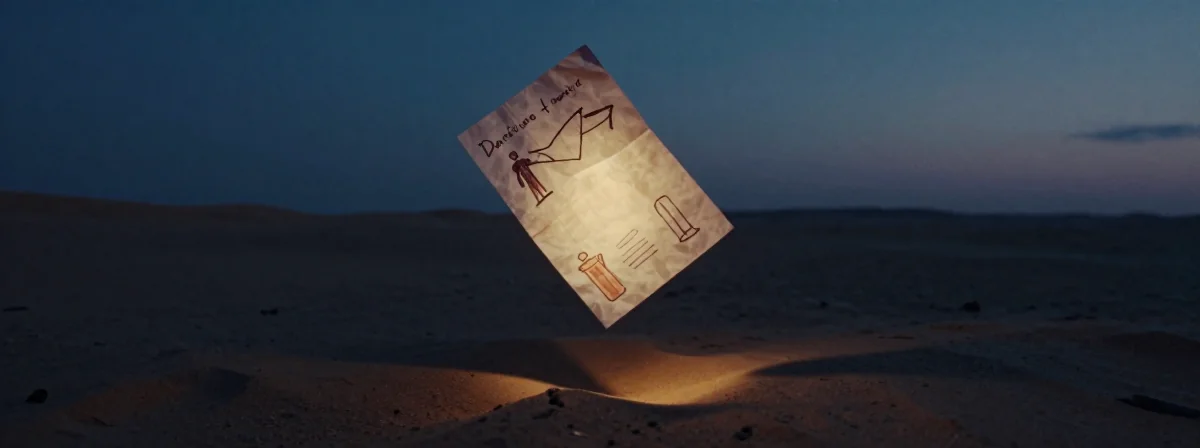
Some things don’t need batteries, Wi-Fi, or even perfect spelling to work miracles. In the middle of a war zone, when everything feels temporary and disposable, a crumpled piece of paper with a child’s drawing can become the most valuable possession in a soldier’s kit. It’s not just about gratitude—it’s about survival.
The truth is, when you’re eating your 50th MRE and staring at the same sand dunes for the third week straight, a handwritten note from a kid back home isn’t just a distraction. It’s a reminder that someone, somewhere, is thinking of you—without expecting anything in return. These notes weren’t just read; they were fought over, pinned to walls, and kept long after the deployment ended.
During Desert Storm, one classroom’s letters became so treasured that the teacher’s friend couldn’t distribute them fast enough. Each soldier received not just a card, but a piece of normalcy from a world that felt impossibly far away. Years later, some still have those notes tucked away—proof that even in chaos, human connection finds a way to land.
Did Soldiers Actually Read Those Handwritten Notes?
Absolutely. Every single one. In fact, many units had rituals around mail call. When a box of cards arrived from an elementary school, it wasn’t just “reading time”—it was an event. Guys would literally fight over who got to read the funniest or most heartwarming ones first.
One soldier in Afghanistan kept a note that read, “Dear Soldier, please don’t die.” It wasn’t eloquent, but it was honest. Another had a crayon drawing of a soldier defending a village from a volcano with a sword. “You were at Pompeii,” his buddies joked, but the drawing stayed pinned to his wall for the entire deployment.
The notes weren’t just read; they were studied. Misspellings, mismatched colors, and awkward drawings weren’t flaws—they were proof of life. One unit even laminated a letter with stick figures shooting off Taliban heads (complete with blood and an American flag) and hung it in their Ops Center. If you ever made one of those notes, the soldier who received it probably still remembers it.
Why Were These Notes So Powerful?
Because they were raw. Unfiltered. Unburdened by the expectations of adult communication. When a third-grader draws a tank with lasers and adds, “Thank you for shooting the aliens,” it’s not just cute—it’s a reminder that the world outside the war zone still makes sense.
For soldiers deployed during holidays, these notes were the closest thing to a family gathering. One soldier in Dhahran covered his dorm fridge with cards and kid drawings, turning a sterile space into a makeshift home. Another kept a note that said, “Have a good war!"—the kind of bluntness that made him laugh even when nothing else did.
The notes also created a shared experience. Units would pass around the funniest ones, pinning them to walls or bulletin boards. One artillery squad even laminated their favorite and made it a permanent fixture in their workspace. It wasn’t just about the message—it was about the collective appreciation for something normal in an abnormal situation.
The Hidden Impact: More Than Just Morale
When a soldier hangs a child’s drawing on the wall, it’s not just for decoration. It’s a psychological anchor. Studies show that even brief reminders of home can significantly reduce stress in high-pressure environments. For soldiers, these notes were more than morale boosters—they were coping mechanisms.
One soldier in Iraq 2004-2005 still has a few notes somewhere at home. “They meant more than you’d think when you’re stuck in the middle of nowhere eating MREs for the 50th day straight,” he said. That’s not hyperbole. It’s a fact. In environments where everything feels temporary, a handwritten note is permanent.
Even the simplest notes had profound effects. A “Don’t get dead” card became a daily reminder to stay vigilant. A “Thank you for your service” note became a reason to keep serving. Some soldiers wrote back to the kids, creating pen-pal relationships that lasted years. One child even ended up praying for their soldier long after the war ended.
The Unspoken Rule: No One Talks About It Enough
Here’s the thing: soldiers don’t often talk about how much these notes meant. They’ll mention care packages, or family letters, but the kid drawings? Those are usually just “oh, yeah, those were nice.” The understatement is part of the job—soldiers don’t want to seem weak, even when they’re breaking down over a misspelled “God bless u.”
But the notes worked. They worked so well that some soldiers wished their own families would send something similar. “Some of us wished our own kids and wives would send some too,” one veteran admitted. It’s a reminder that connection isn’t always about grand gestures—it’s about consistency.
The best part? These notes weren’t curated. Teachers tried to keep them appropriate, but the most treasured ones were often the ones that slipped through. “I wish teachers would stop editing what the kids write,” one soldier said. “The more absurd and off the wall ones absolutely get passed around.” Because in war, absurdity is a luxury.
Why This Still Matters Today
Even if you never sent a note to a soldier, you can appreciate what these messages represent. They’re a blueprint for meaningful connection in a world that often prioritizes efficiency over empathy. The notes worked because they were simple, genuine, and unexpected.
If you ever get the chance to support service members, remember this: the most powerful gifts aren’t the ones that cost the most. They’re the ones that cost the least but mean the most. A handwritten note, a crayon drawing, a misspelled word—these are the things that can turn a terrible day into a survivable one.
So next time you think about what matters in a crisis, don’t just think about supplies or strategy. Think about the notes. Because some things don’t need batteries, Wi-Fi, or even perfect spelling to work miracles. They just need to be real.