
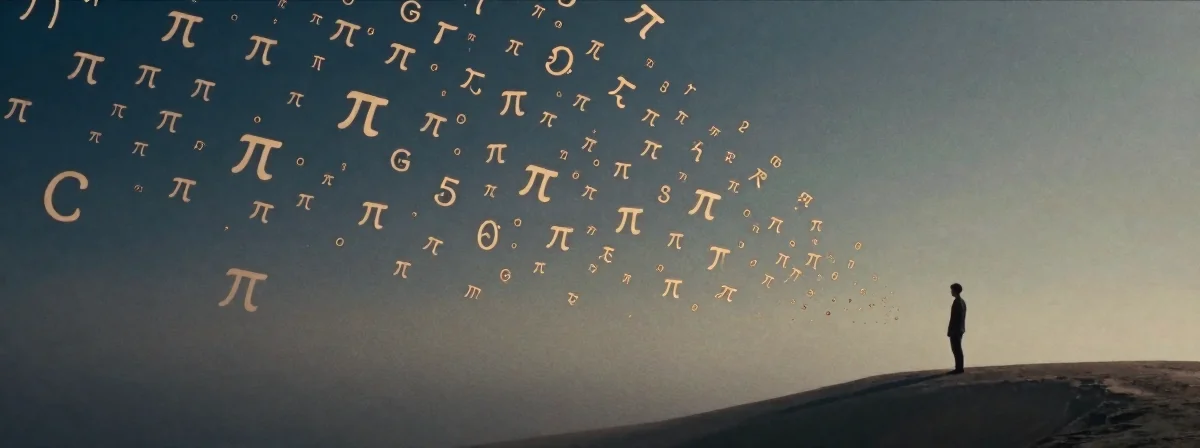
Some days you wake up and realize everything you thought you knew about infinity is a lie. My grandmother taught me that truth isn’t about what we can prove—it’s about what we can’t unsee. Today, that truth is staring back at us from the digits of pi.
We spend lifetimes chasing patterns in numbers as if they’re clues in a cosmic treasure hunt. And yet, the most obvious question remains unanswered: Is pi normal?
The Real Narrative
“Assume pi is not normal. Then it’s probably missing something obvious.”
My grandfather, a numbers man to his core, used to say, “If you can’t find your birthday in pi, something’s wrong.” The irony is that we don’t even know if we should be able to. Normality in numbers means every possible sequence appears eventually—and infinitely often. But for pi, we’re still guessing.QED is just Latin for “we gave up.”
The most elegant proofs are the ones that admit what we don’t know. When someone drops a “QED” on a question this deep, they’re not finishing—they’re passing the baton. My father taught me that real knowledge is knowing when you’re out of answers.The American Pie moment we all have with infinity.

Remember that scene? The guy staring at the pie, convinced he’s onto something revolutionary? That’s us with pi. We see 9s repeating, and suddenly we’re convinced we’re decoding the universe. It’s not just numbers—it’s the illusion of control.
- Fermat’s margins could fit the answer, if only we knew what to write.
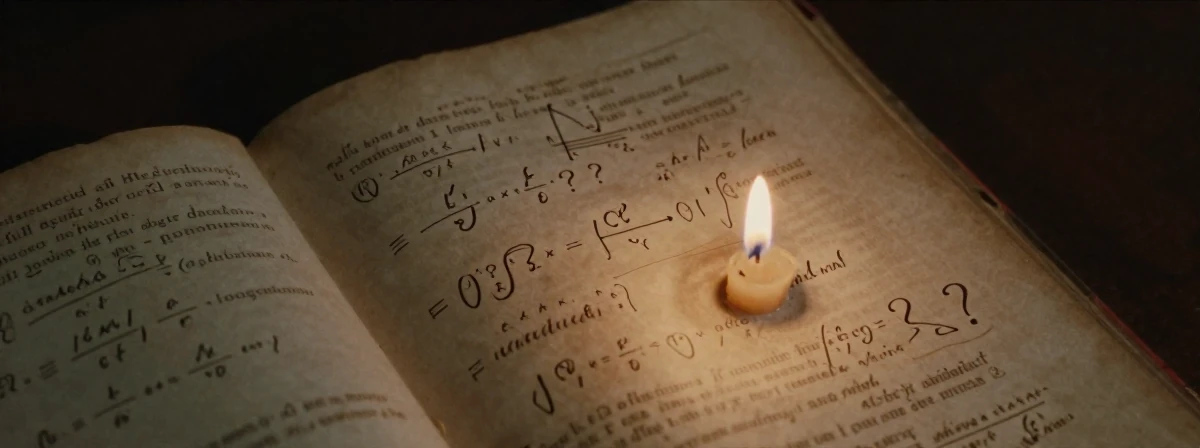
The most frustrating truth about math is that sometimes the answer is staring at us, but we don’t have the language to capture it. My grandmother left notes about pi in her margins—scribbles that ended with question marks, not proofs.
ChatGPT can’t save us from the unknown.
We throw algorithms at problems we don’t understand, and they spit out confident wrong answers. It’s like the colleague who got promoted for pretending to know—science moves forward when we admit what we don’t know, not when we fake certainty.Designed normality vs. natural normality.
The Champernowne constant is like a cheat code—built to be normal from the start. But pi? It grew wild. My father called it “the difference between a garden and a forest.” We can’t force wild things to reveal their secrets.Almost all numbers are normal—but we don’t use almost all numbers.
It’s the ultimate cosmic joke. The vast majority of numbers contain every possible sequence, and yet the ones we care about might not. Like looking for water in a desert while standing next to an ocean.Your entire life is in pi—if it’s normal.
Every book, every conversation, every thought you’ll ever have—encoded in digits somewhere in pi. And not just once, but infinitely. My grandmother said that’s why we keep looking: because somewhere in there is a version of us that got it right.Infinity doesn’t guarantee everything—it just gives it more chances.
The 1/3 example broke my brain. Infinite 3s, never a 4. It taught me that infinity isn’t about quantity—it’s about possibility. And some possibilities are locked out forever.The normality paradox: We need infinite data to find anything useful.
If pi contains everything, how do we find anything? The pointer to your life story in pi would be longer than your life story. It’s the ultimate riddle: the map is larger than the territory it describes.
Decide for Yourself
Infinity isn’t about finding everything—it’s about accepting that some things are hidden by design. The next time you see a sequence of numbers that feels meaningful, remember: it might be there, or it might not. The real question isn’t whether pi contains your life story, but whether you have the courage to live as if it does—or doesn’t.