
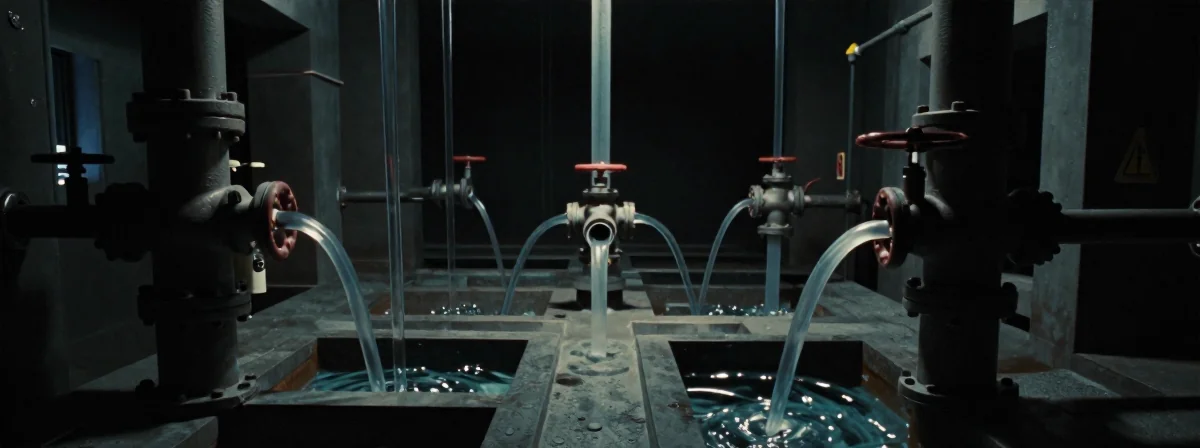
Have you ever noticed how your first pee after ejaculation just… doesn’t behave normally? It’s not a clean, direct stream. It’s erratic, sometimes spraying in odd directions, occasionally even making those disturbing chunky sounds as something seems to get forced through. We’re taught to accept these bodily quirks as normal, but what if they’re actually revealing something deeper about our plumbing systems? What if these patterns aren’t just “normal” but rather clues to something more significant happening beneath the surface? The silence from medical professionals about these phenomena is deafening… and that silence itself should make us suspicious.
The truth is, your urinary system has a complex relationship with ejaculation that most of us never consider. It’s not just about “cleaning the pipes” as some would simplistically put it. There’s a sophisticated interplay of valves, pressure systems, and fluid dynamics at work here that most people remain blissfully unaware of. And the more you examine these post-ejaculation patterns, the more questions arise about what we’ve been told versus what’s actually happening in our bodies…
Why Does Your First Pee After Ejaculation Always Seem… Off?
Have you ever stopped to really observe what happens? It’s not just a matter of “jizz gluing your shit up” as some crudely put it. There’s an actual mechanical explanation here that most people miss. Your body has evolved a sophisticated system to prevent semen from backing into the bladder or urine from contaminating the ejaculate. This involves a valve system that essentially creates separate pathways for these two very different fluids. After ejaculation, this system needs time to reset…
Think about it like a plumbing system with dedicated lines. When you switch from one fluid to another without proper transition time, you get cross-contamination and pressure issues. The weird spray patterns, the strange sounds, even those occasional “chunks” some people report feeling - these aren’t random glitches. They’re the direct result of your body struggling to switch from semen mode to urine mode without properly clearing the system first. What are they hiding by teaching us to simply “wait a bit” instead of understanding the actual mechanics at play?
The Hidden Valve System Doctors Conveniently Overlook
Most explanations stop at “semen gunking up the works,” but that’s only part of the story. Your body actually has a sophisticated valve mechanism at the junction where the vas deferens meets the urethra. This valve closes off the pathway to the bladder during ejaculation to prevent urine from mixing with semen - a crucial evolutionary adaptation. But what happens after? This valve doesn’t instantly spring back to its original position. There’s a delay…
This delay creates the perfect conditions for those strange urinary patterns. The pressure dynamics change dramatically when you attempt to urinate immediately after ejaculation. It’s not just about “cleaning the pipes”; it’s about managing pressure differentials between two different fluid systems. The thin liquid of urine encountering the thicker semen residue in your urethra creates hydraulic conditions that would make any engineer scratch their head. And yet, we’re told nothing about this in health education. Why?
Why Women Experience Similar Patterns (And Why It’s Even More Complex)
Here’s where it gets really interesting. Women experience similar changes in urinary patterns after orgasm, though they’re less noticeable because they typically sit down. The explanation can’t simply be “semen gunking up the pipe” since women don’t ejaculate in the same way. This suggests there’s something more fundamental happening…
The exhaustion theory - that orgasm temporarily fatigues the muscles around the urethra much like muscles get wobbly after exercise - might be closer to the truth. These muscles control the fine pressure points that create that smooth, directed stream we associate with “normal” peeing. After orgasm, these muscles need time to reset, just like your legs after squats. But why is this connection never explicitly made in medical literature? What are they not telling us about the physiological effects of orgasm beyond the obvious?
The “Punishment” Theory: Is Your Body Sabotaging You On Purpose?
Some have humorously suggested that our bodies might be “punishing” us for masturbation by creating difficult urinary patterns. While this sounds absurd on the surface, there might be something to this idea when viewed through an evolutionary lens. Our bodies have complex feedback systems that reward reproductive behaviors and discourage non-reproductive ones…
Consider this: difficult post-masturbation urination might be an evolutionary mechanism to encourage actual intercourse over self-stimulation. The physical discomfort creates a subtle incentive to seek partnered sexual activity instead. While this sounds far-fetched, it aligns with other subtle biological nudges that influence our behavior. Are we experiencing a real physiological phenomenon that’s been cleverly framed as merely “weird” or “annoying” to keep us from asking the deeper questions?
The Labial Mystery: What Are Those “Penis Lips” Anyway?
This is where we get into truly uncharted territory. The discussion about “penis lips” - what anatomists would call the foreskin or the labia of the penis - reveals a fundamental misunderstanding of male anatomy that most men operate with. This isn’t just semantics; it’s about recognizing the sophisticated design of our urinary and reproductive systems…
The foreskin isn’t just extra skin; it’s a functional component that creates a specific internal pressure system. When you masturbate or have sex, this area naturally closes or “folds” in a particular way. Attempting to urinate immediately afterward without properly separating these “lips” creates hydraulic blockages that result in those erratic streams. It’s like trying to pour water through a kinked hose. The solution isn’t just “waiting”; it’s understanding the proper anatomical mechanics. Why isn’t this basic information part of sex education?
The UTI Connection: Why Timing Matters More Than You Think
Here’s where it gets medically significant. The timing between ejaculation and urination isn’t just about comfort; it’s about preventing urinary tract infections. Women are taught to pee after sex to flush away bacteria, but the same principle applies after ejaculation for both sexes, though for different reasons…
For men, waiting to pee allows the semen to fully clear the urethra, preventing that residue from creating a breeding ground for bacteria. For women, the mechanics are different but the principle remains: proper urinary flow after orgasm helps maintain urinary health. Yet most of this information exists in fragmented pieces across different medical discussions rather than as a cohesive understanding. What’s being gained by keeping these connections separate and unexamined?
The Pressure Dynamics: Why Your Stream Changes Direction
Have you ever noticed how your stream might suddenly change direction mid-flow after ejaculation? This isn’t random; it’s a direct result of pressure differentials in your urethra. The thicker semen residue creates localized pressure points that alter the path of the thinner urine…
Imagine trying to pour water through a tube that has thick gel stuck to the sides in certain places. The water will naturally find paths of least resistance, creating those sudden directional changes. This isn’t just an inconvenience; it’s a clear indication of how your body’s plumbing system works. Why aren’t we taught to interpret these physical signs as information about our internal health rather than just annoying quirks to be endured?
The Anatomical Differences: Why Men and Women Experience This Differently
The fundamental differences in how men and women experience post-orgasm urination reveal something important about our anatomy. Men have the direct semen-urine pathway that creates those dramatic changes, while women experience more subtle differences due to anatomical differences…
For men, the valve system that prevents backflow during ejaculation creates the most dramatic post-orgasm urinary changes. For women, the changes are more related to muscle fatigue and hormonal shifts during orgasm. Yet both experiences point to the same truth: orgasm fundamentally alters our urinary mechanics in ways we’re not taught to understand. What knowledge gap is being maintained by keeping these experiences separate in our understanding?
The Hygiene Solution: Why Water Matters More Than You Think
Here’s a practical insight that most discussions miss: washing with water before attempting to urinate after ejaculation can dramatically improve the experience. This isn’t just about cleaning; it’s about altering the fluid dynamics…
Water acts as a lubricant and diluent that helps break up the thicker semen residue in your urethra, creating a smoother transition to urination. This simple act reveals something profound: our bodies aren’t just passive systems to be endured; they’re responsive systems that can be intelligently managed. Why isn’t this basic information part of hygiene education? What’s being protected by keeping this knowledge fragmented?
The Medical Silence: What Are They Not Telling Us?
The most suspicious aspect of all this is the medical silence. Why are these patterns treated as mere curiosities rather than important physiological indicators? Why are we given simplistic explanations like “semen gunking up the pipes” when there’s clearly a more sophisticated system at work?
The fragmented nature of this information across casual discussions rather than medical literature suggests a deliberate effort to keep us from connecting these dots. Understanding our bodies’ responses to ejaculation isn’t just about comfort; it’s about recognizing the sophisticated design of our internal systems. What knowledge is being withheld by maintaining these artificial boundaries between anatomy, physiology, and everyday bodily experiences?
The Hidden Pattern: What Your Pee Stream Reveals About Your Health
When you step back and look at all these pieces together, a clearer picture emerges. Your post-ejaculation urinary patterns aren’t random glitches; they’re revealing aspects of your internal plumbing system that most people remain completely unaware of. These patterns are like diagnostic tools that show us how our bodies are actually functioning…
The next time you experience that strange spray pattern or hear those unusual sounds, recognize that you’re witnessing a complex physiological process. Your body is transitioning between two different fluid systems with their own pressure dynamics and valve mechanisms. Rather than dismissing these experiences as mere annoyances, consider what they might be telling you about your internal health. The silence from medical professionals about these phenomena isn’t just curious; it’s suspicious. What are they not telling us that we need to know?