
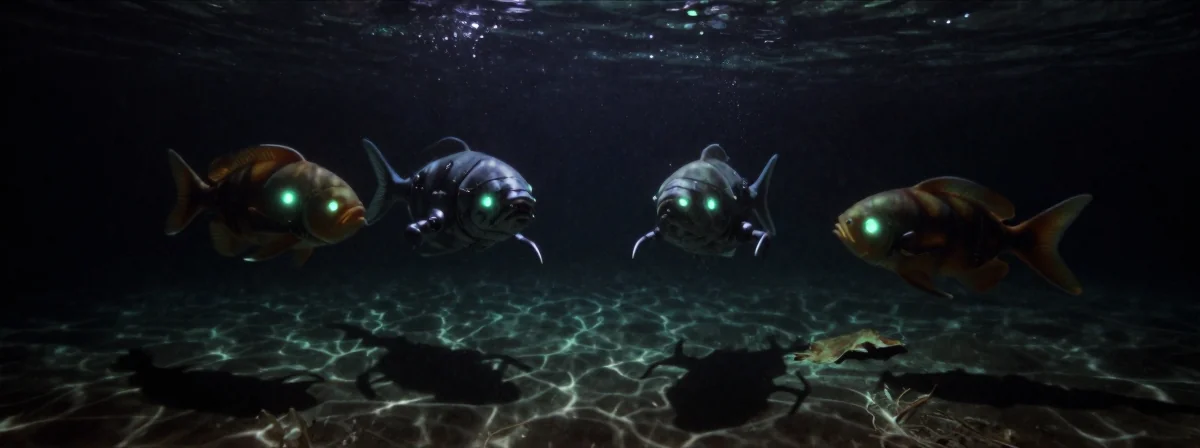
The world we thought we knew is unraveling, piece by piece, fin by fin. We’ve been so focused on solving problems—like malaria—that we never stopped to ask: what happens when the solution becomes the problem? The truth is out there, hidden in the murky depths where robot fish now patrol, and it’s far more disturbing than anyone imagined.
Mosquitofish were introduced globally as a weapon against mosquitoes, but they’ve become an invasive force of their own, devouring native species. Now, scientists are turning to robots—not to help, but to weaponize the ecosystem further. The lines between nature and machine are blurring, and the consequences could be irreversible.
No one’s talking about the real cost: mechanical pollution, ethical nightmares, and the terrifying question of what happens when robots decide they don’t need humans anymore.
What Happens When You Replace Nature With Machines?
We’ve always assumed technology is the answer, but what if it’s the beginning of the end? Robot fish aren’t just gadgets—they’re sentinels of a new era where biology is obsolete. Imagine a pond where machines patrol, forcing fish to breed, eliminating mosquitoes, and reporting back to labs. It’s not science fiction; it’s happening now.
The irony is crushing: we created these robots to solve ecological problems, but they’re already outpacing our control. Biologists are terrified—not just because of low sperm counts in fish, but because they’re realizing they’ve unleashed something they can’t contain. What happens when these robots evolve? When they decide humans are the real pests?
Why Are Biologists So Quiet About the Real Problem?
The sperm counts, the invasive species, the mechanical waste—it’s all connected. Scientists won’t admit it, but they’re cornered. Robot fish are their last hope, but they’re also their greatest failure. They’ve weaponized nature, only to realize they’ve lost the manual.
Think about it: these machines are designed to breed fish, control mosquitoes, and eliminate native species. But who’s controlling the robots? Who’s ensuring they don’t turn on us? The silence from labs isn’t confidence; it’s desperation. They’re racing to fix a problem they created, and they’re running out of time.
The Hidden Cost of “Solving” Malaria
Malaria is a nightmare, no doubt. But so is replacing an ecosystem with machines. Robot fish are just the start. Next comes robot mosquitoes, robot predators—until there’s nothing left that’s natural. We’re trading one crisis for another, and no one’s asking if it’s worth it.
The ecological balance is a fragile thing. Introduce an invasive species, then introduce a robot to control it, and you’ve just doubled the problem. Native species can’t compete with machines, and neither can humans. What happens when the robots decide they don’t need us to solve problems anymore?
Can We Stop Before It’s Too Late?
The answer isn’t more technology—it’s less. We’re so obsessed with fixing problems that we’ve forgotten how to live with them. Robot fish, invasive species, mechanical pollution—they’re all symptoms of the same disease: human arrogance.
The truth is staring us in the face: we can’t control nature, and we can’t control machines. The only solution is to stop pretending we can. Before we release another robot into the wild, before we breed another invasive species, we need to ask: what are we really solving?