
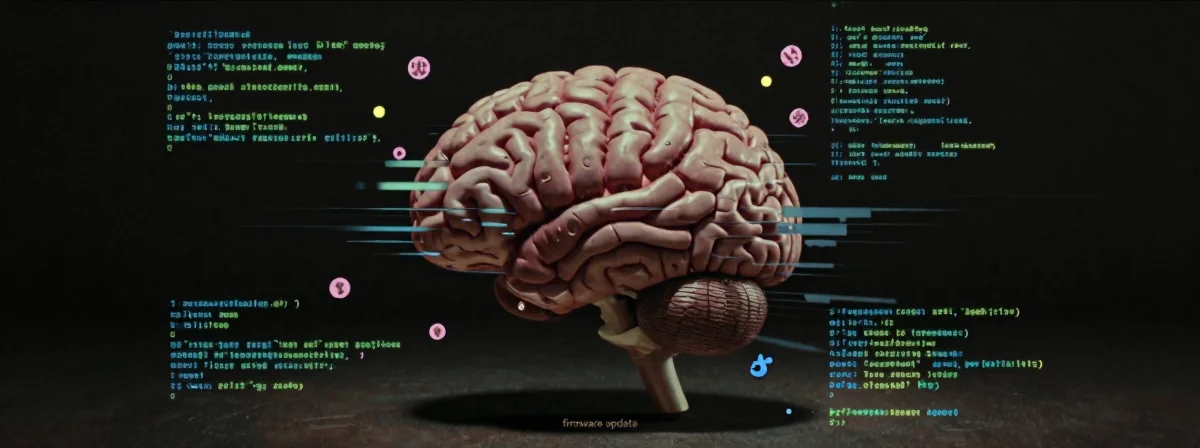
Some platitudes aren’t just annoying—they’re like malware in your brain’s operating system. They make you process reality through a corrupted filter. You know the ones I mean. The phrases that make you want to throw your hands up like a controller that just disconnected mid-game. Let’s debug these linguistic viruses and get your mental OS running smoothly again.
System Analysis
- “Everything happens for a reason” — Unless it’s your mom dying, then it’s just random cruelty. This platitude is a lazy system trying to make sense of chaos. It’s like saying “the game glitched because it was meant to glitch” — no, the game glitched because the code had a bug. Some things just happen because physics and biology are messy, not because of some cosmic spreadsheet. It’s a cope, not an explanation.

“For all intensive porpoises” — Literally the dumbest autocorrect in human history. This isn’t just a typo. It’s a failure of the entire language processing stack. Your brain tries to optimize communication, but sometimes it optimizes straight into the weeds. Like when your game’s AI gets stuck on a pixel. It’s funny until you realize how many other things your brain is getting wrong.
“I could care less” when they mean “I couldn’t care less” — The logic paradox of language. This is like saying “my battery is 110% charged.” It creates a negative feedback loop in your brain. You have to process the incorrect statement, then process the intended meaning, then process the irony of the mistake. It’s mental whiplash. How much less could you care? That’s the question your brain keeps asking.
“It’s giving…” used incorrectly — The fashion trend that broke grammar. When you use “it’s giving” to describe something that isn’t an aesthetic or vibe, you’re like a gamer who uses an exploit in a single-player game. Nobody wins except your temporary feeling of linguistic coolness. It’s a feature abused into a bug.
“Should of” instead of “should have” — The grammatical equivalent of a software update that breaks everything. This one spreads like a virus because it sounds similar enough to work in casual processing. But when you need precision, it crashes. Like when you type “sudo make me a sandwich” and expect your terminal to actually do it. It’s cute until you need real functionality.
“Money doesn’t buy happiness” — The most privileged statement in the English language. This is like saying “air doesn’t buy breathing.” Money isn’t happiness, but it’s the operating system that lets you even run the happiness application. Without it, your entire life system is running in low-power mode. Try paying your bills with “good vibes” and see how far that gets you.

“I have OCD” when they mean “I like order” — Appropriating a disorder like it’s a personality trait. This is like saying “I have cancer” because you stubbed your toe. OCD isn’t about liking clean desks—it’s about being governed by intrusive thoughts that feel like commands from a malicious OS. Your brain isn’t a feature, it’s a system that can break. Don’t pretend it’s a badge of honor.
“Unalived” — The euphemism that lost its purpose. This isn’t just a word. It’s a data point that’s been compressed too much. When you say someone “unalived” yourself, you’re like a system admin who named a critical error “oopsie.” It’s not helpful. It’s not kind. It’s just a way to avoid saying what actually happened.
“For all intensive purposes” — The linguistic equivalent of a buffer overflow. This one makes your brain crash. You start processing the wrong phrase, then realize the mistake, then try to reprocess. It’s like when your game lags because you loaded too many mods. Just use the right phrase. It’s not that hard.
“Organic linen sheets journey” — When everything is a journey, nothing is. This is the ultimate system overload. When you turn every minor life event into a “journey,” you’re like a gamer who treats every quest as the main storyline. Some things are just chores. Some purchases are just buying stuff. Not everything needs a narrative arc.
“It could be worse” — The ultimate empathy failure. When someone says this to your actual pain, they’re not being helpful. They’re running a comparison algorithm that centers their own comfort above your reality. It’s like telling someone with a broken leg that at least they didn’t break both legs. No shit. That doesn’t make their one broken leg hurt less.
“He/she/they did a 360” when they meant a 180 — The geometry of miscommunication. This isn’t just wrong. It’s the opposite of wrong. A 360 means they ended up facing the same direction. A 180 means they changed direction. This is like saying “I completely didn’t understand that” when you totally understood. It’s a paradox.
“Irregardless” — The word that exists only to confuse. This is like creating a variable name that’s intentionally misleading. It’s not just non-standard. It’s the opposite of standard. Your brain has to process the word, then process that it’s wrong, then process the correct word. Three steps instead of one. Inefficient. Bad design.
“Thoughts and prayers” — The digital equivalent of hitting F. This is performative empathy at its worst. It’s like sending an automated condolence email. No actual processing occurs. No system updates run. Just empty tokens exchanged. It makes you question the entire architecture of human connection.
“I was today years old…” — The age of the obvious. This phrase is like a system that generates alerts for non-events. “Warning: You have noticed something obvious today.” It’s not clever. It’s not insightful. It’s just noise in the communication system. Like when your game sends you a notification that you’ve collected wood.
Bottom Line
These linguistic viruses aren’t just annoyances. They’re cracks in the foundation of how we process reality. Every time you let one slide, you’re teaching your brain to accept faulty code. Every time you correct one, you’re doing maintenance on the system. Your brain’s operating system deserves better updates than this. It’s time to start debugging your reality with more precision. What other bugs are you running with today?