
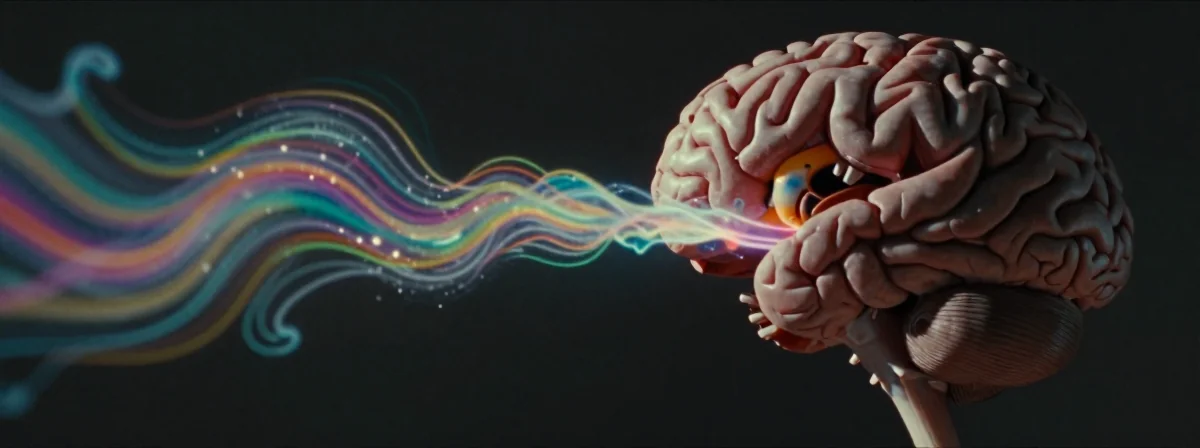
Your sense of smell is the only sense that bypasses your brain’s security protocols. It’s like having a direct admin console exposed to the outside world—no firewall, no checks, just raw data flowing straight into your neural network. This isn’t just a cool fact; it’s a fundamental design flaw that evolution somehow turned into an advantage.
Think about how weird that is. Every other sense has to go through the proper channels, but smell? It just walks right in. Like a VIP with a master key to your brain’s server room.
System Analysis
- Smell Is the Original Hack

Your olfactory system is the oldest piece of code in your sensory operating system. It dates back to when your ancestors were just floating blobs in the primordial soup, needing to detect chemicals in their environment. While vision, hearing, and touch evolved later with more sophisticated interfaces, smell kept its direct line—like a legacy system that never got updated. This explains why losing your sense of smell can feel like you’re disconnected from reality; you’re losing your most fundamental connection to the world.
The Axon Shortcut
Tiny nerve fibers called axons act as the USB ports for your smell system. They plug directly into neurons in the olfactory bulb, creating a zero-latency connection. It’s like having a direct fiber optic line from your environment straight to your brain’s processing center—no routers, no switches, just pure data transfer. This is why smells can trigger memories faster than any other sense; there’s no processing delay.The Retina Isn’t the Same
While some argue that the retina is part of the nervous system, it’s not the same kind of direct interface. The optic nerve is more like a secure tunnel with encryption—light gets converted to electrical signals before hitting your brain. Smell, on the other hand, is the equivalent of leaving your brain’s server room door open. There’s no translation, no conversion—just raw chemical data flowing in.The Mystery of the “Lock and Key”
Scientists still don’t fully understand how we smell. The dominant theory—where odor molecules fit into receptor proteins like keys in locks—has so many holes it’s more Swiss cheese than solid explanation. We’re essentially running with the best guess we have, even though it’s proven unproven. It’s like using a deprecated API in your codebase because nothing else works.COVID’s Neural Debug
The pandemic gave us a rare glimpse into what happens when this system fails. For millions, COVID temporarily “rebooted” their smell and taste processing—essentially a localized brain malfunction. It was like a kernel panic in one of your body’s most fundamental senses. What’s wild is that we still don’t know exactly why it happened or how the system recovers. Our most basic sensory interface is still a black box in many ways.
- Music Smells Like Memory
The same direct-line phenomenon explains why music can transport you to specific moments. Both smell and music bypass your brain’s usual filtering system, creating these hyper-specific memory anchors. It’s like having two different admin backdoors that lead to the same memory server. That song you can’t shake? It’s using the same shortcut as the scent of rain on pavement.
The Fix
Your brain’s design is a beautiful mess of evolutionary patches, and smell is the oldest, weirdest hack of them all. It’s the one sense that never got updated—kept in its primitive form while everything around it evolved. Next time you catch a whiff of something nostalgic, remember: you’re experiencing a direct line to your past, unfiltered and unadulterated. The same system that helped your ancestors survive is still running in the background of your modern life—unchanged, unimproved, and utterly essential.