
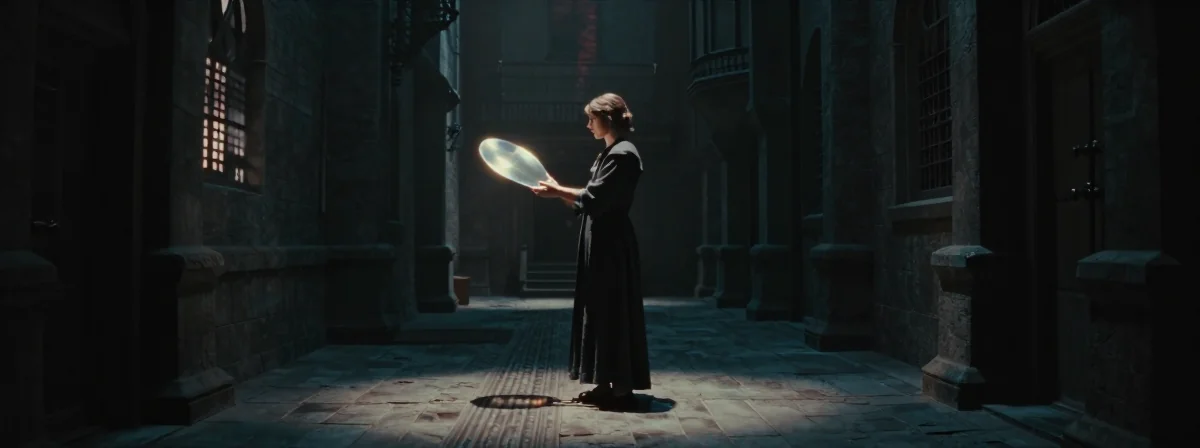
The air in 1526 would be thick with unfamiliar scents—smoke from hearths, damp cobblestones, the distant stink of livestock. If you stepped into that world, not as a noble or a scholar but as an ordinary person from today, you’d carry something far more dangerous than a weapon: your own belongings. They wouldn’t just surprise them; they’d terrify them. Imagine holding something so ordinary to you that it would make people think you were a witch or a god.
The past wasn’t just different; it was fundamentally alien. The tools, the materials, even the very concept of what was possible would be so far removed from your reality that a simple object could shatter their understanding of the world. What you take for granted—plastic, zippers, even clean teeth—would be enough to make them question their faith and their sanity.
But which object, above all others, would make you seem like a sorcerer? Let’s walk through the items that would defy belief, starting with the most obvious and moving to the ones you’d never suspect.
What Would They Think of Your Bicycle?
A modern bicycle isn’t just a machine; it’s a symphony of materials and engineering that didn’t exist in the 16th century. Rubber tires, hollow steel tubing, wire spokes, and precisely machined bearings—all of these would be enough to make someone from 1526 think you were a wizard. The very idea of two-wheeled locomotion would be absurd, but the technology itself would be beyond their wildest dreams.
Imagine showing up in a village with a high-end road bike. The smooth ride, the ability to travel miles in an hour, the gears that let you conquer hills effortlessly—it would be like magic. They’d see the rubber, the metal, the precision, and wonder how you could possibly have conjured such a thing. Even the chain and gear system, something we take for granted, would be baffling. You might as well be riding a mechanical horse that obeys your every command.
But the bicycle isn’t even the most mind-blowing thing you’d bring. There’s something far more ordinary that would truly stun them.
The Plastic Bottle: Invisible Stone That Doesn’t Break
To someone in 1526, a clear plastic bottle would be nothing short of impossible. They’d see it as “invisible stone” that’s incredibly light, doesn’t shatter when dropped, and can be molded into any shape. The very concept of plastic—something that can hold liquid without leaking, that can be mass-produced, that feels neither like wood nor metal nor glass—would defy their understanding of materials.
Imagine holding up a water bottle and explaining that it’s made from petroleum, a substance they’d know as rock oil, but transformed into something entirely new. They’d wonder if it was enchanted, if it was the work of demons, or if you’d somehow stolen the light itself and trapped it in a solid form. The transparency, the flexibility, the sheer unnaturalness of it would be enough to make them question their reality.
And that’s just a bottle. What about the clothes you’re wearing?
Your Shirt: A Confession of Wealth They Can’t Fathom
The average working-class person today has access to more comfortable, durable, and varied clothing than the richest nobles of the 1500s. A tightly woven cotton t-shirt, socks with elastic, shoes with rubber soles—each of these would be a marvel. But the most shocking part? The fact that you, an ordinary person, could afford garments from China, India, or other distant lands.
In 1526, spices from the East were worth their weight in gold. The idea that you could casually wear fabric from across the globe, produced by machines, would be baffling. They’d understand what spices are, but they wouldn’t grasp how you could have so much of them. The reaction wouldn’t be confusion—it would be awe mixed with envy. “Holy shit, you have a lot of spice,” they’d think, not “What is that? Burn the witch.”
But there’s something even more personal that would make them stare.
Your Teeth: A Mirror of Health They’d Never Seen
A full set of clean, white teeth would be enough to make someone from 1526 think you were blessed by the gods. Dental hygiene was virtually nonexistent in the 16th century. Cavities, rot, and missing teeth were common, even among the wealthy. If you showed up with a mouth full of healthy, white teeth, they’d assume you had some kind of divine protection.
And don’t forget the glasses. If you wear them, they’d wonder what in God’s green world they’re made of. The concept of corrective lenses was just beginning to spread, and the idea that you could sharpen someone’s vision with a piece of glass would be seen as sorcery.
But the most dangerous thing you’d carry isn’t an object at all.
You: The Walking Miracle (Or Plague)
The truth is, you yourself would be the most shocking thing of all. Your height, your weight, your soft hands with their trimmed fingernails, your general cleanliness—everything about you would scream “not of this world.” They’d wonder how you could be so nourished, so healthy, so different.
And that’s before they realize you’re carrying diseases they’ve never encountered. A simple cold could wipe out an entire village. You might be the healthiest person they’ve ever seen, but you could also be the deadliest.
The most useful knowledge you could deploy? Washing your hands. That alone would make you the healthiest person in the village. But it might also make you a target. They’d think you were performing rituals, that you had secret powers, that you were a witch who could control disease.
The Final Reckoning: Why the Past Would Fear the Future
If you traveled back to 1526, you wouldn’t just be an outsider; you’d be a living contradiction. The objects you carry—bicycles, plastic bottles, zippers, even your own clean teeth—would be enough to make them fear you. They’d see magic where you see mundane, wonder where you see normalcy, and terror where you see comfort.
The past wasn’t just a different time; it was a different reality. And the things we take for granted are the very things that would make us seem like gods or demons. The next time you hold a plastic bottle, think about how it would appear to someone who’s never seen such a thing. It’s not just an object; it’s a symbol of how far we’ve come, and how much we’ve forgotten.
In the end, the most surprising thing isn’t what they’d think of your objects—it’s what you’d think of yourself.