
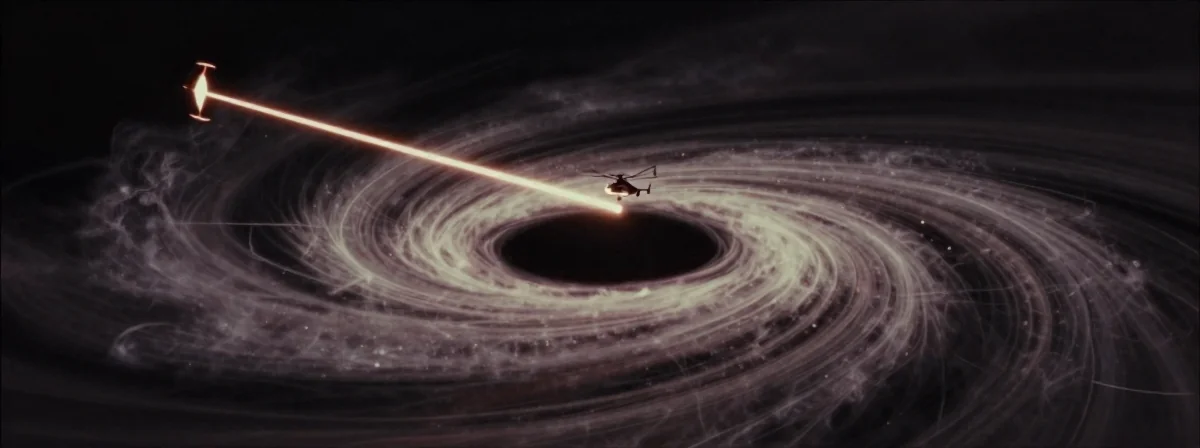
Ever watched a helicopter hovering in place and wondered why it doesn’t simply spin endlessly like a top? The answer lies in a brilliantly simple yet often misunderstood engineering solution that keeps these complex machines pointing in the right direction. It’s a physics problem that dates back to the earliest helicopter designs, and its solution has saved countless lives through elegant counteraction of natural forces.
The helicopter represents one of aviation’s most fascinating paradoxes: it creates its own instability through the very mechanism that gives it lift. When that massive main rotor spins to generate upward thrust, it simultaneously creates a powerful torque reaction that wants to spin the entire aircraft in the opposite direction. Without intervention, the helicopter would quickly become an uncontrollable whirligig, spinning helplessly until it crashed.
Consider this: the main rotor on a typical helicopter can weigh thousands of pounds and spin at hundreds of revolutions per minute. The force required to turn such a massive assembly creates an equal and opposite reaction that would immediately send the helicopter body spinning in the opposite direction—unless something intervenes.
What Really Keeps a Helicopter Pointing Straight?
Most people assume the tail rotor’s sole purpose is directional control, but its primary function is far more fundamental: it exists to counteract the torque reaction created by the main rotor. When the engine turns the main rotor clockwise, physics demands that the helicopter body wants to rotate counterclockwise. The tail rotor provides the counter-torque needed to keep the aircraft stable.
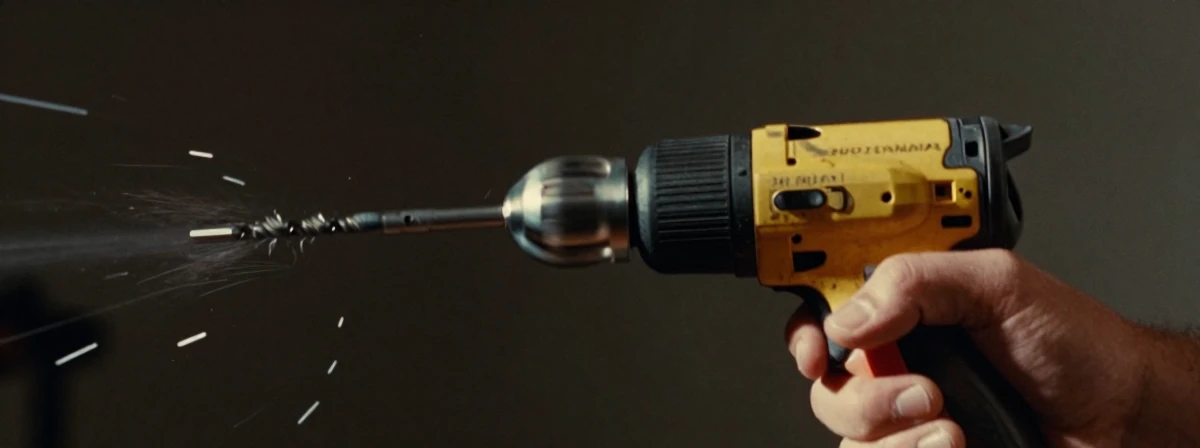
Think of it like using a hand drill without bracing yourself. If you don’t counter the twisting force, the drill will simply spin in your hand rather than turning the bit. The tail rotor acts as that bracing force for the helicopter, applying counter-torque at the end of the tail boom where leverage is maximized. This allows a relatively small rotor to effectively counteract the massive torque of the main rotor system.
It’s worth noting that not all helicopters use this design. Some, like the CH-47 Chinook mentioned in the discussion, employ tandem rotors that spin in opposite directions to cancel out torque effects. But for conventional single-rotor designs, the tail rotor remains the elegant solution to this fundamental physics problem.
Does the Tail Rotor Really Make Most of the Noise?
A fascinating misconception persists that the tail rotor is the primary source of helicopter noise. While it’s true that the tail rotor produces significant noise, claiming it’s the “all the noise” is an oversimplification. In reality, helicopter noise comes from multiple sources including:
- The main rotor’s blade-vortex interaction
- Turbulence created by the fuselage
- Engine exhaust and intake
- The tail rotor’s aerodynamic interaction
The tail rotor does operate in highly turbulent air at the end of the tail boom, which amplifies its noise signature. Its smaller blades spin at higher RPM than the main rotor to generate sufficient thrust in a compact space, which also contributes to its noise level. However, the main rotor’s sheer size and the scale of air movement it creates often make it the dominant noise source, especially at greater distances.
Interestingly, some helicopter designs like the NOTAR (NO TAil Rotor) system eliminate the tail rotor entirely, using instead a fan inside the tailboom that forces air through slots along the tail to create control forces. This demonstrates that the tail rotor, while effective, isn’t the only solution to the torque problem.
How Do Pilots Actually Control Helicopter Direction?
The relationship between the main rotor and tail rotor forms the basis of helicopter directional control. When a pilot wants to turn the helicopter, they don’t simply “steer” it like a car. Instead, they adjust the relative power between the main and tail rotors:
- To turn in the direction of main rotor rotation, the pilot reduces tail rotor power, allowing the helicopter body to rotate more freely
- To turn against the main rotor’s rotation, the pilot increases tail rotor power, creating additional counter-torque
This system creates an asymmetry in turning capabilities. Most conventional helicopters can turn more quickly in one direction than the other because increasing tail rotor power requires more energy than simply reducing it. This is why you’ll often see helicopter pilots making turns in the “easier” direction whenever possible.
The OH-58 Kiowa observation mentioned in the discussion about pilots using one foot on the right pedal for evasive maneuvers illustrates this principle perfectly. In emergency situations, pilots can exploit this torque relationship to execute rapid maneuvers that would be impossible with conventional aircraft.
Why Do Some Helicopters Seem So Much Noisier Than Others?
The noise profile of a helicopter depends on several factors beyond just rotor configuration. Engine type plays a significant role—turbine engines typically produce a higher-pitched whine than piston engines. Rotor blade design, number of blades, and blade pitch settings all contribute to the acoustic signature.
The Chinook’s distinctive “woop-woop” sound comes from its tandem rotor system, where the interaction between the two large rotors creates unique acoustic patterns. The OH-58’s smaller size and simpler design produce a different sound profile entirely.
Some experimental designs have explored noise reduction through various means, including:
- Shrouding the tail rotor
- Using multiple smaller rotors instead of one large tail rotor
- Optimizing blade shapes to reduce noise
- Implementing active noise cancellation systems
These innovations represent ongoing efforts to address the noise challenges inherent in rotary-wing flight.
What Would Happen Without Any Counter-Torque System?
The physics of helicopter flight makes this scenario impossible to ignore. Without any counter-torque system, a conventional single-rotor helicopter would begin rotating immediately after the main rotor achieved sufficient speed. The rotation would accelerate until either:
- The helicopter entered an uncontrollable spin and crashed
- The main rotor slowed enough through aerodynamic drag to reduce torque to a manageable level
In either case, controlled flight would be impossible. This is why the tail rotor or equivalent counter-torque system is absolutely essential for helicopter operation.
The OH-6 Cayuse anecdote about pilots using pedal pressure for maneuvering highlights how sensitive helicopters are to torque effects. In that design, the torque was so pronounced that pilots developed techniques to exploit it for tactical advantages in combat environments.
Could We Design Helicopters Without This Torque Problem?
The quest for torque-free helicopter designs has driven innovation in aerospace engineering. Several approaches have emerged:
- Tandem Rotors: As seen in the Chinook, two main rotors spinning in opposite directions cancel each other’s torque
- Coaxial Rotors: Rotors stacked one above the other, rotating in opposite directions (used in Kamov designs)
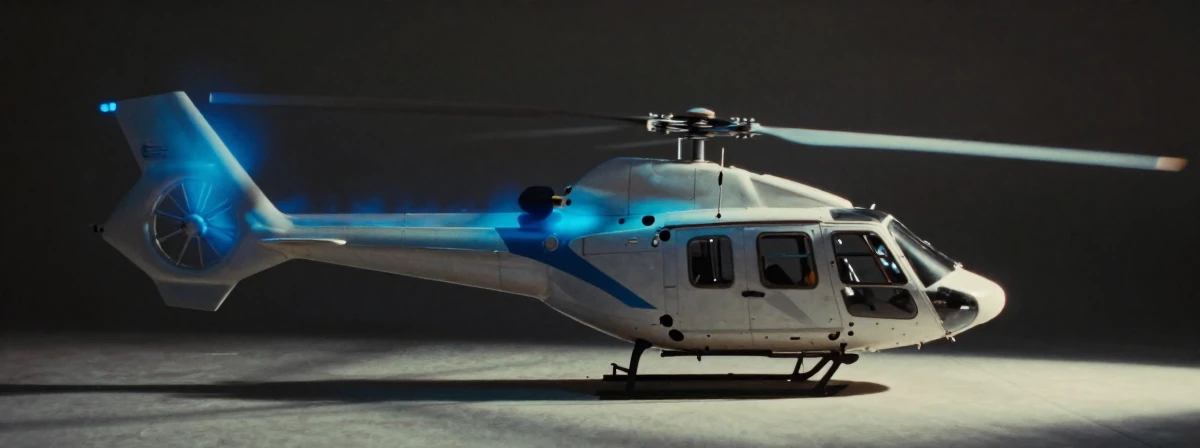
- NOTAR: Using air blown along the tailboom to create control forces
- Side-by-Side Rotors: Rotors mounted on opposite sides of the fuselage
Each approach has its advantages and disadvantages in terms of complexity, weight, performance, and noise characteristics. The conventional single-rotor design with tail rotor remains dominant for many applications due to its balance of simplicity and performance.
The ongoing development of these alternative designs represents the cutting edge of helicopter engineering, pushing the boundaries of what these remarkable aircraft can achieve.
The Physics That Keeps Us Safe in the Air
At its core, helicopter flight represents a continuous battle against the physical laws that would tear the aircraft apart. The torque relationship between main and tail rotors is just one example of the elegant engineering solutions that make rotary-wing flight possible.
Next time you hear a helicopter and watch it maintain a stable heading, remember the sophisticated physics at work. That small tail rotor isn’t just a minor component—it’s the critical counterbalance that transforms potentially catastrophic rotation into controlled, directional flight. It’s a reminder that even in our most advanced technologies, we’re still working within—and sometimes brilliantly against—the fundamental laws of physics that govern our world.
The next time you see a helicopter hovering steadily, consider the invisible forces at play. The main rotor creates lift, but it also creates the torque that would send the helicopter spinning out of control. The tail rotor provides the counter-torque that keeps everything stable. It’s a perfect example of how understanding and working with physical principles can transform a theoretical impossibility into a practical reality.